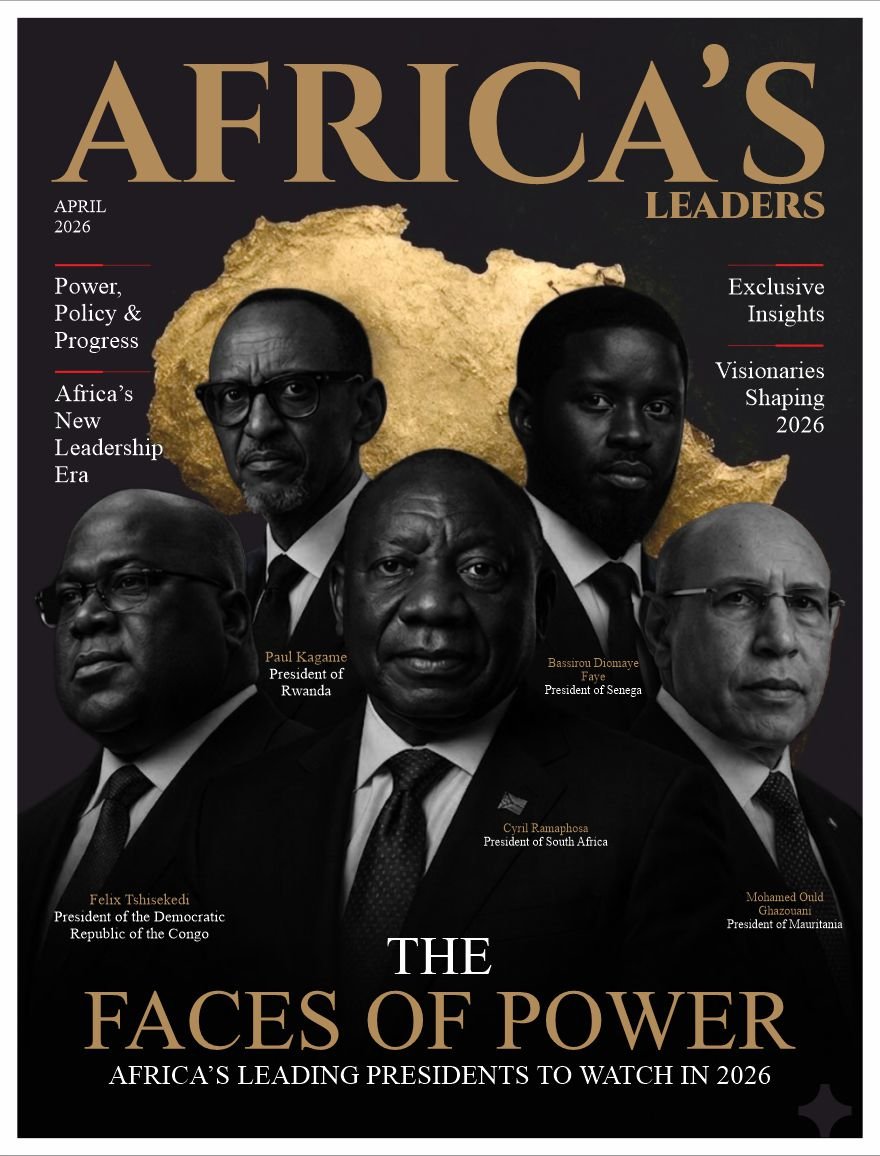

The gavel came down at 5:14 p.m. on Sunday, November 23rd, and the sound it made in the cavernous Nasrec Expo Centre, the same ground where Cyril Ramaphosa had defeated Jacob Zuma for the ANC presidency eight years earlier, was something between triumph and irony. South Africa had just hosted the G20.
The first time in the forum’s history that it had convened on African soil. World leaders had arrived in Johannesburg, shaken hands, debated the future of the global financial architecture, and issued a joint declaration. And the president of the United States was not among them.
Donald Trump had refused to attend, citing fabricated claims of a white genocide against Afrikaners that no credible evidence supports. He had imposed 30% tariffs on South African goods. He had called the summit a disgrace.
His administration had pressured Ramaphosa to issue only a “chair’s statement” rather than a full declaration, and when Ramaphosa refused, the White House accused him of blocking a smooth transition. A junior embassy official had been dispatched to receive the gavel. South Africa declined. The handover would wait.
Ramaphosa closed the summit with a line that managed to be both dignified and pointed: “This gavel formally closes this summit and now moves on to the next president of the G20, which is the United States, where we shall see each other again next year.” He made no mention of the empty chair. He did not need to.
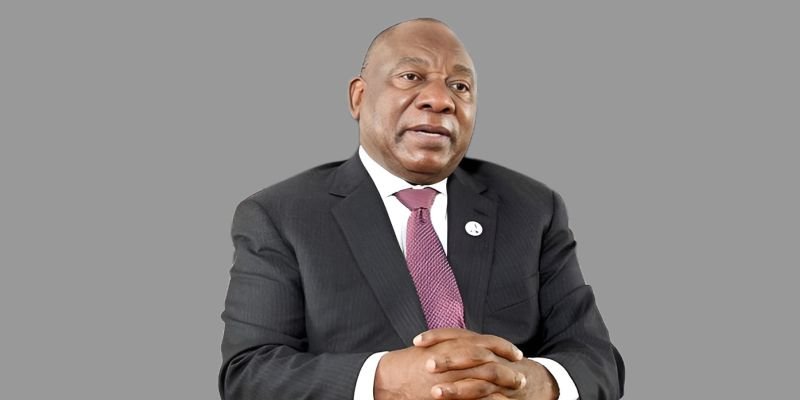
Standing at that podium, Emmanuel Macron to his left, António Guterres in the front row, the declaration already signed, Ramaphosa embodied a paradox that has come to define his entire presidency. He was, in that moment, the most powerful man in the room precisely because of what was absent around him.
The world’s largest economy had walked out. The leaders of China and Russia had sent deputies. Seven of the nineteen G20 member nations did not send their heads of state. And yet the summit happened. The declaration passed. The agenda was held. Africa, for the first time, had set the table.
Whether Ramaphosa built that table or was simply handed it by circumstance is the question that follows him everywhere.
“Africa must not just attend the global table, we must help set it.”
The Long Education of Cyril Ramaphosa
He was born in 1952, in Johannesburg’s Soweto township, and the country he grew up in was designed to ensure that men like him would never govern it. The apartheid state was not merely an ideology; it was an administrative architecture, bureaucratic in its cruelty, and resistant to exactly the kind of organized opposition that the young Ramaphosa was already drawn toward by the time he enrolled at the University of the North in the 1970s.
He was detained twice under security legislation. He studied law. He organized. When he turned to the labor movement in the early 1980s, he brought with him a skill that would later become his most recognizable political trait: the ability to sit across a table from an adversary and find the exact point where their interests and his could briefly overlap.
As founding secretary-general of the National Union of Mineworkers, he built a union of 300,000 members, negotiating with mining houses that regarded black labor as a resource to be extracted alongside the gold. Those negotiations, patient, methodical, strategic, were an education that no law school offered.
By the early 1990s, he was Nelson Mandela’s lead negotiator at the multiparty talks that ended apartheid. His counterpart across the table was Roelf Meyer, a National Party minister. The two men, improbably, built enough mutual trust to draft the framework of a new constitutional order for a country that had never known one.
Ramaphosa was thirty-nine. What he understood, even then, was that a constitution is not a peace treaty. It is a decision about who bears risk. The deal they brokered gave the ANC political power while protecting existing economic structures, a compromise that would shadow the country’s inequality for decades.
He lost the ANC presidential succession race to Thabo Mbeki in 1997 and retreated, temporarily, from politics into business. By the time he returned to public life, he had become extraordinarily wealthy through empowerment deals and board positions, a personal arc that would later become a liability, positioning him simultaneously as a symbol of Black economic advancement and an emblem of the narrow elite capture that distorted it.
His cattle farm. His Phala Phala scandal. The $580,000 in foreign currency allegedly hidden in furniture. The independent panel that found grounds to investigate him. He survived it, narrowly, but the episode established the terms under which many South Africans now read him: a man of genuine institutional instinct who nonetheless lives at an uncomfortable proximity to the very networks he is supposed to clean up.
A New Birth, Freighted With History
On May 29, 2024, South Africans went to the polls in the most consequential election since 1994. The outcome, long anticipated by analysts and feared by the ANC, was nonetheless startling in its finality: 40.18%.
The party that had defeated apartheid, that had governed this country through Mandela’s moral authority, Mbeki’s technocratic ambition, and Zuma’s catastrophic corruption, had fallen below majority for the first time.
The anger was legible in the numbers. Unemployment running above 32%. Rolling electricity blackouts, “load-shedding” in the local euphemism, that had disrupted businesses, schools, and hospitals for years.
A health system under chronic strain. A police service struggling against organized crime that had, in parts of the country, effectively replaced the state. Jacob Zuma’s new party, uMkhonto weSizwe, drew 14.6% on a platform of naked populism and Zulu nationalism, siphoning votes from an ANC that had spent years prosecuting its founder while his supporters watched. Over 75% of South Africans, one polling organization found, believed the ANC had failed to improve the lives of the poor.
Ramaphosa called the result a victory for democracy. Few people believed that framing, but it was not simply spin. What he recognized, and moved on within days, was that the result created an opportunity that the ANC’s internal culture would never have permitted under normal conditions: the chance to bring the Democratic Alliance into government.
The DA, market-oriented, predominantly white-supported, the ANC’s fiercest critic for three decades, was ideologically inconvenient and politically essential. Together, with the Inkatha Freedom Party, the Patriotic Alliance, and six smaller parties, the Government of National Unity was announced. Ten parties. One cabinet. Ramaphosa re-elected president with 283 votes to 44.
He called it “a new birth, a new era for our country.” The DA’s John Steenhuisen, who had spent years denouncing ANC governance as an assault on constitutional democracy, declared he would now help govern the republic. The image was deliberately Mandela-esque, the former liberation movement and its critics joined in common cause, and critics noted the deliberateness of that framing.
The GNU was also, analysts were careful to point out, a piece of political architecture designed to serve the ANC’s specific interests. A grand coalition of ten parties meant no single partner could extract too much.
The EFF’s Julius Malema was excluded, the DA had refused to govern alongside him, and Jacob Zuma’s MK party, which had made Ramaphosa’s removal a precondition of any deal, was also shut out. The coalition Ramaphosa assembled was wide enough to project stability, narrow enough to keep the ANC’s most dangerous rivals from the table.
Is this a masterstroke of democratic maturity, or a fragile compromise waiting to fracture?
Eighteen months later, the coalition holds. Barely. The DA and ANC have clashed repeatedly over the National Health Insurance Bill, land reform, and the decision to bring the genocide case against Israel to the International Court of Justice, a move the DA opposed vocally and unsuccessfully. Cabinet reshuffles have been contentious.
The DA had a deputy minister fired after an unauthorized foreign trip. Policy documents circulate between ministries with competing assumptions baked in. In the National Assembly, the ideological span of the coalition, from centrist liberals to ANC left-wingers to conservative IFP traditionalists, means that legislation requires constant negotiation that would, in most democracies, simply be called governing but here carries a permanent sense of imminent collapse.
Ramaphosa moves through this environment with studied patience. He delays where others would decide. He consults where others would pronounce. His critics call this indecisiveness; his defenders call it coalition management. The distinction is increasingly academic. When you govern ten parties simultaneously, the act of keeping them in the room becomes indistinguishable from the act of not moving.
The Global Stage, Unscripted
South Africa assumed the G20 presidency on December 1, 2024, becoming the first African country to chair the forum. The timing was, depending on your perspective, either ideal or disastrous. Ideal because the Global South was ascendant as a rhetorical category, India, Brazil, and Indonesia had each used recent G20 presidencies to push developing nation concerns to the center of the agenda.
Disastrous because the geopolitical environment of 2025 was particularly hostile to the kind of rules-based multilateral cooperation that G20 declarations depend upon.
Ramaphosa organized South Africa’s presidency around three themes: solidarity, equality, and sustainability. The framing was deliberate and somewhat defiant, these are precisely the categories that the Trump administration had labeled DEI agenda items.
The summit agenda pushed for debt restructuring for low-income nations, increased climate finance from wealthy countries, reform of international financial institutions, and recognition of the particular vulnerabilities of the African continent. He launched the Africa Energy Efficiency Facility in partnership with the African Union Commission in October 2025, aiming to mobilize $3 billion by 2030.
None of this was entirely new. What distinguished Ramaphosa’s approach was the insistence on framing Africa not as a supplicant but as a negotiator. “Africa must not just attend the global table, we must help set it.” The line, delivered repeatedly across the G20 year, was part diplomatic doctrine and part political identity.
After decades in which African countries joined international forums as observers of decisions made by others, here was a sitting president arguing, and, for a moment, demonstrating, that the continent’s interests could be inserted into the agenda rather than appended to it.
The test came immediately. Trump’s boycott was designed to delegitimize the summit, and there were real questions about whether the remaining leaders would have the political will to issue a joint declaration without American participation.
Ramaphosa broke with tradition by issuing the declaration at the summit’s opening, before talks had formally concluded, a procedural maneuver that locked the consensus in place before the atmosphere could deteriorate further. It was, in its way, a negotiator’s move: change the sequencing, change the outcome.
The declaration that resulted endorsed climate commitments, debt relief mechanisms, and global inequality reduction, the exact agenda the Trump administration had sought to block. France, Germany, the UK, Japan, Canada, China, and Russia all signed.
“In a nutshell,” South Africa’s Foreign Minister Ronald Lamola said as the summit closed, “this has been a great success for our country.” Emmanuel Macron gave Ramaphosa a warm embrace, though he also noted, pointedly, that the divisions at the summit remained visible.
They did. The U.S. absence was not a procedural curiosity. It was a structural fact about the post-American era, the possibility that the world’s largest economy might opt out of multilateral forums it helped build. For Ramaphosa, managing that absence while maintaining the coalition of countries willing to remain was itself the achievement. But the question is what the declaration actually produces.
G20 declarations are not binding. The debt relief commitments are voluntary. The climate finance pledges depend on political will in countries that have their own domestic pressures. The table that Africa helped set may still serve a menu that wealthy nations choose to ignore.
Coal, Hydrogen, and the Price of the Future
The Just Energy Transition Partnership, the $8.5 billion financing package committed by the United States, the European Union, the United Kingdom, France, Germany, and others to help South Africa move away from coal, is, in theory, one of the most significant climate finance deals ever directed at a single developing country. In practice, it is one of the most contested commitments in South African domestic politics.
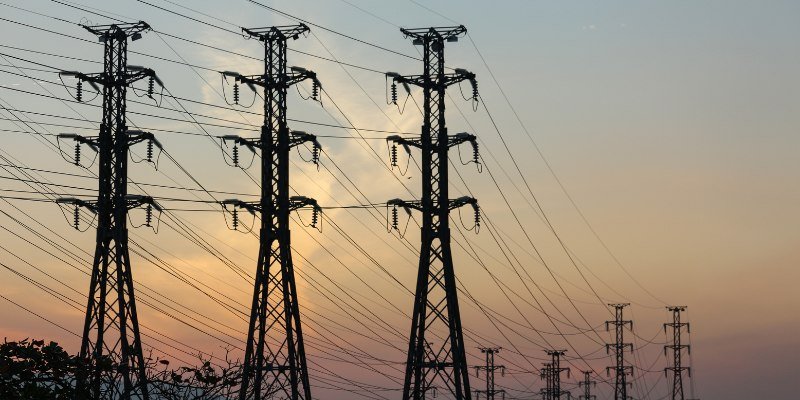
The country runs on coal. Approximately 85% of its electricity comes from Eskom’s aging, chronically mismanaged coal fleet, and the communities built around the Mpumalanga coalfields, miners, truckers, plant workers, the small businesses that depend on them, represent a political constituency with specific demands and limited alternatives. When international partners talk about a “just transition,” the word “just” carries different meanings depending on whether you are a climate negotiator in Brussels or a mineworker in eMalahleni.
Ramaphosa has moved on green hydrogen with more conviction than on almost any other industrial policy question, positioning South Africa as a potential major exporter in a future where hydrogen plays the role that oil does today. The country’s renewable energy resources, wind and solar, are genuinely world-class.
The Renewable Energy Independent Power Producer Procurement Programme, relaunched under his presidency after years of ANC faction-driven obstruction, has brought private capital back into the power sector and begun, tentatively, to ease the blackouts that cost the economy an estimated R50 billion a month at their worst.
But the transition is slow. The coal communities are not moving into hydrogen jobs at any measurable rate. The $8.5 billion is structured partly as loans rather than grants, meaning South Africa takes on debt to decarbonize an energy system it did not build for the purposes of a climate crisis it did not cause.
The internal tensions within the GNU over energy policy, the ANC left suspicious of private-sector solutions, the DA frustrated by any remaining state monopoly, mean that even where consensus exists on the destination, the route remains contested.
Infrastructure tells a similar story. South Africa’s ports and freight rail network, operated by the state-owned Transnet, have deteriorated to the point that copper miners in the Northern Cape and citrus exporters in the Eastern Cape have been unable to move products to market with any reliability.
The government has moved to allow private operators into the rail corridor, a reform that would have been unthinkable under previous ANC administrations but has moved slowly even now. Durban’s port, once the busiest in Africa, has lost container traffic to rivals. The credibility that Ramaphosa spent his first term trying to rebuild with international investors depends on logistics that remain embarrassingly unreliable.
What Unity Actually Costs
There are things Ramaphosa cannot say inside the Government of National Unity that he might, in another configuration, be able to attempt. Radical land redistribution, still a live demand within the ANC’s left wing, is essentially off the table while the DA holds cabinet posts.
The National Health Insurance Bill, which would establish a single national health fund, has the DA in active opposition and the ANC’s own treasury uncertain about the fiscal arithmetic. The contradictions that the ANC accumulated over thirty years in power, between its liberation movement identity and its governing record, between its socialist rhetoric and its market-adjacent practice, have not been resolved by the GNU. They have been managed.
Managing contradictions is not the same as resolving them, and South Africa’s underlying numbers do not leave much room for patience. Unemployment at 32%. Youth unemployment above 60%. Inequality, as measured by the Gini coefficient, among the highest in the world. An education system that produces too few graduates with marketable skills and too many without. A public health system where the gap between those who can afford private care and those who cannot is a direct measure of how apartheid’s geography persists in democratic clothing.
The protests continue. Municipalities where service delivery has collapsed beyond recovery. Communities that have waited decades for promised housing. Taxi associations that enforce their territory with the kind of organized violence that the state seems unwilling to confront. Ramaphosa governs a country where the state’s monopoly on force is unevenly distributed, where the rule of law is robust in some places and notional in others, where the formal economy and the informal one co-exist in a relationship that economists struggle to accurately model.
He is, in the assessment of most serious observers, a better president than either of his two immediate predecessors. That is not a difficult bar to clear. Thabo Mbeki’s denial of the HIV/AIDS epidemic cost hundreds of thousands of lives. Jacob Zuma’s systematic looting of state institutions, what the courts eventually termed “state capture,” left damage that will take a generation to repair.
Against that baseline, Ramaphosa’s record on institutional stabilization, macro-economic management, and the partial restoration of investor confidence represents genuine improvement. The question is whether improvement from a catastrophically low baseline constitutes the leadership that the country’s problems actually require.
Is Ramaphosa stabilizing South Africa for its next chapter, or simply holding together a system already shifting beneath him?
The Unanswered Question
There is a particular quality of tension that attaches itself to a leader who is simultaneously necessary and insufficient. Ramaphosa is, in this sense, a structurally tragic figure, not because he has failed, but because the problems he confronts were assembled over decades by forces he only partially controlled, and the solutions available to him require a velocity of change that the political systems he manages cannot sustain.
The GNU is, by most assessments, still the least bad option available. Its alternative, a coalition with the EFF and MK, moving South Africa toward nationalization and constitutional revision, would likely produce the kind of capital flight and institutional unraveling that the country cannot absorb.
The market-friendly signal sent by the ANC-DA partnership has kept the brand from the worst case scenarios. Foreign direct investment has ticked upward. The credit rating agencies have not downgraded further. None of this is nothing.
But a government of national unity is, by definition, a government of deferred disagreements. The ANC and DA are not natural allies. Their base constituencies have fundamentally different interests, different histories, different readings of what South Africa owes its citizens. The agreement that binds them is procedural rather than visionary, and procedural agreements have a well-documented tendency to fray when real decisions, ones with actual losers, must be made.
At the G20, Ramaphosa handed a gavel to no one. The incoming presidency belonged to a country that had refused to show up. He made the moment into a line: “we shall see each other again next year.” There was no bitterness in it, no self-pity, no performative outrage. Just a man with a gavel, holding an awkward situation with practiced composure, moving things along.
That is, in a sense, the whole of it. Cyril Ramaphosa is a leader who has spent fifty years learning how to hold difficult things together, labor negotiations, constitutional talks, coalition governments, fractured international forums. He is very good at it. South Africa, in 2026, is held together in ways it was not four years ago. The lights stay on more reliably. The ANC no longer governs as if accountability were optional. Africa has, once, hosted the global table.
The question is whether holding things together is sufficient, or whether what this country now needs is not a holder but a builder; not a negotiator of existing interests but a disrupter of the arrangements that produced those interests in the first place. Ramaphosa was shaped by the transition of 1994, which was itself a negotiated settlement between forces that agreed to share power rather than fight for it. That settlement produced a constitutional democracy of genuine quality and an economic order of profound inequality.
He carries both of those inheritances. He is, in ways that are neither accidental nor fully controllable, exactly the kind of leader that this exact moment requires, and possibly not quite the kind that the next moment will demand.
The gavel is in American hands now, for better or worse. South Africa has moved on. Whether it has moved forward is a question that the country’s thirty-two million unemployed citizens, its load-shedded entrepreneurs, its graduate generation that cannot find work, and its coal communities staring at a transition that promises dignity but delivers uncertainty will answer in the next election, not in Johannesburg’s convention centers, but in township polling stations where the argument between hope and experience is settled, imperfectly, every 5 years.