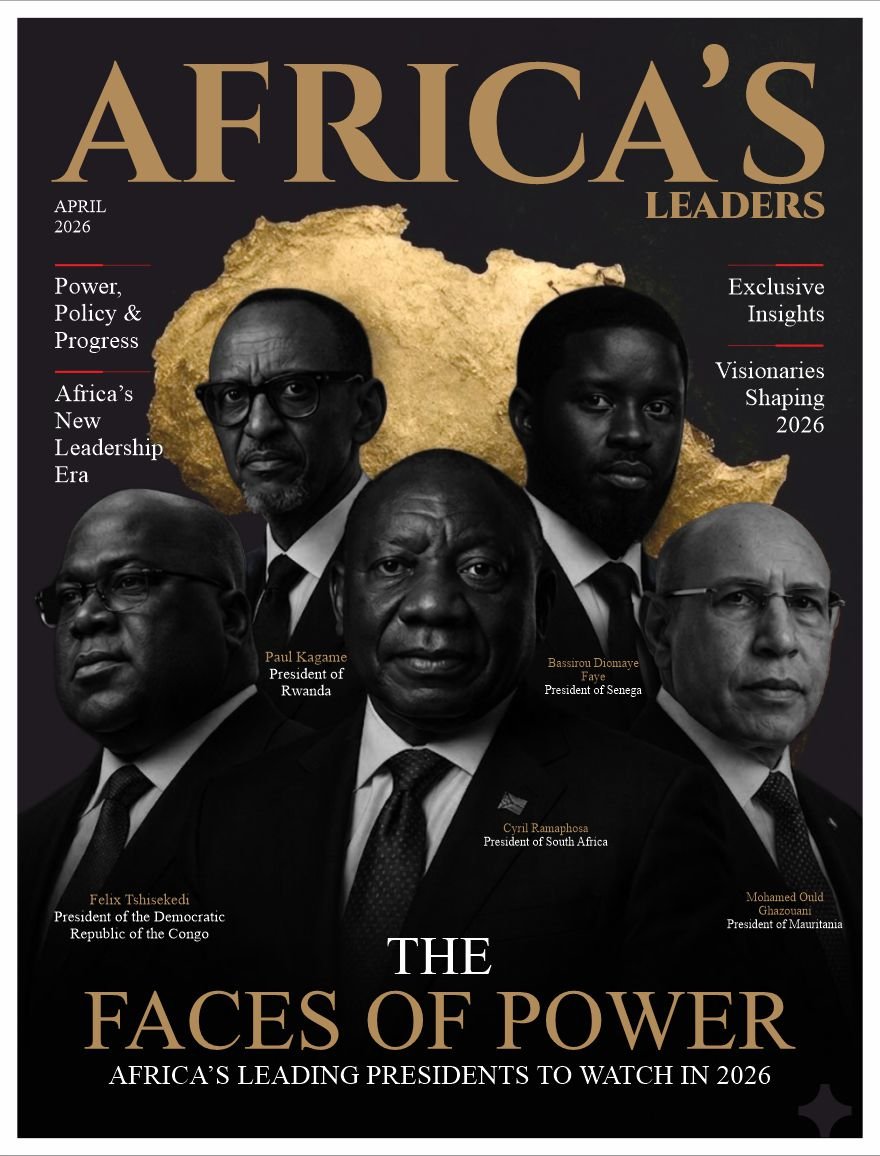

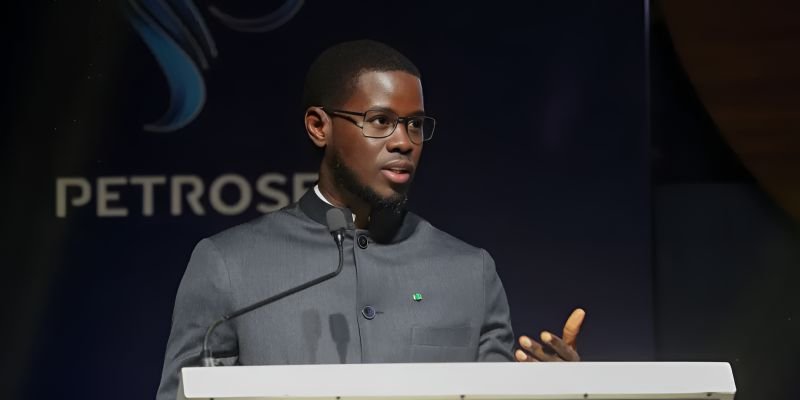
From a prison cell to the presidency in ten days: Bassirou Diomaye Faye and the making of Africa’s most improbable mandate.
The cell at Cap Manuel prison in Dakar is not built for anticipation. It is built for time, the slow, corrosive kind that strips meaning from days and makes weeks identical. Bassirou Diomaye Faye had been inside for nearly a year, charged with defamation and contempt of court after a Facebook post criticising the judiciary in a case against his mentor Ousmane Sonko. He was, on the surface, a relatively obscure man: a tax inspector, a party official, a footnote in someone else’s political drama.
Then, on 14 March 2024, the gates opened. An amnesty law, passed by a government desperate to drain the fever of a political crisis it had helped create, released Faye and Sonko and several hundred others into a country that had been holding its breath for months.
10 days later, on the morning of 24 March, Senegal voted. That evening, as the results came in, it became clear that something had happened that the political class had not fully imagined possible: Bassirou Diomaye Faye, still fresh from detention, with no national election experience, had won 54.3% of the vote in the first round and become Senegal’s youngest president.
His middle name, Diomaye, means ‘the honourable one’ in the Serer language. He had been given it at birth. In March 2024, a country of eighteen million people decided that was enough.
THE SHOCK THAT BECAME A MANDATE
To understand the scale of what happened, you have to understand the scale of what preceded it. President Macky Sall, who had governed Senegal since 2012, had spent three years suppressing a movement that began with Ousmane Sonko, a charismatic, often incendiary tax official turned opposition politician whose particular gift was translating economic discontent into political fury.
By 2021, protests had turned deadly. Hundreds of opposition supporters were arrested. In July 2023, Sonko’s own party, PASTEF, was dissolved by the interior ministry. Faye, its general secretary, was arrested in April of that year for a Facebook post.
Then came the crisis that turned Sall’s final year into chaos. In February 2024, citing unresolved disputes over candidate eligibility, Sall moved to postpone the presidential election, an act that the Constitutional Council of Senegal quickly overturned and that sparked the worst protests in a generation.
Senegal, long held up as West Africa’s democratic exemplar, was suddenly described in dispatches as a country on the edge. Sall reversed course, set the date for March 24, and, in a gesture that would rebound against him, agreed to the amnesty that freed Faye and Sonko.
‘Senegal earned African and global admirers by overcoming the threat of instability to conduct fair elections and a peaceful transition of power within a two-week period.’ – Semafor
What followed was less a campaign than a procession. Faye held his first public appearance as a presidential candidate on 15 March, the day after his release. Hundreds came. He had been designated as PASTEF’s candidate in November 2023, while still in his cell, the party had drawn up the papers, circulated his candidacy on social media, and waited. When he walked out, the structure was already there.
His slogan was ‘Diomaye mooy Sonko, Sonko mooy Diomaye,’ in Wolof, ‘Diomaye is Sonko, Sonko is Diomaye.’ It was transparent about what it was: a proxy candidacy, a constitutional workaround for a disqualified figure. And Senegal voted for it by a landslide.
It was, international observers noted, both credible and symbolic. Credible because the election ran cleanly, the incumbent’s candidate conceded swiftly, and the transition proceeded without incident. Symbolic because the man who won it had been in prison two weeks earlier on charges the government itself found necessary to amnesty away.
What the vote registered was not merely a preference for one candidate but a verdict on the system that had produced the preceding three years, the crackdowns, the delays, the dissolution of a political party, the weaponisation of the judiciary. Senegal had been tested and, just barely, had not broken.
POWER, BUT WITH CONDITIONS
The day after his inauguration, Faye went on television. He delivered a speech that was, by the standards of African political debuts, striking for what it foregrounded. He said he would order an audit of Senegal’s oil, gas, and mining sectors.
He quoted the constitution: ‘The exploitation of our natural resources, which according to the constitution belong to the people, will receive particular attention from my government.’ Then he invited investors to stay. ‘They are welcome in Senegal,’ he said.
That dual register, sovereign reassertion alongside investor reassurance, has defined the economic chapter of his presidency. It reflects both his instincts and his constraints. Faye trained as a tax inspector at the National School of Administration; his understanding of how money moves through systems, where it enters and where it disappears, is not theoretical.
He has spent his adult working life inside the architecture of public finance, which means he knows exactly where opacity hides. The audit was not a campaign flourish. It was a professional reflex.
What the audit revealed, in combination with wider fiscal scrutiny that arrived in his first months, was a structural shock. In September 2024, the new government disclosed that fiscal deficits and public debt reported under Sall had been systematically understated for years.
A subsequent February 2025 report by the Cour des Comptes, the court of auditors, confirmed that hidden deficits had averaged approximately 5.5% of GDP annually between 2019 and 2023, implying actual deficits roughly double what had been reported. Public debt at the end of 2023 was revised upward by 25 percentage points of GDP, from approximately 75 to 100%.
By year end 2024, with additional liabilities consolidated, IMF calculations placed total public-sector debt at around 132% of GDP.
For a government elected on promises of economic sovereignty and anti-corruption, the irony was brutal: the ‘systemic rupture’ they had promised was being defined by a debt overhang they did not create but must now resolve.
The energy side of the ledger offered better news. The Sangomar offshore oil field, developed with Australia’s Woodside, began production in June 2024 and exported 3.8 million barrels in April alone.
The Greater Tortue Ahmeyim LNG project, shared with Mauritania, commenced production in late 2024. Senegal’s oil and gas revenues for 2025 were projected at approximately 753 billion CFA francs, roughly $1.3 billion. For a country whose extractive sector had contributed less than 400 billion francs in total just five years earlier, the numbers represent a structural shift.
The government anticipated raising 884 billion CFA francs through renegotiation of contracts in oil and mining sectors. Petrosen, the state oil company, estimated that its two main deposits could yield an average of 700 billion francs annually over 30 years.
These projections animated Faye’s broader ambition, the ‘Senegal 2050’ development agenda, a four-year plan targeting over 5,600 billion francs in mobilised resources, with 90 percent drawn from domestic sources. It is a plan anchored in a desire to reduce dependence on external borrowing. It is also a plan that, given the inherited debt, faces the arithmetic of very little room.
The question of who benefits immediately from energy wealth is not abstract. Senegal’s youth unemployment rate stands near 20%. Growth of five to seven percent under Sall generated real infrastructure, roads, airports, the train to the new international terminal, but failed to generate enough formal employment.
Faye’s voters, many of them in their twenties and thirties, did not vote against that growth per se. They voted against the sense that its proceeds had been captured, distributed selectively, and managed in the dark.
THE PEACE NO ONE COULD CLOSE
The Casamance conflict began in December 1982, when several hundred protesters marched to the regional governor’s office in Ziguinchor and replaced the Senegalese flag with a white one. The government’s response was brutal enough to ensure that a demonstration became a movement.
The Movement of Democratic Forces of Casamance, the MFDC, spent the next 4 decades fighting a low-level insurgency for independence in a region that is, by geography, almost a separate country: Casamance lies south of the Gambia, cut off from northern Senegal by another nation’s territory, its forests and rivers and cultural distinctiveness making it feel peripheral to a capital it never quite trusted.
Over forty years, the conflict claimed thousands of lives and left the region littered with land mines and more than 60,000 displaced people. Peace agreements were signed in 1991, 1993, 1999, 2001, 2004, and 2022. All held partially. None held completely.
The MFDC fractured repeatedly into factions whose motivations ranged from genuine political grievance to armed banditry around illicit timber and cannabis trade. Negotiating with a unified movement was never fully possible because a unified movement never fully existed.
Faye brought to this problem something neither purely political nor purely military: personal geography. His prime minister, Ousmane Sonko, is from the Casamance region. The government’s approach combined a substantial investment announcement, Faye unveiled a 53 billion CFA franc package, around $88 million, for demining and economic development in Casamance, with direct negotiation.
On 25 February 2025, in Bissau, brokered by Guinea-Bissau’s President Embalo and facilitated by the Centre for Humanitarian Dialogue, Prime Minister Sonko signed a peace agreement with a delegation from the MFDC’s main factions.
The talks had lasted three days.
‘We had to close the work on the negotiations between the MFDC and the state of Senegal,’ Sonko said. It was not the first such statement in forty years. But something about this iteration held different weight. A member of the Initiative for the Reunification of the MFDC’s political wings, Lamine Coly, told Radio France Internationale: ‘The new regime is taking things seriously. In 2022, there was an accord signed but nothing concrete. Now, with the presence of the head of the government of Senegal, we have moved to the concrete.’
The limits of the deal were real. The agreement, like its 2022 predecessor, was signed primarily with the Badiatte faction of the MFDC. The Sadio faction, historically the most intransigent, did not sign.
Land mines remain in Casamance’s fields. Some fighters remain in the forests. In December 2025, Faye made a personal visit to Dar Salam in the south, a former conflict zone now in the middle of a demining programme, and publicly called on the remaining factions to lay down arms. ‘Casamance has suffered too much, and with it, Senegal,’ he said. ‘It is time for this remarkable natural region to regain its dynamism.’
For people who were born into the quiet, grinding war of Casamance, who grew up with land mines on the path to school, who lost fathers and brothers to clashes that received almost no international coverage, the meaning of these developments is measured not in political communiqués but in whether the fields become safe to farm again. That question remains open. But the momentum, for the first time in decades, is in one direction.
REWRITING THE RULES OF GOVERNANCE
The Faye government’s approach to institutional reform carries the fingerprints of its origins. A party that was banned, whose leaders were jailed, whose members were summoned and intimidated, arrived in power with a specific diagnosis of what had gone wrong: the state had been captured, and its capture had been made possible by opacity. The remedies were correspondingly transparency-oriented.
The day-after-inauguration audit of the extractive sector was one signal. Another was the commitment to disclose the effective ownership of extractive companies, the beneficial ownership problem, whereby the actual beneficiaries of contracts are obscured behind corporate layers, that has enabled corrupt arrangements in resource-rich countries across the continent.
In June 2025, the World Bank approved $115 million in concessional financing specifically to support Senegal’s fiscal reforms, public financial management, and domestic revenue mobilisation: an institutional vote of confidence, however conditional.
The government also dissolved the National Assembly after an early clash between executive reform ambitions and legislative resistance, called snap elections, and emerged from the November 2024 legislative vote with a supermajority.
The sequence alarmed some constitutional observers, who noted that a president dissolving parliament to clear a path for his own programme is a well-worn route to executive overreach. Supporters argued it was a necessary correction for a legislature still composed largely under the prior regime.
The picture on press freedom is more uncomfortable. In October 2024, political analyst Cheikh Yérim Seck was detained after criticising the prime minister. In February 2025, a journalist at Walf TV was questioned at length by authorities allegedly seeking to identify his sources.
An attempted attack on TFM, a private broadcaster, was followed by calls from a minister and ruling party officials to boycott the channel. A series of cyberattacks in early 2025 targeted multiple news websites. A government elected in opposition to the suppression of speech was generating, in its first year, its own record on speech to answer for.
The administration’s defenders note that no government is assessed solely on its worst days. Senegal’s institutions, its Constitutional Council, its Cour des Comptes, its press, have demonstrated capacity for independence that is not universal in the region. The audit of Sall-era finances was produced by the state’s own auditing body.
These are signs of a system with some life in it. Whether Faye’s administration will strengthen or gradually constrain those sinews remains the central governance question of its second year.
THE WEIGHT OF EXPECTATION
Governing is slower than winning. This is the oldest truism in democratic politics, and it is the one that catches every reform movement eventually. The urgency that filled Dakar’s streets in 2021, 2022, and 2023, the urgency that put Faye in prison and then in the presidency, was the urgency of people who had been waiting long enough. It does not come with patience attached.
The debt revelation of September 2024 was, in political terms, a gift and a burden simultaneously. A gift because it gave the government an explanation for why structural transformation would take longer than hoped: the fiscal floor was lower than anyone had been told.
A burden because the same revelation confirmed every suspicion about the previous administration’s conduct and raised fresh questions about how the new government would navigate its own relationship with transparency, would it honour the principle selectively, or consistently?
Faye’s 2026 budget projected revenues of 6,188 billion CFA francs against expenditures of 7,433 billion. Debt servicing consumed nearly a sixth of total expenditure, over 1,190 billion francs. Personnel costs absorbed another 1,532 billion. The capital budget, theoretically the engine of transformation, was squeezed between these obligations.
In a country where a transport worker in his thirties voted for Faye because he believed PASTEF ‘has the programme to develop Senegal and Africa,’ the gap between mandate and arithmetic is the central political tension of the coming years.
The energy revenues offer a partial bridge. Growth forecasts for 2025 ranged from seven to ten percent, driven largely by hydrocarbon exports. A current account deficit that exceeded twelve percent of GDP in 2024 was projected to narrow to 6% in 2025. These are significant movements.
They do not, by themselves, solve youth unemployment, narrow spatial inequality between Dakar and the periphery, or accelerate the demining of Casamance. They buy time. How the time is used will define the presidency.
‘For many of Senegal’s disillusioned younger generation, voting for Faye was a way to repudiate an establishment seen as out of touch.’ – The Irish Times
- A NEW AFRICAN POLITICAL LANGUAGE
When Emmanuel Macron congratulated Faye on his election, he did so with a tweet in Wolof, the Senegalese lingua franca rather than the colonial French. The gesture was noted in Dakar as confirmation that France understood something was changing, even if Paris was not sure what to do about it.
Faye had campaigned, among other things, on ‘fighting French economic stranglehold’ over Senegal; had spoken of monetary sovereignty and the CFA franc as a colonial inheritance; had promised a new currency, or at least a reformed monetary framework.
In office, the rhetoric modulated. The CFA franc remained. Faye told Le Monde before the election that the ideal path was reform within ECOWAS first, and if that failed, Senegal might consider going alone as Mauritania did in 1973. His finance minister told Semafor that ‘only in this way can we gradually free ourselves from the bonds of external dependence,’ but gradually was the operative word.
In July 2025, Faye was in Washington at the White House, meeting President Trump alongside other African leaders, praising American investors and reassuring them of Senegal’s political stability. The same president who had vowed monetary sovereignty was working in every bilateral room available.
This is not hypocrisy. It is the friction inherent in pan-Africanist economics meeting the reality of a country that needs foreign investment, holds Eurobond debt, and is trying to navigate the first years of a complex energy transition.
Faye’s language of sovereignty resonates across the continent precisely because it names something real, the sense that the terms of engagement between Africa and global capital have been set largely by others. But naming the problem and resolving it are not the same act. The former can be done in a speech. The latter requires decades of institutional construction and the management of painful trade-offs.
His positioning within the broader Sahel context is careful. Unlike the juntas in Mali, Burkina Faso, and Niger, who expelled Western forces and pivoted toward Russian partnership, Faye maintained French military cooperation initially, though Senegal eventually moved to renegotiate those arrangements.
He resisted the full gravitational pull of the Alliance of Sahel States while trying to keep diplomatic channels open. He attended the BRICS+ process at the margins without committing. In the regional landscape of hard choices, he is trying to preserve optionality, for a country whose geography and new energy status make it geopolitically valuable enough to negotiate with most partners simultaneously.
CODA: THE REAL TEST
On a March evening in Dakar, in the days after his release and before his election, Faye made a campaign stop in a neighbourhood on the city’s outskirts, one of those places where the city ends ambiguously and the weight of insufficient infrastructure is visible in every unfinished wall and crowded minibus.
The crowds were not simply enthusiastic. They were waiting. Not for a speech but for something harder to articulate: a change in the terms of their relationship to the state. A sense that the government was actually constituted of people who knew what their lives cost.
Faye grew up in Ndiaganiao, a village 150 kilometres east of Dakar with no health centre and no paved roads at the time of his childhood. His mother raised him. He watched goats in the fields. He left and studied law and passed the competitive examinations for the National School of Administration and became a tax inspector and built a career inside a state whose internal architecture he came to understand with great precision.
That trajectory, village to bureaucracy, system insider to system challenger, is the biography of a man who knows the gap between the state’s self-presentation and its actual workings.
He has now governed for nearly a year. The peace agreement in Casamance is the most significant diplomatic achievement of his early tenure. The fiscal revelation of Sall-era debt is the most significant structural challenge. Energy revenues are the most significant opportunity. The press freedom incidents are the most significant warning sign. None of these stories has concluded.
Senegal’s 2024 election is already studied in governance seminars as a case of democratic resilience: a country that looked, for a period, as though it might follow the regional pattern of institutional breakdown, and instead held an election, produced a credible result, and made a peaceful transition.
What made that possible was the work of generations, courts that functioned imperfectly but functioned, a civil society that pushed back, a population that came out and voted under conditions of genuine uncertainty.
Faye is the inheritor of that resilience. He is also, now, responsible for sustaining it. The question his presidency poses is not whether he can govern, his early months suggest real capacity for strategic decision-making, but whether a man who built his identity around challenging a system can resist the pull of that system once he is inside it.
Whether the energy revenues will be managed with the transparency his administration has promised and the court of auditors will track. Whether the press intimidations remain aberrations or become patterns. Whether Casamance’s peace holds long enough for the minefields to be cleared and the displaced to come home.