
Africa is almost a different story. For years, the majority of African countries had trading partners mainly in Europe, Asia, and the Americas, but not much with each other. However, that trend is changing today, and the shift towards intra-African trade is gradually reshaping the continent’s economic future. The change is based on a brave, continent-wide agreement and the ever-increasing cross-border collaboration.
Here is a true look at how intra-African trade is changing business growth with some facts, and projections drawn from the recent research and data.
Understanding Intra-African Trade
Simply put, intra-African trade is the exchange of goods and services between African countries. This part of continental trade has been very low for a long time. The share of African trade that occurred within the continent was only about 12% before the radical trade reforms, which is significantly less compared to other regions such as North America (47%) or Europe (69%).
The implication of this was that African businesses were mainly engaged in the export of raw materials outside the continent and the import of finished goods back into it. Such a model had a double effect: on the one hand, it blocked the creation of regional supply chains; and on the other hand, it limited the business opportunities of local manufacturers and service providers.
The Game Changer: African Continental Free Trade Area (AfCFTA)
The African Continental Free Trade Area (AfCFTA) is the most important factor that has led to the growth of intra-African trade. It is a trade agreement that covers 55-member states of the African Union, the main objective being the establishment of one market for goods and services throughout Africa.
According to the AfCFTA:
- Several tariffs will be gradually removed.
- Trade barriers will be dismantled.
Investment and service sectors are now more open and attractive to capital through new regulations, which also encourage deep economic cooperation.
The deal was formally signed in 2021, and, although there have been some difficulties in putting it into practice, it is still very much alive and kicking.
Tangible Growth in Intra-African Trade
Recent statistics indicate that substantial progress has been made:
Intra-African trade reached USD 192.2 billion in 2023, which was higher than in the previous year.
The forecast for 2024 places this figure well above 220 billion USD, which represents a significant increase and is a strong indication of the expansion of regional trade.
Such increments are of great importance. They express that African economies are becoming more and more interdependent, trading with each other and not only with far-away partners.
How Businesses Are Benefiting
The upturn of intra-African trade impacts business growth in several tangible ways:
1. New and Bigger Markets for Products and Services
African businesses are free to grow outside their national territories without being obstructed by tariff walls and complicated trade barriers. Manufacturers looking for new clients would gain the most from this change. Service providers taking their business to regional hubs. Agribusinesses effortlessly entering the markets of the neighboring countries.
Cross-border trade growth is a great step towards less dependency on exports to Europe and Asia and at the same time, it is a tool for building demand for domestically produced goods.
2. Diversification of Exports and Value Addition
More and more countries are shifting from being just raw material exporters, to processors and traders of higher value products. Some of these products may be refined petroleum products, processed foods, and manufactured goods.
Such a change will not only facilitate the expansion of the industrial sector but can also be a driver of micro and small enterprises growing and a source of innovation startups in sectors that were considered as having no regional demand.
3. Investment and Job Creation
There is evidence showing that intra-African trade has a positive impact on overall economic development. One exhaustive study even found that increased trade relations among African countries lead to higher GDP growth rates.
Also, AfCFTA is an investment magnet. Some forecasts predict a rapid increase in foreign direct investment (FDI) in Africa as a result of trade liberalization, with some estimates pointing to a FDI doubling or even more over time.
The logic of more trade leading to more business activity, and more business activities leading to more jobs, is not lost in the AfCFTA project. Hence it is anticipated that AfCFTA will generate employment opportunities, particularly for youth, and result in better living conditions.
4. Strengthened Regional Value Chains
The increase in trade is a main factor behind the development of regional value chains. African businesses are not only exporting raw materials and importing the finished products; they are progressively getting involved in more extended production processes that are crossing borders. For example, a commodity can be agricultural processed in one country and, later, refined or assembled in another before being marketed regionally.
This interconnection is generating demand in the areas of logistics, finance, services, and technology which are vital activities for business development.
5. Improved Business Infrastructure and Innovation
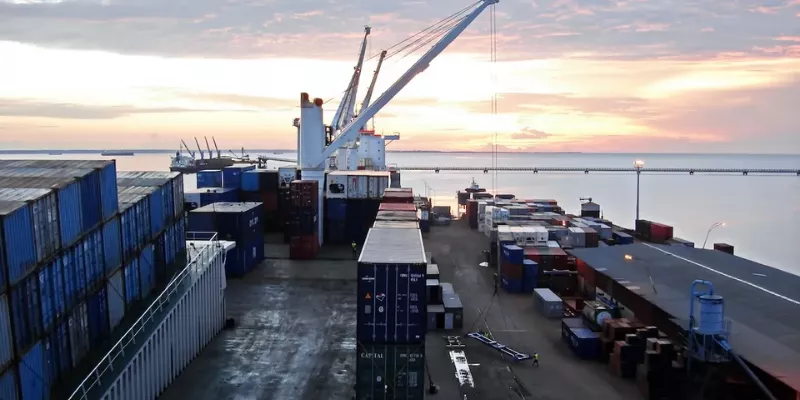
Countries that want to facilitate trade have to work on their infrastructure such as transport corridors, digital systems, and customs facilitation. These improvements are cutting business costs and making commerce smoother. Joint efforts and investments in transport and logistics go a long way in removing the inefficient working that used to slow down cross-border trade.
Challenges Remain
The point is: the progress made is quite substantial but not everywhere or in every way. The execution of AfCFTA protocols is different in each country. Institutional capabilities, infrastructure deficiencies, and differences in regulations are still among the obstacles that hinder the way.
Moreover, the change from dependence on raw commodities to value-added trade cannot be done overnight; it needs continuous investment, skills development, and policy coordination.
Looking Ahead
The future of intra-African trade looks bright. The first thing the projections are pointing out is that, by 2045, given that the AfCFTA framework is fully implemented, intra-African trade will have grown by about 35%.
If African governments will still be committed to dismantling trade barriers, putting money into infrastructure, and integrating their economies, the continent will be able to experience vigorous business expansion driven by regional demand and better competitive positioning globally.
Conclusion
The development of intra-African trade has been one of the main factors that has contributed to reshaping business growth. New markets are created, exports are diversified, investment is attracted, regional value chains are fostered, and job creation is driven. Despite the fact that there are still some challenges, the AfCFTA and other trade-related initiatives have brought Africa closer to a future where regional trade will be the main driver of sustainable economic transformation.
Where Africa will be 10 years from now is not going to be determined as much by its external trade partners as by how its countries trade with each other. Such a structural change is not simply beneficial for trade, it is the basis of long-term economic resilience.