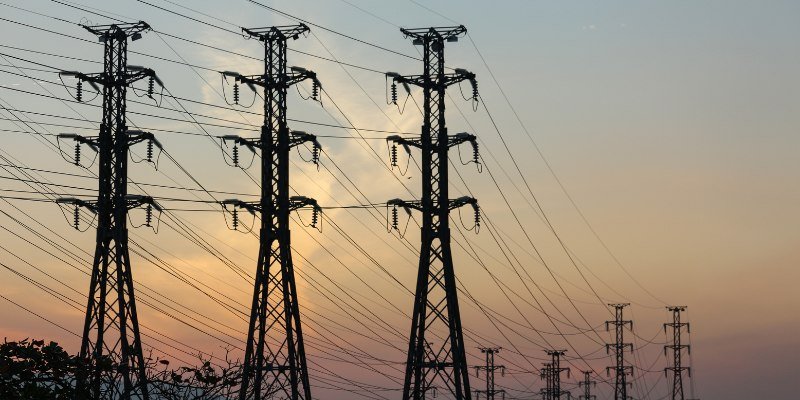

Think for a moment about what it means to live without reliable electricity, to depend on kerosene lamps that fill a room with toxic fumes, on diesel generators that consume money faster than they produce light, or on nothing at all once the sun goes down. For hundreds of millions of people across sub-Saharan Africa, that calculation has formed the pace of daily life for generations.
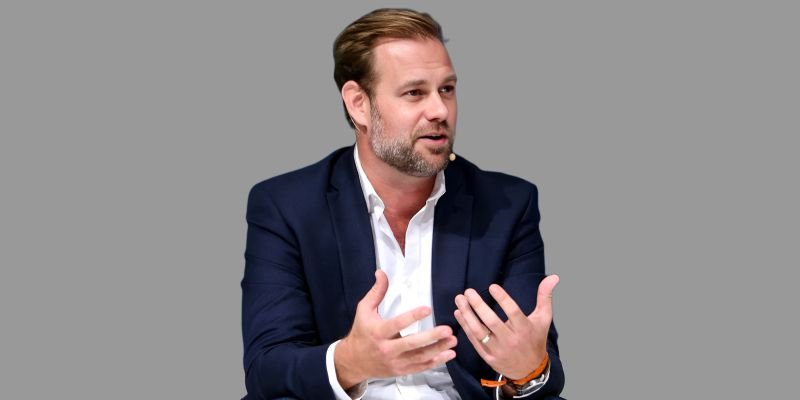
It is a challenge so vast that many assumed it would take decades of grid infrastructure investment to address. Jesse Moore looked at the same problem and saw something entirely different: an opportunity, a system waiting to be reimagined, and a business model powerful enough to change everything.
Moore is the co-founder and chief executive of M-KOPA Solar, one of the most celebrated solar energy startups in Africa and a company that has become synonymous with the pay-as-you-go revolution in distributed solar energy. Since its founding in Nairobi in 2011, M-KOPA has connected well over 750,000 homes across Kenya, Uganda, and Tanzania to affordable solar power, receiving more than 30 million customer micropayments per year.
The company has been ranked by Fortune Magazine as one of the Top 50 Companies Changing the World, placed on the MIT Technology Review 50 Smartest Companies list, and awarded the Zayed Future Energy Prize. These are extraordinary achievements for a business that, by Moore’s own admission, was never really intended to be an energy company at all.
The Electricity Gap
The scale of the problem Moore chose to confront is almost impossible to overstate. According to the World Bank, at the time M-KOPA was taking shape, only 23% of Kenyans had access to an electricity supply, whilst just 10.8% of Rwandans and 14.8% of Tanzanians could say the same.
Across sub-Saharan Africa more broadly, the energy gap has long represented one of the most acute barriers to economic development, with millions of low-income households relying on kerosene for light and cooking at enormous cost to both their finances and their health.
Moore has pointed out that with more than 20 million homes off the grid across the region, over three billion dollars was being spent annually on these inefficient and frequently dangerous energy substitutes. Solar power, he argued, represented a massive opportunity for entrepreneurs and investors alike, provided someone could find the right way to make it financially accessible.
It is worth pausing on what that figure means in human terms. A mother studying her accounts by the light of a kerosene flame. A child straining to read a school textbook as the wick flickers. A small trader unable to attract customers after dark. These were the everyday realities driving Moore’s thinking, and they gave his commercial ambitions a moral clarity that has defined M-KOPA’s culture ever since.
The Making of a Solar Entrepreneur
Moore grew up in Canada and first encountered the African continent in his early twenties, visiting Nairobi at a time when he found the city daunting and unfamiliar. Yet something in the experience lodged itself in him, and his professional life gradually oriented itself toward the developing world.
He spent years working with mobile network operators across Africa and Asia at the GSM Association, accumulating a detailed understanding of how mobile technology was quietly reshaping economic possibility for low-income communities.
He then pursued graduate studies as a Skoll Scholar at Oxford, where he met the two colleagues who would become his co-founders at M-KOPA. The Morehead-Cain Scholarship, which had first taken him overseas, is something Moore credits with unlocking the global perspective that ultimately led him to Kenya.
What crystallised during those Oxford years was a conviction that the mobile phone had already done something remarkable: it had given tens of millions of people in the developing world access to financial infrastructure for the first time, through services like M-Pesa in Kenya.
If mobile money could deliver financial inclusion at scale, Moore reasoned, it could equally serve as the foundation for a new kind of energy business, one that sold solar power the way a mobile operator sells data, in small, affordable increments that low-income customers could actually manage.
The Birth of a New Business Model
In 2010, Moore moved to Nairobi with what he later described as four PowerPoint slides, no money, no company name, and no products. By 2012, M-KOPA Solar was operational. The model the company developed was elegantly simple in conception, though complex in execution: a customer makes an initial deposit of around $30 and receives a solar home kit comprising a solar panel, mobile phone charging outlets, and a few ceiling lights.
The remaining balance of approximately $170 is paid off through mobile money micropayments spread over twelve months. Once the system is paid for, it belongs to the customer entirely.
The name itself tells the story. The word ‘kopa’ means ‘to borrow’ in Swahili, and the M stands for mobile, so the brand translates, quite literally, as ‘borrow solar through your mobile phone.’ Moore has always been candid about the fact that the company set out to build a mobile financing platform rather than an energy company.
Solar was, in his words, serendipitously the right product: it needed to be electrified so that payment behaviour could control access, and since customers often lacked reliable power, selling them power solved two problems simultaneously. The innovation lay at the intersection of technology, finance, and off-grid solar solutions, a combination that transformed the economics of energy access in Africa.
PAYING FOR LIGHT, ONE MESSAGE AT A TIME
The pay-as-you-go model M-KOPA pioneered for the African solar energy market is a study in meeting customers exactly where they are. For households spending a significant portion of their income on kerosene, the idea of a large upfront solar investment was unthinkable.
But a daily or weekly mobile payment, of the kind M-KOPA customers were already making for airtime, was entirely within reach. Moore has noted that long-term solar use saves M-KOPA customers an average of $50 and 63% month compared to kerosene expenditure, a figure that, for 36% of Kenyans, represents close to half a month’s salary. Over 4 years, a customer saves approximately $750. The business makes money; the customer makes considerably more.
It took M-KOPA two years to connect its first 100,000 homes, and just eight months to connect its second 100,000. That acceleration tells its own story. Word spread quickly through communities in Kenya, Uganda, and Tanzania that solar power, previously a luxury confined to wealthier urban households, had become genuinely affordable for rural off-grid families.
The company surpassed half a million households by 2017, and by early 2018, 500 new homes were being added to the network every single day. The distributed solar model Moore had built was scaling at a speed that few in the industry had thought possible.
IMPACT ON EVERYDAY LIVES
Behind every statistic lies a transformed daily experience. Homes that had relied on dim, smoke-filled kerosene lamps could now read, cook, and socialise after dark under clean electric light. Children’s study time increased measurably, according to surveys carried out by companies across the off-grid solar sector.
Traders attracted more customers to well-lit shops in the evening hours. Parents charged their mobile phones at home rather than paying for charging services in town. In communities where reliable electricity had been absent for generations, the arrival of solar power, delivered through a smartphone payment, represented a shift in quality of life that went far further than lighting alone.
Moore has spoken about data as being the number-one game-changer for quality of life in developing countries, making a point that many miss when they focus solely on the energy aspect of M-KOPA’s work.
For customers who had previously been invisible to banks, to governments, and to the formal economy, the payment records generated by regular mobile money transactions with M-KOPA were building a financial identity, creating the foundation for credit, insurance, and economic opportunity that had previously been entirely out of reach. Energy access, in Moore’s framing, was always a gateway to something larger.
A CONTINENT OF SOLAR ENTREPRENEURS
M-KOPA did not build Africa’s renewable energy revolution alone. Across the continent, a generation of solar entrepreneurs was arriving at similar conclusions through different routes. In Tanzania, ZOLA Electric, originally founded as Off-Grid Electric in 2012, was developing modular solar home systems for rural off-grid communities, using mobile money to sell solar-powered electricity as a daily service and growing rapidly to reach hundreds of thousands of households across Tanzania, Rwanda, Ghana, and Ivory Coast.
ZOLA Electric, which later attracted investment from major names including Tesla, GE Ventures, EDF, and Total, eventually expanded across ten countries and four continents, serving over 1.5 million people.
In Rwanda, companies like ARED were building solar-powered kiosks offering mobile phone charging and mobile money transfers in places the grid had never reached.
In Tanzania, Juabar operated networks of solar charging stations in rural areas. Each of these solar energy startups in Africa was attacking the same fundamental problem from a slightly different angle, collectively building an industry where none had existed before.
What united this new wave of renewable energy entrepreneurs in Africa was a shared recognition that the continent’s energy challenge was also a commercial opportunity of extraordinary scale, and that the tools to seize it, mobile money chief among them, were already in the hands of the people who needed the solution most.
THE PHILOSOPHY OF PURPOSE-DRIVEN LEADERSHIP
Moore’s approach to leadership is rooted in empathy, a word he uses deliberately and often. In interviews, he has described the importance of understanding the needs of every stakeholder in the business: customers who are trying to save money and improve their lives, staff members who want career growth and a sense of purpose, and investors who are backing a model with both commercial and social returns.
For Moore, this is not a soft or peripheral concern, it is the central discipline of leadership itself, the capacity to hold multiple perspectives simultaneously and make decisions that honour each of them.
He has spoken about the importance of building a business that actually has purpose because it helps its customers, arguing that focusing a company on genuinely helping people leads, in the long run, to success. This conviction shapes everything from M-KOPA’s product design to its hiring philosophy, and it has proven persuasive to some of the world’s most discerning capital allocators.
M-KOPA’s investors have included Generation Investment Management, the CDC Group, Standard Bank, and a roster of high-profile entrepreneurs including Virgin founder Sir Richard Branson, AOL founder Steve Case, and former Duke Energy chief executive Jim Rogers.
That combination, impact-first institutions alongside commercially motivated entrepreneurs, reflects the company’s unusual ability to speak credibly to both camps, a feat that requires not just a compelling story but a genuinely defensible business model underneath it.
Moore completed his MBA at Oxford rather than following a more conventional business school path, and he credits the experience with providing the environment in which his entrepreneurial vision could take shape. The Oxford setting, with its emphasis on rigorous debate and interdisciplinary thinking, appears to have reinforced rather than contradicted his instinct that good business and good values are more complementary than they are in tension.
His advice to aspiring leaders is characteristically direct: empathy matters more than technical expertise, purpose matters more than profit, and the most important preparation for leadership comes from doing it rather than studying it.
It is counsel that reflects the arc of his own career, built not on inherited advantage or a carefully plotted trajectory, but on a willingness to operate in difficult markets, take on problems others had abandoned, and trust that a business genuinely oriented around its customers would eventually find its footing.
THE FUTURE OF SOLAR ENERGY IN AFRICA
The off-grid solar solutions sector in Africa that Moore helped to build has matured considerably since the early days of M-KOPA. The pay-as-you-go model has spread across the continent and into Asia; technology has grown more sophisticated; battery storage has become more capable and more affordable; and the potential of distributed solar energy to provide community-level electrification, powering clinics, schools, and small businesses, not just individual households, has moved from aspiration to reality.
What began as a bold experiment in Kenya has evolved into a proven development framework, one that other entrepreneurs, investors, and policymakers now study and replicate.
Moore has written thoughtfully about the industry’s maturation, predicting that pay-as-you-go solar will surpass ten million customers globally and exceed a billion dollars in cumulative revenue, while also cautioning that consolidation lies ahead as the sector enters its second decade. Scale, he has argued, brings both opportunity and obligation.
As companies grow larger and investor expectations intensify, the risk is that the original mission, serving the poorest and most remote customers, becomes subordinated to the pursuit of margins and market share. Navigating that tension, between commercial sustainability and genuine social impact, is the defining challenge for the next generation of off-grid energy leaders.
The technology itself continues to advance in ways that would have seemed remarkable to the earliest M-KOPA customers. Smarter credit-scoring algorithms now assess eligibility with greater precision, reducing default risk while extending access to customers previously considered unbankable.
Solar home systems have expanded in capability, moving beyond basic lighting to power televisions, refrigerators, water pumps, and productive equipment that can anchor small enterprises.
Connectivity, through mobile data and increasingly through satellite, means that remote monitoring, predictive maintenance, and real-time customer support are no longer luxuries confined to urban markets.
What remains constant, amid all this evolution, is the core conviction that drove Moore to Nairobi with those four PowerPoint slides in 2010: that low-income families across Africa deserve access to clean, affordable, reliable energy, and that the most powerful way to deliver it is through a business model genuinely designed around their needs rather than imposed upon them from outside.
That conviction, pragmatic in its methods, yet deeply moral in its foundations, is ultimately what distinguishes the companies most likely to endure from those that mistake growth for purpose.
A LIGHT THAT SPREADS
Africa’s solar energy story is still being written. The continent’s energy access challenge remains vast, and the scale of what is still to be done dwarfs even the most impressive achievements of the past decade.
Yet the emergence of entrepreneurs like Jesse Moore, people who looked at one of the world’s great social and economic challenges and responded with creativity, rigour, and an unshakeable belief in the capacity of business to do good, represents something genuinely new in the history of African development.
Solar power is arriving in communities that the grid may never reach, carried not on pylons and cables but through mobile phones and modular panels and daily payments measured in cents. In home after home, in village after village, a light has come on that no one expected to see. That it arrived at all is, in no small measure, the work of people like Jesse Moore.