
How William Brent and Husk Power Systems are wiring the world’s forgotten communities, one solar mini-grid at a time.
The generator has been silent for three days. In the Nigerian village of Azara, in Nasarawa State, that silence is not peace, it is the familiar arithmetic of diesel scarcity: fuel costs too much, supply runs out, and darkness returns. Mothers do their accounts by candlelight. Students abandon their textbooks before nine. The health clinic’s refrigerator, needed to keep vaccines viable, runs warm.
Then, one Thursday morning, a crew arrives with mounting brackets, inverters, and coils of wire. Within days, a cluster of solar panels rises on a steel frame at the village edge. A control box, about the size of a large chest freezer and cooled by a quiet fan, sits in a concrete enclosure nearby.
By the following weekend, a small LED lamp flicks on above the clinic door, steady, reliable, drawing power from the sun through a battery bank that will carry the village through the night. The generator stays off. The vaccines stay cold.
This is not a pilot project or a philanthropic gesture. It is a commercial transaction: a micro-utility selling electricity by the kilowatt-hour to paying customers in a community that the national grid has never reached and, at current expansion rates, may not reach for another two decades. It is also the core premise of Husk Power Systems, and the daily work of advocates like William Brent who have spent careers building the case that decentralized renewable energy is not a stopgap measure. It is the answer.
The Energy Gap That Statistics Cannot Fully Capture
The numbers are large enough to lose their meaning. Roughly 600 million people across Sub-Saharan Africa still lack access to electricity, a figure that has proved stubbornly resistant to reduction despite years of policy effort and investment. Nigeria alone, Africa’s most populous nation, has approximately 90 million people living without reliable grid power. In Tanzania, Ethiopia, the Democratic Republic of Congo, and a dozen other countries, rural electrification rates remain in the single digits.
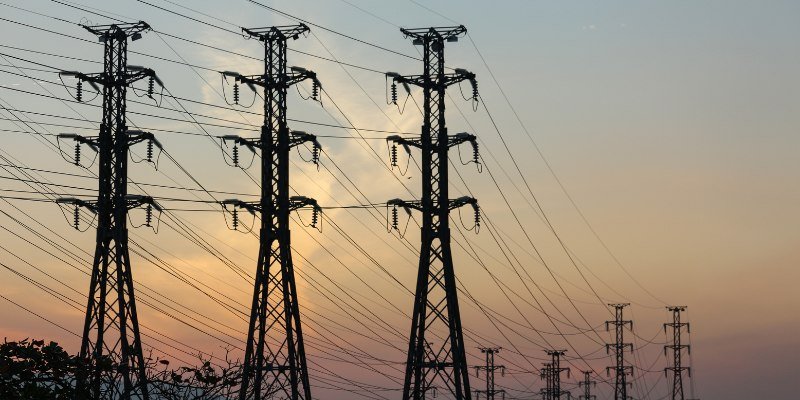
The traditional solution, extending the national grid, was always a slow, expensive undertaking. Stringing transmission lines across hundreds of kilometers of savanna, delta, and forested terrain costs millions of dollars per kilometer. Then there is the question of supply: many national grids in Sub-Saharan Africa are themselves chronically underpowered, their generation capacity falling far short of demand even in cities. Extending an unreliable grid to unserved communities is, as one energy economist put it, sharing the shortage.
Mini-grids, small-scale electricity networks serving clusters of between 50 and 1,000 customers, emerged over the past decade as a structurally different proposition. Rather than waiting for national infrastructure to arrive, they bring locally generated and locally managed power directly to communities. Modern solar hybrid mini-grids, pairing photovoltaic panels with lithium-ion batteries and a diesel backup for emergencies, can be deployed in weeks rather than years and serve a village for two decades or more.
“Extending an unreliable grid to unserved communities is sharing the shortage. Mini-grids change the equation entirely.”
The Communicator Who Became a Catalyst
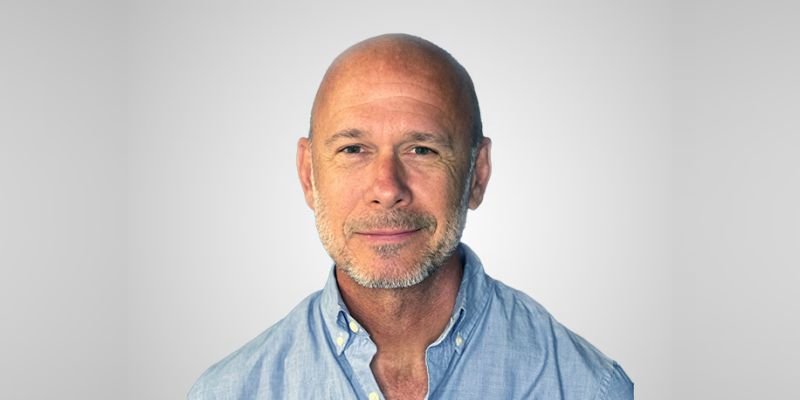
William Brent arrived in the clean energy sector by the route that has produced some of its most effective advocates: not as an engineer or a financier, but as someone who understood that the hardest problem in climate and energy work is often not technical. It is a narrative. Getting governments, investors, and communities to see decentralized renewable energy as a credible infrastructure solution, rather than a niche development experiment, requires the patient work of framing, storytelling, and relentless translation between technical experts and policy audiences.
Brent has operated in the thick of that translation work for years, developing expertise in climate communications and energy access advocacy within a global ecosystem that includes development finance institutions, impact investors, government agencies, and on-the-ground operators.
His association with Husk Power Systems placed him inside one of the sector’s most closely watched companies, a firm that is simultaneously a commercial enterprise, an infrastructure developer, and a demonstration project for what modern rural electrification can look like.
In a field prone to grandiose claims and underdeveloped delivery, Brent represents a particular kind of value: the practitioner who can distinguish between genuine systemic progress and what insiders sometimes call solar safari storytelling, the presentation of individual projects as proof of scalable transformation before the hard work of replication has actually been done. His contribution is holding the sector to rigorous account while simultaneously amplifying the evidence when that evidence genuinely exists.
Husk Power Systems: Engineering a Micro-Utility
Founded in 2008 initially around rice husk gasification in India, Husk Power Systems evolved into one of the world’s most sophisticated solar hybrid mini-grid operators. Its current model, refined over years of iteration across India and Nigeria, centers on a standardized, modular system architecture that allows rapid deployment while maintaining the operational reliability that paying commercial customers require.
A typical Husk mini-grid in rural Nigeria consists of a solar array sized to meet projected community demand, a battery storage system large enough to supply power through the night and on overcast days, a diesel backup generator for periods of extended low solar irradiance, and a network of smart meters connected to each customer premise.
The smart meters are not an accessory: they are the financial spine of the business model. They enable prepaid electricity tariffs, reduce losses from meter tampering, allow remote monitoring of system performance, and generate the consumption data that operators need to right-size future installations.
The company designs its systems not merely to light homes but to power productive use. Industrial-grade connections capable of supporting welding machines, grain mills, cold storage units, and water pumps are integral to the offering. This is a deliberate commercial philosophy: communities that can use electricity to run businesses generate higher and more stable revenue for the utility, which in turn supports the financial sustainability of the mini-grid without chronic subsidy dependence.
“The smart meter is not an accessory, it is the financial spine of the entire business model.”
When the Lights Stay On, Economies Wake Up
The transformation that reliable electricity enables in a previously unserved rural community tends to follow a recognizable sequence. In the first weeks, households gain lighting and the ability to charge mobile phones without traveling to the nearest town.
Within months, small enterprises begin to emerge or formalize: a tailor who can now work in the evenings, a phone repair shop, a small restaurant running a refrigerator and a television. Within a year, in communities where Husk has installed systems with productive-use capacity, more capital-intensive enterprises begin to appear.
In one community in Nasarawa State, a welding workshop that previously operated a few hours a day using an expensive rented generator switched to mini-grid power and extended its operating hours to twelve per day. The owner hired two additional apprentices within six months.
In another village, a woman running a small provisions store added a chest freezer, began selling cold drinks and ice, and tripled her revenue. A grain mill in a third community eliminated its dependency on diesel entirely, reducing its operating costs by roughly 60 percent.
These are not anomalies. Impact assessments across mini-grid deployments in Sub-Saharan Africa consistently show significant increases in evening economic activity, household income, and the number of operating enterprises within electrified communities within two to 3 years of connection.
The multiplier effect, electricity enabling economic activity that in turn generates demand for more services, creating local employment, is the theoretical foundation of rural electrification policy. Husk’s commercial model is designed to capture and reinforce it.
Scaling Across a Continent
Nigeria has become Husk Power’s primary proving ground for large-scale deployment. The country presents a challenging but strategically important set of conditions: a massive unserved population, a national grid that supplies on average fewer than twelve hours of electricity per day even to connected customers, a regulatory environment that has gradually become more accommodating to mini-grid operators, and a growing base of impact investors and development finance institutions looking for investable infrastructure assets.
Husk has targeted the deployment of hundreds of mini-grid systems across Nigeria, with ambitions to electrify millions of people across Nigeria and other markets including Tanzania. The company’s expansion strategy relies on a replicable site-assessment and deployment process that reduces the time from community identification to first power delivery, a critical variable in a sector where slow execution has undermined investor confidence in the past.
The broader argument for decentralized deployment is compelling. Research by the Rocky Mountain Institute and other energy analysts has estimated that mini-grids and standalone solar systems could electrify a larger share of Africa’s unserved population at lower total system cost than grid extension for communities below a certain population and economic density threshold, which describes the majority of unserved settlements. The economic case, once counterintuitive, has become mainstream.
Climate Capital Finds Its Way to the Last Mile
The confluence of climate finance commitments and energy access imperatives has created a moment of genuine opportunity for companies like Husk. Development Finance Institutions, including the International Finance Corporation, the African Development Bank’s Facility for Energy Inclusion, and bilateral institutions from the US, UK, and EU, have significantly increased allocations to off-grid renewable energy infrastructure over the past five years. Husk has drawn investment from multiple sources in this ecosystem, including the Shell Foundation and other impact-oriented investors.
The investment thesis has three overlapping components. First, mini-grids deliver measurable carbon abatement by displacing diesel generators, which currently supply a significant fraction of electricity in off-grid African communities and carry both financial and environmental costs. Second, they represent bankable infrastructure assets with predictable revenue streams from metered customers. Third, they generate the kind of verified development impact, electrification of schools, clinics, and enterprises, that satisfies the mandate of institutions whose capital carries both financial and social return requirements.
Advocates like Brent have played a sustained role in constructing and communicating this investment case, translating field-level data into the language of risk-adjusted returns, helping donors and development banks understand why the commercial mini-grid model deserves patient capital, and making the argument that energy access is not a charity proposition but an investable market with decades of demand ahead of it.
Energy as the Foundation of Everything Else
The long-term vision that animates people like William Brent and companies like Husk extends well beyond electricity provision. It is a vision of decentralized clean energy infrastructure as the enabling layer for rural development across a continent. Electricity access is not simply a quality-of-life improvement; it is the precondition for a cascade of other development outcomes that are otherwise structurally blocked.
In education, reliable lighting means children can study after dark and schools can operate computers and projectors. Across electrified communities in Nigeria, primary school enrollment and attendance rates have shown measurable improvement following mini-grid installation, a pattern replicated in studies from Tanzania and India.
In healthcare, cold chain reliability, the ability to store vaccines, blood samples, and temperature-sensitive medications, determines the quality of care that rural clinics can provide. A functional freezer powered by a solar mini-grid can be the difference between a community having access to routine immunization and going without.
For small business growth and local job creation, the evidence is increasingly robust. Economies that gain access to reliable electricity see formal business registration increase, nighttime commercial activity expand, and agricultural value chains, cold storage for produce, mechanized grain processing, refrigerated transport, become viable at smaller scales than grid-dependent models require. Each of these effects compounds over time, which is why economists studying rural electrification speak of electricity access not as an input but as a multiplier.
“Electricity access is not simply a quality-of-life improvement. It is the precondition for a cascade of other development outcomes that are otherwise structurally blocked.”
Redrawing the Energy Map
There is a particular kind of infrastructure optimism that has been earned rather than assumed, the confidence that comes from watching a model work in one place, then watching it work again somewhere else, then watching it work again with a different team and a different community under different conditions. That is the ground on which the case for decentralized renewable energy now stands.
William Brent and Husk Power Systems represent two aspects of what functional systems change requires: an operator that has built a replicable, financially sustainable model for delivering electricity to communities that markets and states have historically bypassed, and an advocate who understands that technology alone does not transform systems, narrative, policy, and capital flows do. The intersection of those two roles is where the future of rural electrification is being negotiated.
The global energy map is being redrawn, and it is being redrawn from the periphery inward. The communities that were always last, last to be considered, last to be connected, last to benefit from the economic growth that reliable power enables, are no longer waiting at the end of a grid extension queue. They are the market. They are the proof of concept. And in village after village across Nigeria and beyond, the lights are staying on.