
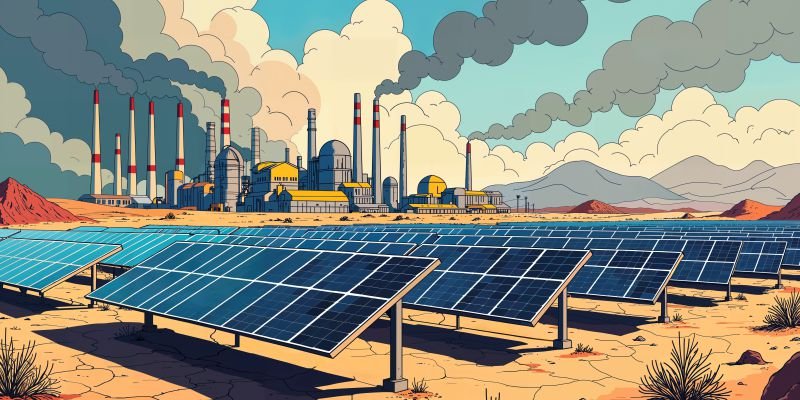
The Sahara is not a wasteland; it is a nuclear reactor. Every day, the African continent is bathed in enough solar radiation to power the entire planet several times over. According to the International Energy Agency (IEA), Africa possesses roughly 60% of the world’s best solar resources.
Yet, as night falls across the continent, a staggering 600 million people, about 43% of the total population, are left in the dark. While the rest of the world races toward a green transition, Africa, the most sun-drenched landmass on Earth, accounts for less than 1% of global installed solar capacity.
This is the great energy paradox of the 21st century. It is not a story of resource scarcity, nor is it a story of technological failure. Solar photovoltaic (PV) technology is the cheapest it has ever been, and in many African markets, it is significantly more cost-effective than coal or gas. The sunlight is free, the technology is proven, and the need is desperate.
If the resource is not the problem, what is? To answer that, we have to look past the shimmering heat of the desert and into the cold, clinical world of global finance, aging copper wires, and the friction of mid-level bureaucracy.
Ground Reality: The Numbers of Neglect
To understand the scale of the missed opportunity, one must look at the chasm between potential and investment.
- The Resource: Africa holds 60% of high-quality solar potential.
- The Investment: The continent attracts only 3% of global clean energy investment.
- The Gap: To achieve its energy and climate goals, Africa requires an estimated $190 billion per year between now and 2030. Currently, it receives a fraction of that, with the annual investment gap for clean energy hovering around $60 billion.
When $2.8 trillion was invested in renewable energy globally over the last decade, only $60 billion of that reached Africa. To put that in perspective, more solar capacity was installed in the Netherlands, a country famous for its grey skies, than in the entirety of Africa in several recent years.
This is a systemic strangulation of economic potential. In real terms, these numbers manifest as factories that cannot run 24/7, hospitals relying on flickering diesel generators, and children studying by the dim, toxic light of kerosene lamps.
Breaking the Myth: The Four Walls of the Energy Prison
The common narrative suggests that Africa lacks the “readiness” for solar. But a deeper diagnosis reveals a “system failure” designed by global financial structures and local infrastructure gaps.
A. The Cost of Capital: The “Africa Premium”
The biggest barrier to a solar panel in sub-Saharan Africa isn’t the sand or the heat; it’s the interest rate. Solar projects are “front-loaded,” they require massive capital expenditure (CAPEX) on day one, but have almost zero operating costs afterward. This makes them hypersensitive to the cost of borrowing.
In Europe or the US, a developer might borrow money at a 3% or 4% interest rate. In many African nations, that same developer faces rates of 15% to 25%. Investors perceive African projects as high-risk due to political instability or currency fluctuations, so they demand higher returns.
This “risk perception” creates a self-fulfilling prophecy: because the capital is expensive, the electricity becomes expensive, making the project less viable, which in turn proves it was “risky.”
B. Weak Grid Infrastructure: A Road with No Cars
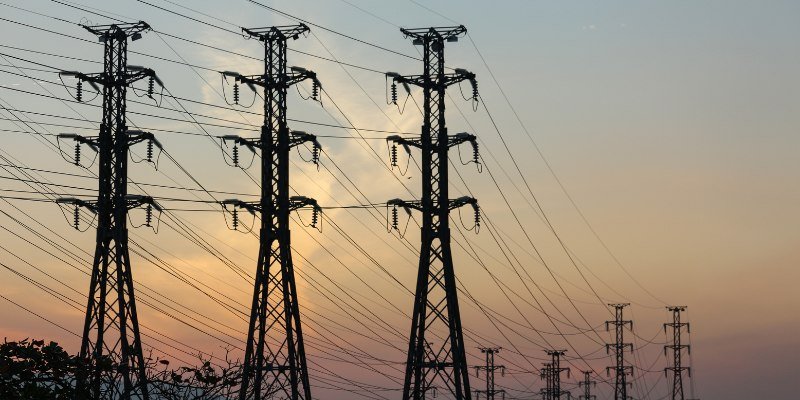
You can build the largest solar farm in the world, but if the “highway” to the city is a dirt path, the energy stays in the desert. Most African national grids were designed in the colonial era for centralized, fossil-fuel power. They are often “brittle,” unable to handle the variable, intermittent nature of solar power.
When a cloud passes over a massive solar array, the power drop can crash a weak grid. Integrating solar requires smart grids, battery storage, and reinforced transmission lines. Currently, many projects sit idle or are “curtailed” (turned off) because the grid simply cannot absorb the juice they produce.
C. Policy & Regulatory Friction
Capital is a coward; it goes where it feels safe. In many regions, the regulatory environment is a labyrinth. It can take 12 to 18 months just to get the necessary permits for a medium-sized solar project. Sudden changes in government policy, or the lack of a “single-window” clearance system, create a “policy fatigue” that drives developers to more predictable markets in Southeast Asia or Latin America.
D. The Manufacturing Vacuum
Africa remains a consumer, not a producer, of solar technology. Roughly 100% of high-end PV components are imported, mostly from China. This leaves projects vulnerable to global supply chain shocks and shipping costs. Without local manufacturing, the continent misses out on the secondary economic “win” of the green transition: job creation and industrial localization.
Case Snapshots: Success vs. Stagnation
To see what is possible, we look at the outliers who managed to break through the systemic barriers.
Morocco’s Noor Ouarzazate: The Desert Crown
Morocco didn’t wait for the system to fix itself. By creating a dedicated agency (MASEN) and utilizing “blended finance” (a mix of developmental grants and private loans), they built the Noor Ouarzazate Solar Complex. It is one of the largest concentrated solar power (CSP) plants in the world. Morocco proved that with high-level political will and clever de-risking of investments, massive scale is achievable.
Egypt’s Benban Solar Park: The Power of Regulation
Egypt’s Benban project succeeded because the government provided a clear, fixed “feed-in tariff” (a guaranteed price for the electricity produced). This gave international investors the certainty they needed. Today, Benban is visible from space and provides nearly 1.5 GW of power, proving that the “African risk” can be managed if the rules of the game are transparent.
The Contrast: Zambia and the Small-Scale Struggle
In contrast, projects in countries like Zambia or Burkina Faso often face “fragmentation.” They are too small to attract big institutional investors but too complex for local banks. These projects often stall not because they aren’t needed, but because the “transaction costs” of setting them up are nearly as high as the cost of the solar panels themselves.
The Investment Gap: Where is the Money?
Global climate finance is currently skewed toward the “safe” markets of the Global North. While leaders at COP summits talk about “climate justice,” the reality is that loans dominate over grants.
African nations are being asked to transition to green energy while already buried under debt. Asking a country with a 60% debt-to-GDP ratio to take out more USD-denominated loans to build solar farms is a recipe for a fiscal crisis. Furthermore, institutional investors (pension funds, insurance companies) avoid Africa because of credit ratings that many African leaders argue are unfairly biased.
The capital is there, trillions of dollars are sitting in ESG (Environmental, Social, and Governance) funds, but it is flowing where the risk is lowest, not where the impact (and the sunlight) is highest.
Signals of Momentum: The Groundswell
Despite the systemic headwinds, the tide is turning. This isn’t happening because the global financial system suddenly grew a conscience; it’s happening because the economics are becoming undeniable.
- Solar Imports: Imports of solar components to Africa have surged. In South Africa alone, businesses and households installed thousands of megawatts of rooftop solar in 2023-2024 to bypass a failing national utility.
- Off-Grid Innovation: The “Pay-as-you-go” (PAYG) solar model is revolutionizing rural electrification. By using mobile money, millions of Kenyans and Nigerians are buying small home solar systems that the grid never reached.
- Investment Spikes: We are seeing a shift from $2.6 billion in 2021 to a projected $40 billion by 2024-2025. It is a massive jump, yet still only a fraction of what is needed.
The growth is happening despite the system, driven by the sheer necessity of the African people and the relentless efficiency of the technology.
The Capital Gap: Decoding the “Africa Premium” in Solar Finance
To truly understand why a solar panel in the Sahara costs more than one in the cloudy Netherlands, we have to look at the Weighted Average Cost of Capital (WACC). This is the “interest rate” of a project, the combined cost of the debt and the profit margins demanded by investors.
In 2025–2026, the gap remains staggering. While the hardware (the panels themselves) is a global commodity with a uniform price, the cost of the money used to buy them varies by as much as 700% depending on where you stand.
The Cost of Solar Capital: Africa vs. Developed Markets (2025/26)
| Region / Market | Estimated WACC (Nominal) | Typical Debt Cost | Equity Return Expectation | Primary Risk Drivers |
| European Union (EU) | 3% – 5% | 2% – 4% | 6% – 8% | Low; stable policy & currency. |
| United States (US) | 4% – 6% | 3% – 5% | 7% – 10% | Low; high tax-equity availability. |
| North Africa (e.g., Morocco, Egypt) | 8% – 11% | 6% – 9% | 12% – 15% | Moderate; currency volatility. |
| Southern Africa (e.g., South Africa) | 10% – 14% | 9% – 12% | 15% – 18% | Grid stability; utility credit risk. |
| West & East Africa (e.g., Nigeria, Kenya) | 15% – 22% | 12% – 18% | 20% – 30% | High; inflation & lack of long-term debt. |
| Central Africa / LDCs | 25% + | 18% – 25% | 35% + | Extreme; political risk & small project scale. |
The Bigger Stakes: More Than Just Lights
The solar transition in Africa is not just an environmental goal; it is the prerequisite for the continent’s survival and growth.
- Industrialization: You cannot run a steel mill or a data center on a diesel generator. If Africa is to move from exporting raw materials to processing them, it needs massive, cheap, reliable power. Solar is the only way to do that without bankrupting the planet.
- Climate Justice: Africa contributes less than 4% of global greenhouse gas emissions, yet it is the continent most vulnerable to droughts, floods, and heatwaves. Providing solar is not just “aid,” it is a form of debt repayment from the industrialized world.
- Job Creation: The solar value chain, from installation to maintenance, is labor-intensive. A thriving African solar sector could provide millions of jobs for the world’s youngest workforce.
Reframing the Question
For decades, the question has been: “Can Africa afford to go solar?”
Given the falling costs of technology and the rising costs of climate disasters, the question has flipped. The real question is: “Can the world afford for Africa not to?”
If Africa is forced to follow the carbon-heavy development path of Europe and China because it couldn’t access green finance, the global climate goals are dead on arrival.
The sunlight is there. The land is there. The will of the people is there. The only thing missing is a global financial architecture that values human impact as much as it values quarterly risk-adjustments. Africa is not waiting for the sun to rise; it’s waiting for the world to stop blocking the light.
Key Takeaways
- The “3 to 7x” Multiplier: In many sub-Saharan markets, the cost of capital is 3 to 7 times higher than in the EU or US. This means that even if a project in Kenya has double the “sunlight yield” of a project in Germany, the Kenyan project can still end up being more expensive per kilowatt-hour because of the financing burden.
- The Debt Maturity Gap: In the US or EU, a developer can get a 20-year loan, matching the life of the solar panels. In many African nations, commercial banks rarely lend beyond 5-7 years. This forces developers to “pay back” the entire plant far too quickly, driving up the price of the electricity to unsustainable levels.
- Currency Strangling: Most solar components are priced in USD, but the electricity is sold in local currency (Naira, Shillings, Rand). If the local currency devalues by 20%, the project’s ability to pay back its USD debt evaporates. Investors “price in” this fear by demanding massive 25%+ returns.
- The Policy Penalty: The “Soft Costs,” permitting, legal fees, and regulatory delays, can account for up to 15% of total project costs in fragmented African markets, compared to less than 2% in streamlined European markets.