

There are moments in history when the ground shifts, when a single announcement signals not just investment, but a renegotiation of who gets to lead the world’s next chapter. Africa may be living through one of those moments right now.
In February 2026, at the Nairobi AI Forum held on the 9th and 10th of the month in Kenya, the African Development Bank Group (AfDB) and the United Nations Development Programme (UNDP) jointly unveiled the AI 10 Billion Initiative, a transformative continental drive to mobilize up to $10 billion by 2035 to accelerate responsible artificial intelligence adoption across Africa. The goal? Unlock up to 40 million new jobs and add an estimated $1 trillion to Africa’s GDP within a single decade.
This isn’t a vague pledge. It’s a co-designed, multi-stakeholder roadmap anchored in five critical enablers, data, compute, skills, trust, and capital, and backed by the governments of Kenya and Italy, the European Union, and a growing ecosystem of private sector partners. For a continent of 1.4 billion people, more than half of whom are under 25, this initiative arrives at precisely the right moment.
The State of Africa’s AI Landscape Before the Initiative
To understand what the AI 10 Billion Initiative means, you first have to understand what Africa was working with before it.
Africa’s digital economy has been growing fast, but unevenly. The continent’s digital economy expanded its share of GDP from just 1.1% in 2012 to an estimated 5.2% by end of 2025, with projections reaching 8.5% by 2050, according to data from FurtherAfrica. The Africa Digital Transformation Market is valued at $30.24 billion in 2025, expected to more than double to $63.31 billion by 2030.
But the infrastructure gaps are stark.
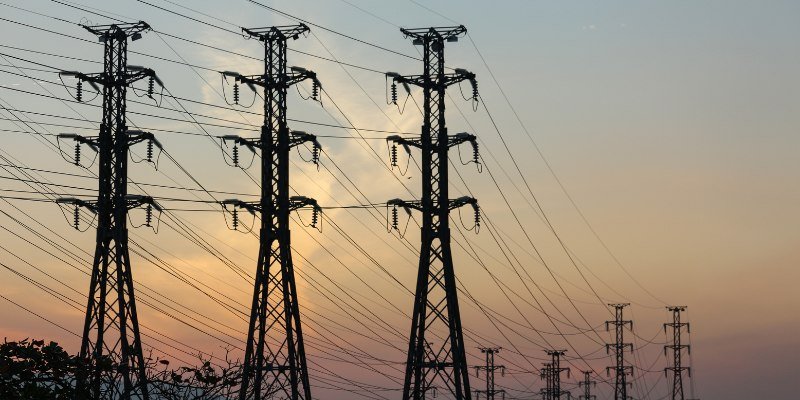
Africa currently hosts less than 1% of global data center capacity. The continent is estimated to need at least 700 data centers by 2030 just to meet projected digital demand. Only 37% of Africa’s population was online in 2023, compared to a global average of 67%. Electricity access remains the single most critical barrier to AI adoption, with a severity score of 9.2 out of 10 across 45 African countries, according to AI adoption analysis by Neuravox Journal.
Still, momentum was already building. South Africa leads continental AI readiness with an adoption rate of 21.1% as of late 2025. Nigeria, which aims to capture 43% of the continent’s projected $136 billion in AI-driven productivity gains by 2030, had an AI diffusion rate of 9.3%. Kenya launched its National Artificial Intelligence Strategy (2025–2030) in March 2025. Egypt unveiled a second edition of its National AI Strategy, covering governance, talent, and international cooperation through 2030.
The pieces were moving into place. What was missing was scale, coordination, and committed capital. That’s what the Nairobi AI Forum set out to change.
What is the AI 10 Billion Initiative – and Who Is Behind It?
The AI 10 Billion Initiative is a co-designed partnership between the AfDB, UNDP, and private sector actors. It is not a single fund, it is a phased capital mobilization architecture designed to channel resources across the full ecosystem of AI development in Africa.
According to the AfDB and UNDP’s announcement, investments will be deployed across five areas:
- AI entrepreneurship – supporting startups from proof-of-concept through to equity and debt financing
- Regional data infrastructure – building interoperable data ecosystems and regional data embassies
- Compute capacity – expanding GPU and cloud access so African developers aren’t dependent on foreign platforms
- Policy and governance frameworks – developing ethical, locally-grounded AI regulation
- Skills and workforce development – upskilling youth and women for an AI-powered economy
The initiative is guided by a June 2025 AfDB report, Africa’s AI Productivity Gain: Pathways to Labour Efficiency, Economic Growth and Inclusive Transformation, which lays out a three-phase roadmap toward AI readiness. The high-level panel at the Forum featured representatives from the governments of Italy and Kenya, the European Union, and the AfDB and UNDP – signaling broad international political will.
Nicholas Williams, AfDB’s ICT Operations Division Manager, captured the urgency clearly: “The AI 10 Billion Initiative paves the way for expanded partnerships and sustained investment that will accelerate AI entrepreneurship, strengthen data and infrastructure ecosystems, and support inclusive growth across the continent.”
Jean-Luc Stalon, UNDP Resident Representative in Kenya, framed the initiative as a pivot toward private-sector-driven AI partnerships designed specifically to create jobs and improve livelihoods in communities most at risk of being left behind.
To build momentum, the AfDB will conduct a continent-wide roadshow over the next ten months, engaging governments, investors, and innovators to formalize commitments.
The Five Pillars of AI Readiness in Africa
Transforming Africa’s AI potential into reality depends on getting the foundations right. The AfDB framework identifies five interlocking enablers that must all advance in concert.
1. Data: The Fuel for AI Systems
Without clean, accessible, locally relevant data, AI systems cannot function effectively. Africa’s data ecosystems face fragmentation, limited interoperability, and underinvestment in public datasets. The initiative aims to establish regional data embassies, shared infrastructure where countries can pool and govern data collaboratively, reducing dependency on external cloud providers.
2. Compute: Access to the Hardware of Intelligence
AI training and deployment require substantial computing power – GPUs, cloud infrastructure, and energy to run them. Africa’s data center shortage is acute. Addressing this, the Nairobi AI Forum announced 1.5 million GPU hours for 130 innovators across Africa through a partnership between the AI Hub for Sustainable Development and Cineca, aligned with Italy’s Mattei Plan for Africa.
3. Skills: The Human Capital Imperative
Africa’s greatest competitive advantage is its people. With a median age of just 19, the continent has the largest and youngest potential technology workforce on Earth. But skills gaps are real. Nigeria’s 3 Million Technical Talent (3MTT) programme – backed by a nearly $2 billion pledge from MTN – has already trained 90,000 Nigerians at ICT schools. Microsoft’s AI Skills Week in Lagos in December 2025 drew 235,000 participants and issued 1,700 AI certifications in a single event. These numbers are striking. They suggest the demand is already there – it just needs to be organized and financed.
4. Trust: Governance and Ethical Foundations
Africa must not simply absorb AI models built elsewhere with foreign data and foreign assumptions. A central theme of the Nairobi Forum was digital sovereignty, the right and capacity of African nations to shape, develop, and govern their own AI technologies. Seven African countries have developed national AI policies, with Rwanda’s passing into legislation in 2023. Ghana, Tunisia, Morocco, and Egypt have established comprehensive strategies. The initiative aims to accelerate policy frameworks that are both ethically grounded and fit for African contexts.
5. Capital: Turning Ambition into Infrastructure
$10 billion over a decade. That’s the headline number – but the real story is how it’s structured. The initiative blends equity financing, debt instruments, and development capital to de-risk early-stage AI ventures, fund infrastructure, and support policy implementation across 54 countries with vastly different starting points.
Inclusive Innovation: Why It Must Reach Youth, Women, and Rural Communities
The risk with any large-scale technology initiative is that the benefits pool at the top, flowing to cities, to educated elites, to those already connected. Africa has lived through development programs that promised transformation and delivered fragmentation. The AI 10 Billion Initiative has explicitly sought to design against that pattern.
The initiative targets the creation of 40 million new jobs, but the quality, location, and accessibility of those jobs matters enormously. According to the AfDB’s announcement, it specifically commits to “creating jobs for youth and women” as a primary outcome, not an afterthought.
The Harmonic Africa Startup Acceleration Programme, announced at the Forum by the Harmonic Innovation Group in partnership with the AI Hub, is designed to equip high-growth African AI startups with capital, technical assistance, and market access, with a priority focus on agriculture, health, education, and energy. These are not abstract sectors. They are the daily reality of hundreds of millions of Africans who farm, seek healthcare, send children to school, and manage households without reliable power.
Mustapha Zaidan, CEO of Chestify AI Labs, an AI health startup working with rural and community health clinics, put it plainly: “We are ready to scale our services to rural and community-based health clinics that form the backbone of Africa’s health ecosystem.”
That sentence should be understood as a policy agenda, not just a business pitch. Africa’s AI revolution must reach the health clinic before it reaches the boardroom if it is to mean anything lasting.
Case Studies: Where African AI Innovation Is Already Taking Root
Kenya: M-Pesa to AI Hub
Kenya’s innovation story begins with mobile money. M-Pesa, now serving more than 40 million users and expanding regionally, built a culture of digital adoption that has made Kenya East Africa’s primary ICT hub. Safaricom, which surpassed 50 million customers in 2025, launched a dedicated AI/Machine Learning initiative to deploy generative AI tools for customer experience and data analytics. Nairobi’s designation as the continent’s premier tech and financial hub, backed by the Nairobi International Financial Centre, provides capital structuring support and regulatory certainty that makes it easier for AI startups to form, raise, and scale.
Nigeria: Scale Through Skills
Lagos was ranked the world’s fastest-growing tech ecosystem in the 2025 Global Tech Ecosystem Index. Nigeria’s tech ecosystem hosts unicorns, fintech giants like Flutterwave (processing 500,000+ daily transactions for over 1 million businesses), and grassroots AI talent development at unprecedented scale. The 3MTT initiative’s goal of 3 million technically trained Nigerians by 2030 represents one of the largest skills programs in the developing world.
Ethiopia: Digital Ethiopia 2030
Launched on December 20, 2025, Digital Ethiopia 2030 (DE2030) is Ethiopia’s five-year national digital blueprint, covering AI, cybersecurity, digital infrastructure, and inclusive digital services. Prime Minister Abiy Ahmed framed it as a means to “strengthen trust between citizens and institutions.” Broadband penetration has already risen from below 20% in 2020 to nearly 45% by 2025. Data centers are being built in Adama, Hawassa, and Bahir Dar. With cumulative public-private investment commitments exceeding $4 billion by 2025 and the country identified as the fastest-improving in continental digital rankings, Ethiopia is emerging as a Horn of Africa digital anchor.
Rwanda: Governance as Competitive Advantage
Rwanda’s National AI Policy, enacted into law in 2023, gives it a regulatory edge that many larger economies lack. Zipline’s drone delivery network, developed in Rwanda, slashed medical supply delivery times to remote clinics and reduced blood wastage by two-thirds, a vivid demonstration of what AI and autonomous technology can do in resource-limited settings. Rwanda exemplifies how governance, not just infrastructure, is a source of competitive advantage in the AI era.
Morocco: The Northern Gateway
Morocco’s Digital Morocco 2030 strategy, launched in September 2020, positions the country as North Africa’s digital hub. Morocco consistently ranks first on the Andersen GeoTech Index of African digital readiness. Its early investment in AI governance, infrastructure, and open data systems makes it a natural gateway for European and Middle Eastern AI partnerships flowing into the continent.
Economic Impact: Jobs, GDP, and Sector Transformation
The numbers attached to Africa’s $10 billion AI push are extraordinary, but are they credible?
The AfDB projects that strategic AI adoption could unlock up to $1 trillion in additional GDP for Africa by 2035. McKinsey analysis supports this magnitude, projecting that generative AI alone could deliver up to $103 billion in annual economic value across Africa’s retail, telecommunications, and banking sectors. Conservative estimates from multiple forecasters place the total AI contribution at $1.2–1.5 trillion across the continent.
The 40 million new jobs target represents a plausible, if ambitious, scenario, particularly if AI creates demand for skilled labor in sectors that are already large:
Agriculture accounts for roughly 60% of African employment. AI applications in crop monitoring, yield prediction, and climate adaptation are already deployed in Ghana, Nigeria, and Senegal. A new Kenya-Italy partnership announced at the Forum will build national-scale geospatial data for agriculture, improving crop mapping and early climate risk detection for smallholder farmers.
Healthcare is chronically understaffed across the continent. AI diagnostic tools, from Nigeria’s Ubenwa platform using machine learning for birth asphyxia detection to South Africa’s diabetic retinopathy systems, can extend the reach of limited clinical capacity dramatically. Chestify AI’s chest scan analysis technology, scaling to rural clinics, could change diagnostic outcomes for millions.
Finance is already being transformed. Mobile money, AI-powered credit scoring, and fraud prevention systems have expanded financial access to previously unbanked populations. Fintech solutions like Moniepoint are transforming payments at scale.
Education, where AI-powered tutoring, language translation, and adaptive learning tools can reach students in 54 countries across hundreds of languages, may be the sleeper sector of the initiative.
Challenges and Risks: What Could Go Wrong
No honest assessment of Africa’s $10 billion AI push can ignore the risks.
- Infrastructure gaps are severe. Africa’s electricity challenge is not a minor hurdle, it is a fundamental constraint. With 85% of sub-Saharan Africa still lacking reliable electricity access and data center capacity at less than 1% of global share, building AI infrastructure requires solving energy at the same time. These are parallel tracks, not sequential ones.
- Uneven access threatens to widen inequality. The countries and cities already ahead, Nairobi, Lagos, Johannesburg, Cairo, will naturally attract the most capital and talent. Without deliberate policy intervention, the $10 billion initiative risks deepening the digital divide between capitals and rural communities, between connected populations and the hundreds of millions still offline.
- Policy barriers and regulatory fragmentation across 54 sovereign nations create friction for continental AI deployment. Data protection laws, cross-border data flows, and AI governance frameworks are at vastly different stages of maturity. The initiative’s policy support component must be matched by genuine political will to harmonize regulation, a challenge that has stymied previous Pan-African initiatives.
- Digital dependency risks are real. Africa must be a creator of AI, not merely a consumer of systems built with foreign data, for foreign contexts, by foreign interests. The emphasis on AI sovereignty at the Nairobi Forum reflects awareness of this risk. But translating that awareness into locally-built models and locally-governed platforms takes time, funding, and talent that must be cultivated deliberately.
- The funding gap is also worth naming honestly. $10 billion mobilized over a decade, spread across 54 countries, amounts to roughly $185 million per country, far less than what leading AI economies invest in a single year. The initiative will need to be catalytic rather than comprehensive: seeding ecosystems that attract multiples of private capital in return.
Conclusion
Africa’s $10 billion AI push is not just about technology. It is about who shapes the world’s digital future, and whether the continent that will be home to one-quarter of humanity by 2050 will be a producer or a consumer of the intelligence systems that define that future.
The AI 10 Billion Initiative, launched at the Nairobi AI Forum in February 2026, is the most significant coordinated commitment to African AI development in history. It addresses the right problems, infrastructure, skills, governance, capital, and inclusion, with an architecture designed to catalyze private investment rather than substitute for it.
The projections are bold: $1 trillion in additional GDP, 40 million new jobs, a continent repositioned as a global AI innovation hub. The risks are real: infrastructure gaps, uneven access, regulatory fragmentation, and the ever-present danger that development flows to those already ahead.
But the momentum is real too. The engineers building AI diagnostics in Lagos. The farmers using satellite data in Kenya. The students learning to code in Addis Ababa. The policymakers in Kigali creating governance frameworks sophisticated enough to attract global capital. They are not waiting for permission. They are building.
The $10 billion is not Africa’s ceiling. It is its starting line.