
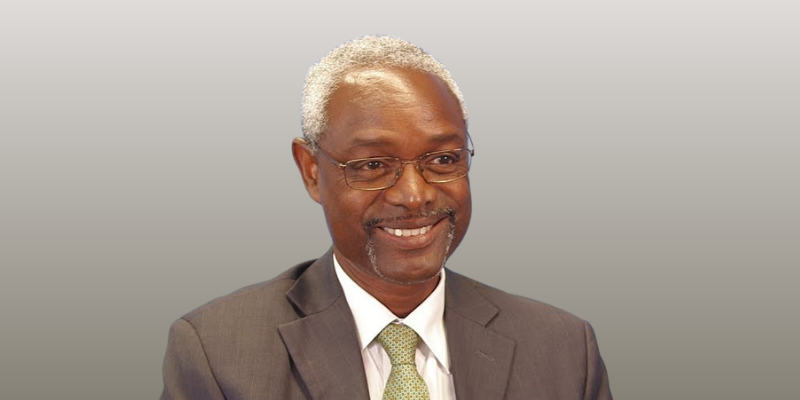
For decades, climate conversations were dominated by carbon numbers, energy transitions, and emission targets. Land degradation sat on the sidelines, treated as a specialist issue rather than a global priority. Ibrahim Thiaw changed that.
An environmental expert and one of the most respected voices in climate governance, Thiaw has spent more than forty years pushing land restoration and resilience into the center of international policy and investment thinking. By the time he завершed his tenure at the UN Convention to Combat Desertification (UNCCD) in mid-2025, land restoration had moved from being viewed as a niche environmental concern to being recognized as a pillar of climate action, biodiversity protection, and economic stability.
This shift has been one of the most consequential policy transformations in modern climate leadership. It has redefined what the world considers a serious climate solution.
A Career Built in the Field and Proven in Global Institutions
Thiaw’s credibility comes from the rare combination of technical grounding and institutional leadership. Trained in forestry techniques, he built his early career in Africa, working close to the landscapes and communities most exposed to drought, land loss, and fragile agricultural systems.
From there, he moved into senior roles within the UN system, including leadership positions at the UN Environment Programme. He later served as Special Adviser to the UN Secretary-General for the Sahel, one of the world’s most climate-stressed and geopolitically sensitive regions.
These experiences shaped his core leadership advantage: he understands that climate risk is never only about the environment. It shapes economies, migration patterns, political stability, and national security.
In 2019, he stepped into the role of Under-Secretary-General and Executive Secretary of the UNCCD. Under his leadership, the organization gained sharper relevance, stronger urgency, and broader influence in global decision rooms.
Reframing Land Degradation as a Global Economic Risk
Thiaw’s defining achievement has been reframing land degradation into an issue that finance ministers, heads of state, and investors could no longer ignore.
When land degrades, economies feel it first through food supply instability, rising commodity prices, reduced productivity, and increased vulnerability of rural livelihoods. Over time, the impact expands into healthcare pressures, cross-border displacement, conflict risk, and weakened state capacity.
Thiaw consistently connected the dots in a way that made land restoration a strategic issue, not a humanitarian afterthought. His argument was simple and powerful: land is infrastructure.
Healthy land supports food systems. It stabilises communities. It protects biodiversity. It reduces vulnerability to drought and flooding. It improves long-term productivity. It strengthens economic resilience.
Restoring 40% of Degraded Land: A Global Target With Measurable Returns
Under Thiaw’s stewardship, UNCCD championed pathways for countries to restore the 40% of land worldwide that has been degraded. This goal carried massive implications, both in the scale of impact and in the opportunity for returns.
Restoration is often misunderstood as slow and expensive. Thiaw challenged that narrative repeatedly. He emphasized that restoration is inexpensive, creates jobs, and enables communities to strengthen food security.
In business terms, it is one of the rare interventions that delivers multiple benefits at once:
- It boosts agricultural output and rural income
- It creates employment through restoration work and land management
- It reduces disaster recovery costs tied to drought and land loss
- It supports biodiversity recovery, which strengthens ecosystem stability
- It improves long-term national resilience against climate shocks
This is why land restoration has evolved into a cross-sector investment theme rather than an environmental donation category.
A Security Issue in the Sahel and Beyond
Thiaw has also been relentless in elevating the human reality behind land loss, especially across the Sahel.
Drought, desertification, and soil degradation can push communities into survival cycles. Livelihoods shrink. Competition over resources intensifies. People move. Tensions rise. Fragility spreads across borders.
As a global speaker, Thiaw consistently demonstrated how land degradation fuels displacement, food insecurity, and conflict. His framing offered policymakers a more honest understanding of instability: climate stress is a multiplier.
When land collapses, social order becomes harder to maintain. Economic pathways narrow. Extremism becomes easier to recruit for. States face rising pressure with fewer tools to respond.
By naming these patterns clearly, Thiaw pushed land restoration into security conversations that once focused only on military or political solutions.
A New Climate Language: Practical, Investable, and Human
One reason Thiaw’s leadership resonated is the way he spoke about solutions. His voice carried urgency without panic. It also carried clarity without jargon.
He treated land restoration as a practical lever. Something that countries can implement now, at scale, with measurable outcomes.
This approach strengthened UNCCD’s relevance in global forums. It also helped bring land into mainstream climate planning, alongside energy, transport, and industrial policy.
In short, Thiaw helped turn land restoration into an investable climate solution. One that policymakers can justify. One that communities can feel. One that economies can benefit from.
The Legacy: A Permanent Shift in Global Climate Strategy
By mid-2025, as Thiaw concluded his tenure at UNCCD, the policy landscape had changed in a way that will be difficult to reverse.
Land restoration is now widely seen as a vital solution for:
- climate mitigation
- biodiversity recovery
- food system resilience
- job creation and economic productivity
- long-term stability in climate-exposed regions
That legacy is significant because global climate agendas often move in cycles. Issues rise, fade, and return. Thiaw ensured land restoration moved into the category of permanent priorities.
He achieved this through persistence, credibility, and a strategic ability to translate environmental science into national interest.
Why Business Leaders Should Pay Attention
Executives and investors often focus on climate through energy costs, supply chain disruption, and regulatory shifts. Thiaw’s work highlights an equally powerful reality: land is a balance-sheet issue.
Land degradation affects raw material reliability, food prices, logistics stability, and labor markets. Restoration strengthens long-term resilience and reduces volatility in regions that matter for future growth.
What Thiaw delivered was not only a policy shift. He delivered a reframing of risk, showing the world that land is one of the strongest defenses against climate instability.
A Leader Who Made Land Impossible to Ignore
Ibrahim Thiaw’s four-decade career proves that strategic influence comes from choosing the right battle early and staying with it long enough to win.
He took a topic once treated as secondary and elevated it into a central pillar of global climate governance. He made restoration credible, urgent, and economically compelling.
In the new climate era, where resilience matters as much as reduction, Thiaw’s message has become the world’s new consensus: restoring land is restoring stability.