
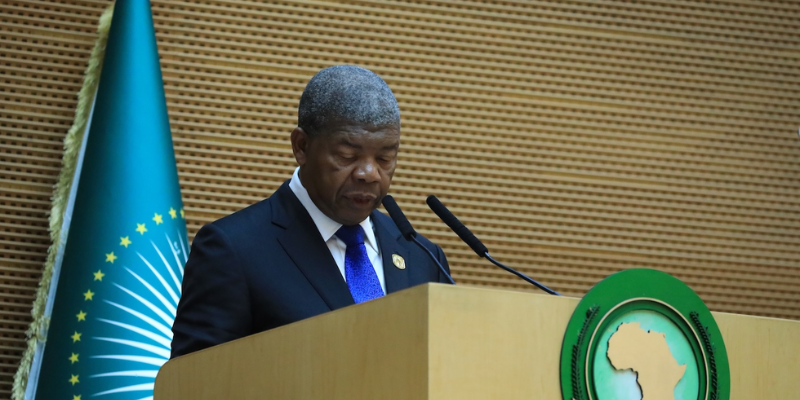
This year has positioned Angola’s President João Lourenço as one of the most consequential leaders shaping Africa’s direction. Serving as Chair of the African Union, he has ensured Angola stands at the heart of major continental conversations, restoring the country’s role as a serious diplomatic and economic force.
The timing has carried symbolism and strategic weight. Angola’s 50th year of independence has arrived alongside a renewed national presence on Africa’s biggest political platform. Lourenço has used that overlap to elevate national pride while pushing a broader message: Africa’s future will be built through stability, self-belief, and stronger economic cooperation between states.
His approach has been measured, yet highly deliberate. Rather than leading through spectacle, Lourenço has leaned into consistency, convening power, and long-range projects that change how Africa moves, trades, and retains value.
Repositioning Angola as a Strategic African Player
Angola has often been viewed through the lens of resources and post-war rebuilding. Under Lourenço’s watch, the narrative is shifting toward influence and execution.
As AU Chair, he has hosted key events and anchored discussions that matter to Africa’s growth agenda. Peace, energy security, and industrial cooperation have moved up the list, reflecting priorities that are both urgent and commercially meaningful.
This year, Angola has looked less like a country observing regional shifts and more like one helping shape them.
Lourenço’s leadership has brought Angola into rooms where the future of African supply chains, security frameworks, and investment partnerships are being defined. In a continent where leadership is often measured by delivery, that visibility matters.
A Continental Agenda Built Around Peace and Productivity
Lourenço has shown an understanding that Africa’s growth story depends on one basic principle: stability enables scale.
He has convened leaders around peacebuilding and regional security, while also reinforcing an agenda that connects diplomacy with economics. The message has been clear: peace and productivity belong in the same conversation.
His efforts have extended into complex regional environments, including mediation around the Great Lakes region, where diplomacy demands patience, credibility, and a steady hand. Lourenço’s style has been quiet yet assertive, strengthening his image as a leader who can operate in high-pressure negotiations without needing to amplify the conflict to gain influence.
That approach builds trust across borders, and trust remains one of Africa’s strongest currencies for long-term cooperation.
Keeping More African Wealth Under African Ownership
Beyond summits and statements, Angola has also taken bold steps economically, signalling a sharper continental confidence around ownership and value retention.
One of the strongest indicators has been Angola’s reported exploration of a potential purchase of Anglo American’s stake in De Beers. If pursued and executed, such a move would carry significance beyond the diamond industry itself.
Diamonds represent one of Africa’s most valuable natural resources, and for decades, large portions of that wealth have flowed outward through external ownership structures. A shift toward African ownership strengthens the continent’s ability to retain more value, influence pricing leverage, and shape how resources contribute to national development.
This is economic diplomacy in action: protecting strategic assets while signalling seriousness to global markets.
The Lobito Corridor: A $6 Billion Blueprint for Africa’s Future Infrastructure
If Lourenço’s AU leadership has defined the politics of the year, the Lobito Corridor has defined the economics.
The $6 billion, US-backed road-and-rail project has become one of the most discussed infrastructure efforts on the continent. Linking Angola’s Atlantic port of Lobito to Zambia, the corridor has been positioned as a regional game-changer, offering faster and smoother transit for raw materials and industrial inputs.
What makes the Lobito Corridor stand out is its multi-layered value.
It strengthens logistics across borders, improves export efficiency, and opens new pathways for regional trade integration. It also shifts the infrastructure conversation away from isolated national projects and toward cross-border systems designed for scale.
For investors and policymakers, the corridor represents more than transport. It is a model for how Africa can structure future public-private partnerships with clear strategic intent, improved accountability, and long-term commercial relevance.
It is also the kind of project that reshapes regional competitiveness. When movement becomes easier, investment becomes more attractive. When transit becomes reliable, supply chains become stronger. When corridors connect economies, industries expand.
This is how regional growth gets built.
Diplomacy Without Noise, Influence With Results
Lourenço’s leadership style has remained consistent throughout the year: calm, firm, and execution-driven.
Whether chairing AU summits, hosting major continental events, or operating in complex peace discussions, he has avoided unnecessary showmanship. Instead, he has leaned into strategic influence, steady positioning, and the ability to bring leaders into alignment around shared outcomes.
That kind of diplomacy tends to age well. It delivers credibility. It reduces friction. It creates room for trade, cooperation, and long-term agreements.
And at a time when global partnerships demand more negotiation, more alignment, and sharper economic strategy, this approach has strengthened Angola’s standing across multiple fronts.
The Signal Africa Is Sending Through Lourenço
João Lourenço’s leadership this year reflects a broader shift in Africa’s mindset.
Africa is moving toward a future where it finances more of its own priorities, safeguards more of its own resources, and defines its own economic lanes with greater confidence. This is a continent becoming more assertive about ownership, more focused on industrial outcomes, and more determined to build systems that endure.
As AU Chair, Lourenço has played a central role in that story, linking continental ambition to tangible projects and real economic choices.
Angola’s return to the centre is strategic. The leadership behind it has been calculated.
And the momentum suggests this year may be remembered as the moment Angola stopped being viewed as a participant in Africa’s transformation, and began being recognized as one of its drivers.