
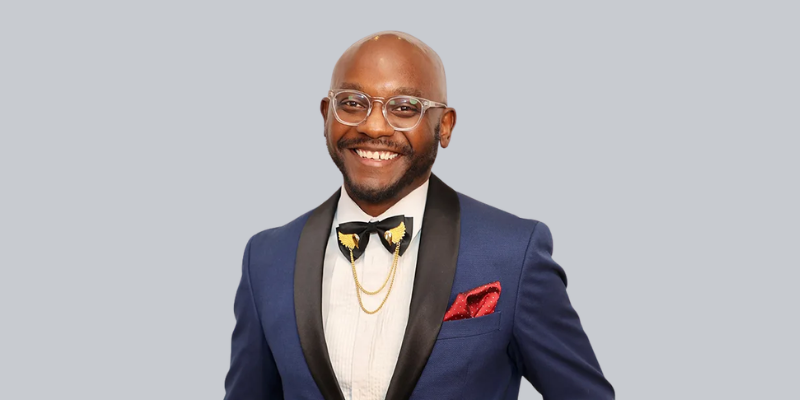
Dr. Serufusa Sekidde does not speak about artificial intelligence like it is a buzzword. He speaks about it like it is a turning point. The kind that can decide whether healthcare across Africa remains reactive and overstretched, or becomes smarter, faster, and more connected.
Today, as Chief of Staff to the CEO at ViiV Healthcare, Dr. Sekidde sits at the intersection of leadership, public health strategy, and innovation. But his conviction around healthcare transformation did not begin inside boardrooms. It began with lived experience across Uganda, Kenya, and South Sudan, where he saw the same challenge repeat itself in different forms: patients arriving late, systems moving slowly, and healthcare workers doing their best with limited support.
His career has placed him close to the realities on the ground, and it is that proximity that makes his perspective compelling. Dr. Sekidde’s message is clear: Africa does not lack talent or urgency. It lacks strong healthcare infrastructure that can scale with population growth, rising disease burden, and increasing expectations from patients who deserve better.
Why AI Is Not the Future, It Is the Missing Support System
From a business lens, healthcare systems fail when they cannot operate at scale. In many African settings, scale is where things break down. Clinics may handle daily walk-ins, but continuity becomes fragile: missed follow-ups, delayed lab results, incomplete medical history, and poor coordination between facilities.
Dr. Sekidde believes AI can strengthen the weak links in this chain.
Not by replacing doctors or nurses. Not by turning healthcare into a cold automated pipeline. But by acting as a decision-support partner that helps overstretched teams maintain quality, consistency, and speed.
He positions AI as a force multiplier for clinical care, particularly where healthcare workers face overwhelming demand, limited time, and gaps in access to specialists. It is about enabling faster decision-making, improving patient engagement, and ensuring people are supported beyond the first consultation.
Start with the Foundation: Data Is the Real Infrastructure
Dr. Sekidde is direct about one uncomfortable truth: AI is only as good as the data feeding it.
Many healthcare facilities across Africa still operate with fragmented systems. Patient information is often incomplete, handwritten, or trapped in disconnected databases. Even when digital tools exist, they may not communicate with each other. And when records do not move with the patient, care becomes repetitive, expensive, and error-prone.
Dr. Sekidde frames this as the first big unlock.
If African healthcare wants AI to work, it needs better data quality and connectivity. Not for the sake of technology, but for the basic promise of healthcare: knowing what happened yesterday so the patient can be treated better today.
From a growth strategy viewpoint, digitised and connected health records also help leaders plan resources, forecast trends, and respond faster to outbreaks or chronic disease patterns. This is how healthcare becomes both more humane and more efficient.
Practical AI That Works in African Clinics, Not Just in Labs
What makes Dr Sekidde’s vision realistic is that it is rooted in daily workflow.
He talks about AI supporting tasks that quietly decide patient outcomes:
- Reminding patients to return for follow-up care
- Tracking medication adherence
- Flagging missed appointments that could signal relapse
- Alerting teams when symptoms suggest urgency
- Helping frontline staff prioritise limited time and resources
In many communities, especially rural areas, a clinic may function with fewer doctors and nurses than needed. AI support systems can reduce the pressure by handling routine monitoring tasks and helping healthcare workers focus on what humans do best: judgement, empathy, and decision-making in complex cases.
For healthcare leaders, this changes the productivity equation. You are no longer only increasing capacity by hiring more people. You are increasing capacity by improving how existing teams operate.
Human-Centred AI: The Difference Between Adoption and Resistance
Dr. Sekidde also addresses a major barrier that many AI rollouts face: trust.
Technology fails when people do not see themselves in it. When systems feel imported, impersonal, or designed for someone else’s reality.
His stance is clear: AI in African healthcare must be human-centred.
That means building tools that respect local context, language diversity, resource limitations, and cultural habits around healthcare seeking. It also means involving clinicians and communities early, so AI feels like support, not surveillance.
This matters for adoption. A tool that is accurate but difficult to integrate into real workflows will be ignored. A tool that is practical and respectful will spread quickly, because healthcare workers will protect anything that genuinely protects their patients.
Africa Is Not Waiting: Local AI Innovation Is Already Rising
Dr. Sekidde brings attention to something that deserves more global respect: Africa is building its own AI momentum.
He points out that the African AI sector is projected to reach USD 4.5 billion by 2025, with growth fueled by local innovation and demand for scalable solutions.
He highlights emerging health-focused innovators such as:
- Kito Health, supporting caregivers and improving health-seeking behaviour through digital platforms
- Qhala in Kenya, founded by Dr Shikoh Gitau, developing AI tools to address workforce shortages and improve disease surveillance
- Africa Centre for Applied Digital Health in Kampala, applying data science and AI to improve healthcare outcomes
For investors and decision-makers, this signals a clear opportunity. AI in African healthcare is not only an aid project. It is an emerging market with real demand, serious talent, and high-impact outcomes.
The Bigger Picture: AI as a Leadership Decision, Not a Tech Decision
Dr. Sekidde’s perspective reframes AI as a leadership challenge.
Because at the end of the day, technology is not the hardest part. Execution is.
The real questions are:
- Can organisations invest in clean data systems?
- Can public and private sectors coordinate standards?
- Can healthcare leaders commit to long-term capability building rather than short pilots?
- Can systems protect patient privacy while improving access?
These are boardroom questions. They require strategy, budget planning, partnerships, and policy alignment.
And this is why Dr Sekidde’s voice matters. He speaks both the language of healthcare reality and the language of leadership scale.
A Journey that Signals What Africa’s Healthcare Can Become
Dr. Serufusa Sekidde represents a kind of modern African leadership that is quietly powerful: grounded in patient realities, but skilled in building systems big enough to carry millions.
His call is not for miracle technology. It is for disciplined progress: digitise records, strengthen data, train people, test carefully, scale responsibly.
Because when AI is designed with care, implemented with discipline, and rooted in human needs, it does not just transform healthcare systems.
It transforms outcomes, families, and futures.
And that is the kind of transformation Africa deserves