
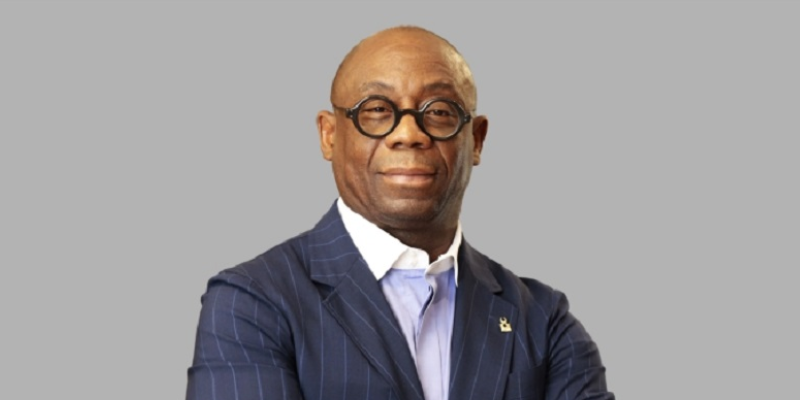
When Serge Ekué took charge as President of the West African Development Bank (BOAD) in 2020, he stepped into an institution with a strong legacy but an urgent need to evolve. The region BOAD serves, the eight-member West African Economic and Monetary Union (WAEMU), needs more than traditional development lending. It needs scale, credibility, and speed.
Ekué’s central mission has been clear: reposition BOAD from a conventional development finance institution into a globally credible, investment-ready bank that can support West Africa’s financial sovereignty and long-term growth.
His leadership is rooted in a sharp diagnosis of the moment. Foreign aid is declining. Global capital is cautious. Public budgets are stretched. Yet the development needs of West Africa, from energy access and infrastructure to climate resilience and job creation, are expanding.
Ekué is not framing this as a crisis. He calls it an opportunity to rethink development financing and to build stronger internal capacity to fund growth from within.
A Global Finance Career That Trained Him for the Pressure
Ekué is not a political appointee learning finance on the job. He is a Beninese banker and economist with over two decades of experience across international markets.
Before BOAD, he spent close to 15 years at Natixis, holding senior leadership roles in global markets and regional banking responsibilities across multiple geographies.
His academic background is equally strong: he is a graduate of Institut d’études politiques de Bordeaux and holds an Executive MBA from HEC Paris, alongside advanced credentials in banking and finance.
This blend of training and execution matters because leading a modern development bank today is not just about approving loans. It is about navigating ratings, risk frameworks, capital buffers, and investor confidence, while still delivering real outcomes on the ground.
The Djoliba Strategy: A Five-Year Reset for BOAD
Ekué’s blueprint for BOAD’s transformation has been the Djoliba Strategic Plan 2021–2025. The plan, named after the Niger River, was designed to reflect regional integration and collective progress across WAEMU.
Djoliba is not a slogan. It is a structured roadmap with a financing ambition of around CFAF 3,300 billion, with at least one-quarter directed toward private sector development, a crucial shift in how BOAD drives impact.
The focus areas are practical and growth-linked: agriculture and food security, renewable energy, core infrastructure, health, education, and social housing.
This matters because development today is measured less by intention and more by execution: projects completed, capacity built, jobs created, and systems upgraded. Under Ekué, BOAD has leaned hard into that performance mindset.
By mid-2025, BOAD had reportedly achieved 98.8% of its targets under the Djoliba Strategy, a milestone that signals momentum, operational discipline, and improved delivery capability.
Capital Strength: Building the Balance Sheet to Match the Vision
For BOAD to scale, it needs more than project ideas. It needs capital strength that meets international expectations.
That is why balance sheet reinforcement has been a major piece of Ekué’s agenda. In February 2022, BOAD announced it had successfully completed a first stage of its capital increase, raising more than half of its $1.5 billion target.
Then came a major global signal in 2024: the African Development Bank (AfDB) signed an agreement for a $24 million equity investment into BOAD, further strengthening the bank’s capital base and credibility.
In simple terms, this type of equity participation does two things. It reinforces BOAD’s capacity to lend, and it strengthens the confidence of investors and partners who look closely at governance, shareholder quality, and balance sheet resilience.
De-Risking the Future: The MIGA Advantage
In development banking, perception is performance. If lenders and markets see risk, they price risk. That affects borrowing costs, deal terms, and the ability to scale.
To strengthen BOAD’s risk posture and improve market comfort, the bank secured credit enhancement support through the Multilateral Investment Guarantee Agency (MIGA), part of the World Bank Group.
In 2024, MIGA-backed support was structured to help BOAD expand lending toward climate and sustainable projects across its eight member countries, particularly in priority sectors.
MIGA’s role in offering guarantees and credit enhancement is well established, designed specifically to mobilize investment into developing markets by reducing non-commercial risk exposure.
For BOAD, this is not just about risk coverage. It is a credibility lever, one that signals alignment with international standards and investor-grade discipline.
Beyond Money: BOAD as a Regional Sovereignty Tool
The deeper story behind Ekué’s BOAD is not only banking. It is positioning.
West Africa is entering an era where economic independence will depend heavily on financial independence. The region cannot sustainably grow if its infrastructure, energy transition, housing boom, and industrial development are permanently financed outside its own systems.
Under Ekué’s leadership, BOAD is steadily shaping itself into an institution that can help WAEMU finance its own priorities, on its own terms, without being forced into cycles of dependency.
That approach reflects modern development reality: capital is available, but only to institutions that can prove governance strength, risk control, and measurable impact.
The Post-Aid Era is Not the End. It Is the Test.
Ekué’s message lands because it is strategic, not sentimental. The decline of aid is not the end of development. It is a forcing function.
It pushes African institutions to build new partnerships, unlock private capital, modernize governance, and raise the bar on delivery. BOAD’s shift toward private sector participation and climate-resilient financing sits directly in that logic.
Serge Ekué is proving that a development bank can be both impact-driven and investment-grade in its ambition. More importantly, he is showing that West Africa’s growth story does not need to be outsourced.
It can be financed locally, owned regionally, and built to last.