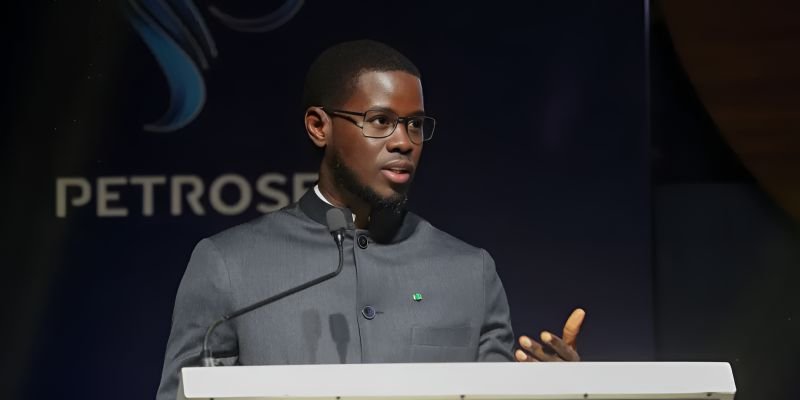


At just 32 years old, Khalil Halilu has emerged as one of Nigeria’s most watched leaders in the intersection of technology, enterprise, and national development. In September 2023, President Bola Tinubu appointed him as the Executive Vice Chairman and Chief Executive Officer of the National Agency for Science and Engineering Infrastructure (NASENI), placing him at the forefront of Nigeria’s efforts to harness science and engineering for economic growth.
NASENI is a federal agency with a mandate to coordinate technology development, prototype engineering solutions locally, and facilitate the transfer of those innovations into viable products and services. Its success influences not only manufacturing capacity but also the nation’s competitiveness in critical sectors.
Roots in Enterprise and Technology
Halilu came into the world on 29th October 1990, in the city of Kano, which is a significant commercial hub in Nigeria. As the firstborn among five, he had to use his imagination and patience in every-thing enterprise-related. He was already selling ice blocks and recording and selling CDs at school during his teenage years, which was a clear demonstration of his entrepreneurial spirit. The informal business education through those ventures came out much earlier than the formal leadership roles.
His studies took him to the University of Hertfordshire in the UK, where he graduated with a Bachelor of Science in Business Administration, then a Master’s degree in International Business. This educational background gave him not only strategic vision but also the understanding of global markets.
Building Companies Before Government Leadership
Halilu was nothing but a skilled entrepreneur and tech leader before joining NASENI. He was only 23 when he started to create and found businesses in logistics and technology. A very early win of his was ShapShap, an instant delivery service that was operating in the most important cities of Nigeria. Then he established The CANs Park, a tech hub in Abuja that was empowering startups, innovation, and cooperation across West Africa.
In such a way, Halilu proved his capacity to convert business models to local conditions and to tackle everyday issues by using digital and service-oriented methods. He has also held senior management positions such as COO, managing director, operations manager, and creative director in various organizations before making a transition to public sector leadership as a part of his extensive professional journey.
A Mandate for Transformation
The ascension of Halilu to the leadership of NASENI was the second signal that the agency was changing its attitude from a research and development organization to a deliverer of solutions and an initiator of industrialization. He has a technology background and a business-oriented mindset, which allows him to give priority to practical innovation rather than abstract strategy.
NASENI under his leadership is gradually but surely becoming not only a technical discussion partner but also a national policy influencer and economic development speaker. The agency’s projects are now being accessed by the stakeholders involved such as state governments, global investors, innovators, and even the common Nigerians. This is a sign of the broader impact the organization is hoping to realize.
Vision for Tech-Driven Growth
Halilu’s broader view of leadership goes beyond institutional reform. He believes technology can be a catalyst for solving everyday problems, in agriculture, manufacturing, education, and civic engagement. This perspective drove him to found the Centre for Civic, Citizen’s Welfare and Community Development (CWCD Africa), focused on issues from education and health to sustainability and welfare.
His leadership narrative does not treat innovation as a luxury. Instead, it is a necessity for a growing economy with a youthful workforce. Halilu embodies a generation that sees digital tools not as foreign solutions imported from elsewhere, but as tailored instruments that can be adapted to local challenges.
A Leader With Broader Influence
Beyond NASENI, Khalil Halilu’s influence is recognised across Africa’s entrepreneurial and tech communities. He was named Young African Leader of the Year at a continental leadership awards event, reflecting his rising profile and cross-sector appeal.
He also remains connected to the startup ecosystem, maintaining ties with industry partners and mentoring emerging founders. This keeps his leadership grounded in real business realities even while steering one of Nigeria’s strategic technology institutions.
Strategic Thinking in Action
What distinguishes Halilu from others in the Nigerian development sector is his mixture of startup agility and public leadership responsibility. He knows that making a huge difference requires discipline and flexibility, a combination that few leaders acquire early in their careers.
At a moment when most countries are trying to turn innovation into jobs, growth, and global competitiveness, Halilu’s journey comes to remind the business executives that leadership is not merely a matter of position. It is about establishing the necessary frameworks for the ideas to travel from concept to production, from prototype to prosperity.
His journey, which is still in its early stages, exemplifies how the combination of entrepreneurial roots and a technology mindset can influence the country’s institutions and, in turn, the country’s potential.