
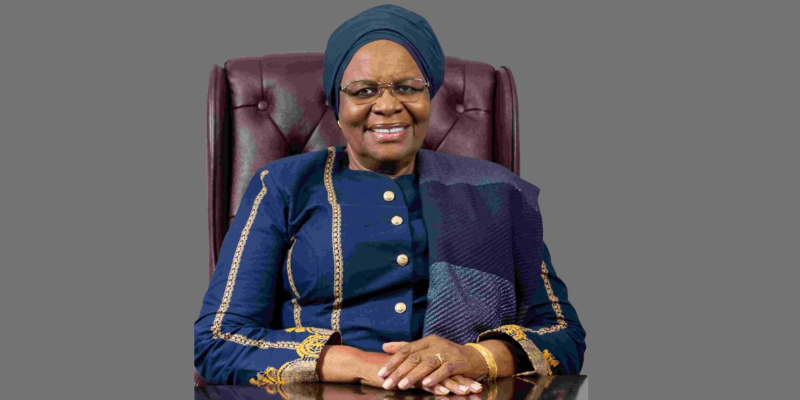
Netumbo Nandi-Ndaitwah’s journey from a young activist to the presidency of Namibia embodies resilience and decades of public service. Born on October 29, 1952, in a small village in the Oshana Region, she joined the South West Africa People’s Organization (SWAPO) as a teenager, committing to her country’s fight for independence.
After years in exile during Namibia’s liberation struggle, she returned home in 1989 as the nation prepared for independence. Since 1990, she has served continuously as a member of the National Assembly, bringing deep experience to every role she held in government.
Her election as Namibia’s president on November 27, 2024, marked a historic milestone, making her the first woman to hold the nation’s highest office. She assumed the presidency on March 21, 2025.
Leadership Built on Diverse Government Experience
Before becoming president, Nandi-Ndaitwah served in an array of ministerial positions, demonstrating both diplomatic skill and administrative breadth. She was deputy minister of foreign affairs, director-general of the Department of Women’s Affairs, and held significant portfolios including environment and tourism, information and broadcasting, and international relations and cooperation.
From 2015 to 2024, she served as deputy prime minister, further solidifying her role in shaping national policy. These varied responsibilities equipped her with a panoramic view of Namibia’s economic, social, and governance challenges, and shaped her leadership approach as one grounded in diplomacy, coordination, and continuity.
Vision for Economic Diversification
At her inauguration, Nandi-Ndaitwah spoke directly to the pressing business challenge facing Namibia’s economy: diversification. While the country has benefited from natural resource investments, particularly in oil, gas, and green hydrogen, significant unemployment and inequality persist.
She has prioritized strategies aimed at broadening the economic base, with a focus on agriculture, fisheries, and creative industries as engines for job creation and value addition. Her administration has signaled a shift toward policies that encourage investment beyond extractive sectors and support sustainable growth that puts citizens to work.
Strategic Cabinet Restructure for Efficient Governance
In a move that reflects business leadership principles of efficiency and accountability, Nandi-Ndaitwah restructured the Namibian cabinet shortly after taking office. She reduced the number of ministries and consolidated functions to eliminate redundancy, improve oversight, and reduce public expenditure.
Key appointments, such as the appointment of Ericah Shafudah as finance minister, bring experienced technocrats into pivotal economic roles. This streamlined executive structure echoes private sector approaches to lean management and strategic focus.
Policy Innovation with Social Impact
Beyond macroeconomic reforms, Nandi-Ndaitwah has also introduced bold social policies that have implications for national productivity. In April 2025, she announced that government-run tertiary institutions will offer free higher education starting in 2026, a landmark policy aimed at reducing barriers to skill development and expanding the talent pool for a modern economy.
This initiative aligns with long-term workforce development goals and responds directly to youth unemployment, a critical business and social challenge.
Championing Women and Inclusive Leadership
Nandi-Ndaitwah’s presidency has catalyzed significant progress in gender representation at the highest levels of government. Her Cabinet appointments resulted in a majority of women ministers across key ministries, including finance, foreign affairs, health, and education, signaling her commitment to inclusive leadership.
This move underscores her belief that diversity is an asset in decision-making and governance, and it sets a powerful precedent for corporate and public sectors alike to embrace gender equity as a driver of innovation and performance.
Diplomacy and Global Engagement
Her extensive background in foreign affairs positions Namibia as a constructive partner on the regional and global stage. Nandi-Ndaitwah continues to advocate for ethical governance, climate action, and regional cooperation, areas that resonate with investors seeking stable, forward-looking markets.
Her leadership reflects a balancing act between domestic priorities and international engagement, essential for attracting foreign direct investment and fostering economic partnerships.
Looking Ahead
Netumbos presidency is marked by a continued strategy based on his long experience. Her taking over the executive leadership in Namibia is like a giant step made from the role of liberation activist to the one of a statesman who is now expected to deliver economic growth and inclusive development.
She fuses realism and boldness in social policy, and her emphasis on diversification, reforms in governance, and development of human capital primes the next chapter of Namibia’s history.
Her narrative gives points for business leaders: commitment for a long time, experience in different sectors, and the skill to mix economic strategy with a social cause are the main attributes that help guiding complex organizations, be they national governments or multinational corporations, into the path of sustainable success.