
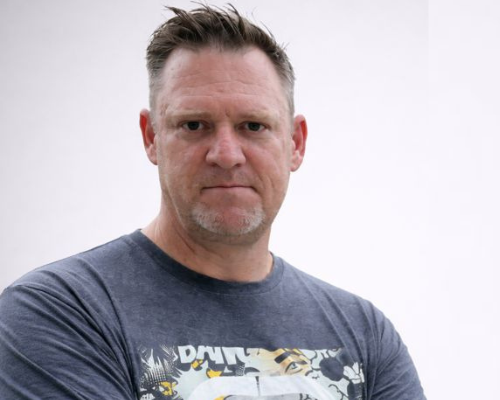
In an industry defined by legacy, risk, and relentless change, Paul Ehlers stands at an unusual intersection. He is a mining veteran who speaks fluently in simulation, gaming logic, and digital twins. As Chief Executive Officer of DMS Mining Studios, Ehlers is not focused on extracting more from the earth. He is focused on extracting more understanding from the people who work it.
Mining, he believes, is at a turning point. The pressure to operate safely, sustainably, and profitably has never been greater. Yet the way the industry learns has remained stubbornly static. That is the gap Ehlers has dedicated more than two decades to closing.
From the Pit to the Big Picture
Paul Ehlers did not enter mining through theory. He began on site, working as part of a survey team, the role that quite literally sees the mine before anyone else does. Being present every day gave him a ground level education in how operations actually function, where inefficiencies hide, and how decisions ripple across the value chain.
Even then, he was never satisfied with knowing only his own task. Curiosity defined him early. He wanted to understand how geology connected to planning, how equipment decisions affected safety, and how leadership choices shaped outcomes underground.
That curiosity turned him into the person others consulted. Over time, it became the foundation of his leadership style: question assumptions, learn continuously, and refuse to accept the status quo simply because it is familiar.
Bridging Legacy and the Digital Age
Few industries carry as much institutional memory as mining. Ehlers understands why. Mines are capital intensive, dangerous, and unforgiving of failure. The culture of “if it is not broken, do not fix it” did not emerge from complacency, but from survival.
Yet he has also watched mining lag behind other sectors in digital adoption, scarred by past experiences where technology promised transformation and delivered disruption instead. Having lived through the transition from analogue to digital systems, Ehlers developed a sharp instinct for what creates value and what does not.
His philosophy is clear. Technology must earn its place. It must deliver operational, environmental, and social value. It cannot be a one off implementation. It must become part of how leaders think and how organizations behave.
He aims to lead mining through meaningful adoption, not fashionable experimentation.
DMS Mining Studios and the Power of Simulation
That belief comes to life at DMS Mining Studios. Under Ehlers’ leadership, the company uses immersive simulation and gamified learning to transform how mining is taught, practiced, and improved.
Instead of static manuals or high risk on the job learning, professionals enter realistic virtual environments where they can make decisions, see consequences, and build confidence without danger or cost. From planning to production, users engage with scenarios that mirror real world complexity.
The platform provides real time feedback and performance dashboards, allowing individuals and teams to measure progress and identify gaps. But DMS goes further. It connects mining companies, original equipment manufacturers, educators, and technology providers into a shared digital ecosystem, encouraging collaboration and standardization across the industry.
Sustainability is embedded, not appended. Modules integrate water stewardship, electric equipment, environmental risk, and closure planning, reinforcing that responsible mining begins at the learning stage.
Sustainability as Strategy, Not Constraint
Ehlers rejects the idea that profitability and sustainability are opposing goals. In his view, long term value is inseparable from environmental and social responsibility. Operations that ignore this reality simply delay failure.
His approach is to integrate sustainability into strategy from the start. That means investing in technologies that reduce environmental impact while improving efficiency. It means designing mines with closure and rehabilitation in mind. It means engaging local communities as partners, not afterthoughts.
When sustainability is treated as a driver of innovation, he argues, it becomes a competitive advantage rather than a compliance burden.
Preparing Minds for AI and Automation
Over his career, Ehlers has implemented everything from basic digital tools to advanced collision avoidance systems and vehicle tracking. What excites him most today are adaptive technologies like AI, automation, and digital twins.
These tools, he notes, do not arrive with instruction manuals. Their value depends entirely on the mindset of the people using them. In organizations where curiosity is absent, even the most powerful technology delivers little.
That insight explains why education sits at the center of DMS Mining Studios. The goal is not to train operators to follow instructions, but to prepare thinkers who understand context, question outcomes, and apply tools creatively.
Simulation becomes a rehearsal space for judgment, not just compliance.
ESG as a Way of Thinking
For Ehlers, ESG is not a reporting requirement. It is a mindset that must run through every decision in the mining value chain. Drilling, processing, logistics, and procurement all carry consequences.
At DMS, ESG principles are woven directly into the learning experience. In simulations, players must confront trade offs, manage risks, and see the long term effects of short term decisions. Awareness becomes practice. Theory becomes habit.
Gamification, he believes, is powerful because it simplifies complexity without trivializing it.
Culture, Safety, and the Courage to Change
Ehlers has seen enough failed transformations to know that change cannot be imposed. Mandates breed resistance. Real progress happens when the people closest to the operation are empowered to lead.
His focus is on building cultural DNA early. By the time someone enters the workforce, curiosity, safety, and innovation should feel natural. Within his own organization, ideas are welcomed from anywhere. No suggestion is dismissed outright.
Leadership, in his view, is about creating space for responsibility to be shared.
The Leaders Mining Needs Next
When Ehlers looks for future leaders, curiosity comes first. It signals self learning and adaptability in a world reshaped by automation. But technical skill alone is not enough.
He believes leaders must develop others, listen well, and lead with humility. Compassion matters. Character matters. How someone treats people when there is nothing to gain tells him more than a résumé ever could.
The future of mining, he insists, belongs to leaders who are technically capable, emotionally intelligent, and purpose driven.
A Love Letter to an Industry
Ehlers encourages emerging professionals to be proud of mining. It is one of humanity’s oldest and most essential industries, powering everything from clean energy to digital infrastructure.
What excites him most about the future is gamification, not as entertainment, but as a way to reshape how mining understands itself. At DMS Mining Studios, it is a tool for education, engagement, and ethical innovation.
In his words, it is a love letter to an industry full of possibility. And an invitation to build a mining future that is inclusive, sustainable, and visionary.