
Vanessa Nakate did not step into climate activism to become visible. She stepped in because what she saw around her could no longer be ignored. In Uganda, climate change was not a future scenario or a policy debate. It was extreme heat, disrupted rainfall, and communities paying the price for decisions they did not make.
Her first climate strike in Kampala was solitary. One placard. One voice. Yet that moment revealed a leadership instinct that business leaders recognize well. When a gap exists, someone has to step into it. Nakate did. What followed was not noise, but direction. She began reframing climate change as a justice issue rooted in inequality, access, and long-term economic stability.
Her rise matters because she brought something global climate conversations lacked. Context. Africa contributes the least to global emissions, yet bears some of the harshest consequences. Nakate made it clear that any serious climate strategy that ignores this imbalance is incomplete and ultimately ineffective.
Building Institutions, Not Just Awareness
Activism often stops at visibility. Nakate moved toward structure. She founded Youth for Future Africa and later the Rise Up Climate Movement with a clear intent: amplify African voices and convert concern into coordinated action.
These platforms function like purpose-driven enterprises. They identify talent, build networks, and create shared objectives. Young climate leaders across the continent found not just inspiration, but infrastructure. This is where Nakate’s work intersects strongly with business thinking. Sustainable change scales only when systems exist to support it.
Her movements focus on representation in global decision-making spaces, but they also emphasize outcomes on the ground. Climate justice, in her framework, is not abstract morality. It is about energy access, education continuity, food security, and economic resilience.
Presence Where Power Convenes
Nakate’s influence expanded as she entered rooms where economic and policy decisions converge. She spoke at global climate summits and forums attended by heads of state, investors, and corporate leaders. Her message remained consistent. Climate change is not only an environmental risk. It is a business risk, a humanitarian risk, and a reputational risk.
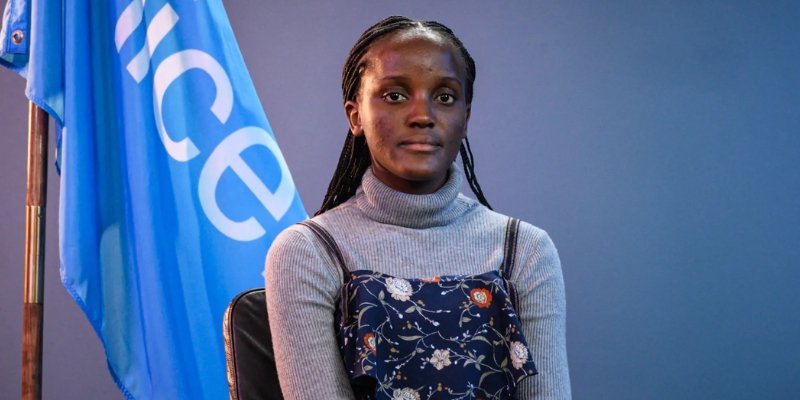
Her appointment as a UNICEF Goodwill Ambassador further strengthened this position. The role gave her access to global platforms, but also responsibility. She began linking climate impact to children’s health, disrupted education, and long-term workforce instability. For businesses thinking in decades, not quarters, these connections matter.
She challenged leaders to look beyond emissions targets and ask harder questions. Who benefits from climate policies. Who is protected. Who is left exposed. Those questions shape the credibility of institutions in the years ahead.
When Exclusion Became a Turning Point
In 2020, Nakate experienced a moment that would define her public leadership. A widely circulated image from a major global forum cropped her out, erasing the presence of an African activist from a climate narrative dominated by the Global North.
Her response was calm, direct, and impossible to dismiss. She did not ask for sympathy. She named the pattern. Entire regions, she said, are often removed from conversations that decide their future.
That moment resonated because it reflected a truth many industries face. Representation is often spoken about, rarely practiced. Nakate’s clarity turned a personal setback into a systemic critique. It reminded leaders that diversity without inclusion is performative, and that credibility is fragile when voices are selectively amplified.
Action Backed by Tangible Results
Nakate’s leadership is grounded in practical solutions. Through initiatives linked to her movement, solar panels were installed in schools across rural Uganda. These projects delivered immediate impact. Reliable energy improved learning conditions, reduced costs, and demonstrated how renewable investment directly supports social and economic development.
This is where her work becomes especially relevant for business. These are not symbolic gestures. They are scalable models. Renewable energy, when deployed thoughtfully, strengthens communities and opens pathways for sustainable growth. Nakate consistently points to solutions that balance ethics with execution.
Her book, A Bigger Picture, extends this thinking. It challenges leaders to zoom out, connect climate action with human rights, and design strategies that account for long-term societal health. It is not written as theory. It reads as lived experience translated into leadership insight.
Why Business Leaders Are Paying Attention
Nakate’s story carries a clear message for today’s executives. Climate justice is not separate from economic performance. Supply chains depend on stable climates. Markets depend on healthy populations. Brands depend on trust.
Ignoring frontline communities is no longer just unethical. It is strategically short-sighted. Nakate’s work shows that inclusive climate action unlocks resilience, innovation, and legitimacy. Companies that understand this early will be better positioned for a future defined by accountability and adaptation.
Her leadership reminds decision-makers that listening is not passive. It is an active skill. The future belongs to those who expand the table, invest with intent, and build systems that serve more than immediate returns.
Vanessa Nakate is not asking the world to care. She is showing it how.