
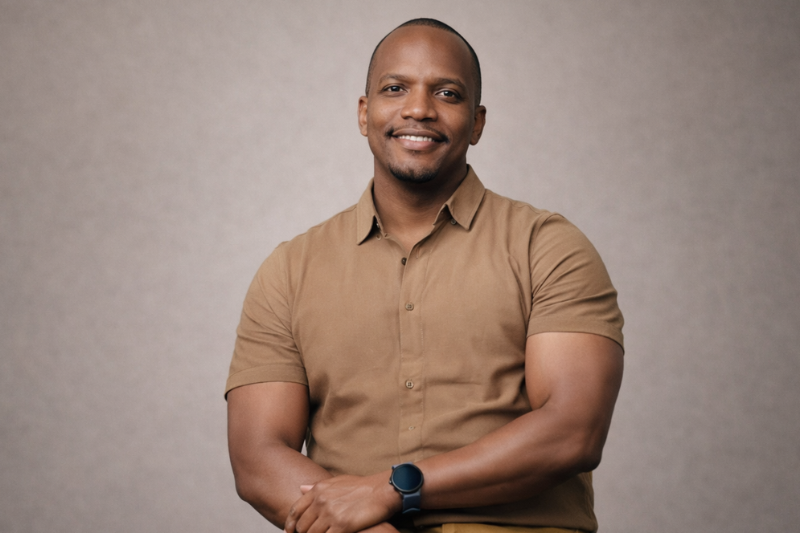
In Africa’s fast moving fintech landscape, where innovation often favors the already visible, David Opio Obwangamoi is building something radically different. He is not chasing disruption for spectacle. He is restoring dignity to people long excluded from formal finance. As Founder and Executive Director of gnuGrid CRB Limited, Opio has turned lived experience into a continental blueprint for financial inclusion.
His leadership is shaped not by privilege, but by marginalization. Raised by his grandparents on Uganda’s Buvuma Islands, Opio grew up watching how isolation compounds inequality. Banking services were absent. Credit was invisible. Yet discipline, saving, and trust existed quietly within communities that formal systems refused to see. That contradiction became his calling.
Where Exclusion Became Insight
On the islands, daily life required resilience. Access to healthcare, transport, and finance was limited. What struck Opio most was not just the lack of banks, but the absence of recognition. His grandparents participated in savings groups and informal lending for decades, yet had no digital footprint to prove financial responsibility. To lenders, they did not exist.
This reality extended far beyond his family. Across Uganda, more than eighty five percent of people lack access to formal financial services, not because they are uncreditworthy, but because their financial behavior is undocumented. Even when interacting with financial institutions, their histories remain invisible to traditional credit systems.
That insight shaped Opio’s mission. The problem was not risk. It was representation.
A Mobile First Breakthrough
Uganda’s near universal mobile phone penetration offered an answer. With ninety seven percent of the population using mobile phones, Opio saw a digital highway where banks saw none. If people could not reach financial institutions, finance could reach them through devices already embedded in daily life.
gnuGrid CRB was born from that realization. Its core innovation lies in converting everyday mobile behavior into creditworthiness indicators. Through partnerships with mobile money platforms such as Airtel Money, the system analyzes hundreds of data points, including airtime usage and transaction patterns, to build alternative credit profiles.
The result was Uganda’s first mobile credit score, accessible through simple USSD codes on feature phones. No smartphones required. No apps to download. For millions, credit visibility became possible for the first time.
Today, more than fifteen million mobile money users can check their credit scores through USSD or WhatsApp, placing financial insight directly into the hands of people previously excluded from the system.
AI Designed for African Reality
At the heart of gnuGrid CRB sits an AI powered credit decision engine processing over one million applications every day. But this is not artificial intelligence built for abstract markets. It is trained on African realities, reflecting how people actually earn, spend, and save in rural and peri urban contexts.
While complex algorithms operate behind the scenes, the user experience remains simple. Eligibility checks. Personalized credit limits. Loan access through mobile phones. Transparency replaces opacity. Trust replaces fear.
By segmenting customers accurately and automating approvals, gnuGrid CRB has proven that populations once labeled unbankable are not only viable, but sustainable. The data was always there. It simply needed to be understood differently.
Ethics at the Core
For Opio, technology without ethics is failure. Having grown up in trust based communities, he understands that digital systems must earn confidence. Data privacy is not an afterthought at gnuGrid CRB. It is embedded by design.
Consent driven data collection, secure storage, and user control form the foundation of the platform. Algorithms are continuously audited to prevent bias and exclusion. The goal is expansion of opportunity, not digital replication of old inequalities.
Opio is clear. Credit scoring should unlock doors, not reinforce barriers.
Scaling Inclusion Across Africa
With Uganda as proof of concept, Opio is now focused on continental expansion. His vision positions gnuGrid CRB as a backbone for inclusive finance across Africa. This means more than copying systems into new markets. It requires localization, multilingual interfaces, and regulatory alignment across diverse environments.
Each market brings unique cultural and economic realities. Opio approaches expansion with patience and partnership, working closely with regulators, banks, and mobile network operators to build trust and interoperability.
The ambition is bold. Unlock unsecured credit for millions while ensuring systems integrate seamlessly with existing financial ecosystems.
Purpose Before Product
Outside the boardroom, Opio is a youth advocate and writer, encouraging young Africans to see entrepreneurship as a tool for impact, not just income. His advice to aspiring founders is grounded and clear.
Start with purpose. Understand real pain points. Build for the last mile, not the urban core. If a solution works in a village with limited connectivity, it can scale anywhere.
He challenges technology leaders to resist trends and cultivate foresight. Innovation, he believes, must restore dignity and agency, especially for those historically excluded.
Redefining African Fintech
As gnuGrid CRB processes millions of transactions daily, Opio remains focused on human outcomes. Success is not measured by algorithmic complexity, but by practical change. Can a grandmother access credit to expand her small business. Can a family weather an emergency without falling into predatory debt.
This grounded perspective sets him apart in an industry often driven by scale alone. His work demonstrates that Africa’s fintech future does not need to mirror Western models. It can leapfrog them.
David Opio Obwangamoi is not merely building technology. He is rewriting who gets to be seen, counted, and trusted in Africa’s financial systems. In doing so, he is proving that the most powerful innovation is inclusion itself.
To explore more inspiring stories and insights from visionary leaders, read more articles on Africa’s Leaders Magazine