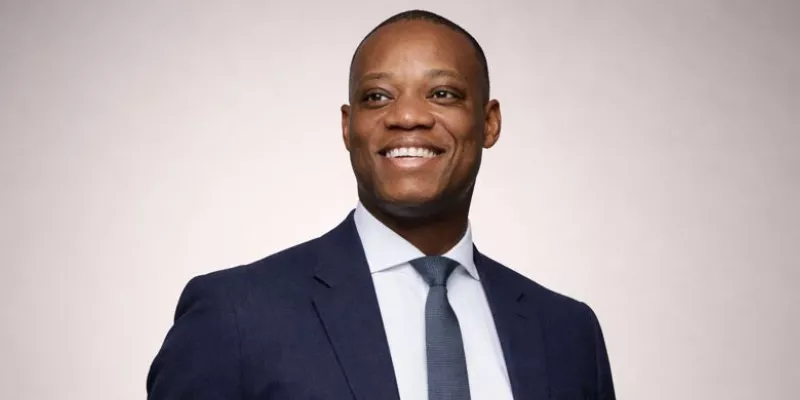
Power in business rarely announces itself loudly. It is built, decision by decision, over years of disciplined execution. Tunde Olanrewaju embodies that quieter form of authority. In a time when leadership is often confused with visibility, he represents something far more enduring: credibility earned through outcomes.
As Senior Partner at McKinsey & Company and Managing Partner for Europe, Olanrewaju stands at the center of one of the world’s most influential advisory networks, guiding strategy and transformation across twenty three countries. His work shapes how institutions grow, how governments compete, and how technology is turned into lasting advantage.
From Strategy to System
Olanrewaju’s career reflects a fundamental shift in the business landscape. Strategy is no longer sufficient on its own. The modern test of leadership is whether ideas can survive contact with reality. He has built his reputation on closing that gap. Advising CEOs, boards, and public sector leaders, his focus spans strategy, operations, organizational design, and AI driven transformation. The common denominator is execution.
Europe presents a uniquely complex canvas. Fragmented markets, regulatory diversity, and contrasting economic priorities demand leadership that is both precise and adaptive. As Managing Partner for Europe, Olanrewaju is responsible not only for growth, but for coherence across the firm’s regional practice. His leadership emphasizes capability building over short term fixes. Change, in his view, must be designed to last.
Building McKinsey Digital
Before assuming his current role, Olanrewaju served as the firm’s Global Chief Technology Officer. It was during this period that he helped create McKinsey Digital, an integrated platform combining design, software engineering, advanced analytics, and artificial intelligence. This was not an abstract initiative. It was a direct response to a market reality. Clients were no longer asking for advice alone. They needed working solutions.
Under his leadership, multidisciplinary teams were embedded deep inside client organizations. Designers worked alongside engineers. Data scientists partnered with operators. Strategy was translated into code, workflows, and measurable outcomes. McKinsey Digital became a catalyst for redefining how transformation is delivered, bridging the divide between aspiration and implementation.
Technology with Purpose
Olanrewaju has consistently resisted the temptation to treat technology as an end in itself. For him, digital transformation is about performance. AI, analytics, and automation are tools to unlock productivity, resilience, and growth. Yet he is equally clear about the risks. Without governance, skills, and ethical frameworks, technology can amplify fragility rather than solve it.
This balanced perspective has made him a trusted advisor at a moment when organizations are grappling with profound change. Leaders face pressure to move fast while maintaining trust. They must innovate while protecting institutions built over decades. Olanrewaju frames these tensions as design challenges. With the right operating model, progress and responsibility can coexist.
Leadership Beyond the Boardroom
Influence, in Olanrewaju’s world, extends beyond corporate performance. He serves as a trustee of Oxfam GB, contributing strategic insight to global humanitarian and development efforts. His role underscores a belief that scale and impact require disciplined systems, not just compassion.
He is also an independent member of Imperial College Council, helping guide one of the world’s leading science and technology institutions. In parallel, he sits on the board of Innovate UK, where the focus is on turning research excellence into commercial and societal value. Across these roles, his contribution is consistent. Institutions succeed when governance, incentives, and execution align.
Shaping National Competitiveness
Olanrewaju’s perspective is particularly influential in public policy. As a member of the Industrial Strategy Advisory Council, he contributes to the long term development of the United Kingdom’s industrial strategy. The council’s mandate is explicit. Provide independent, evidence based recommendations that inform government action.
Industrial strategy, as Olanrewaju sees it, is not about choosing winners. It is about building the conditions for sustained competitiveness. Skills, infrastructure, innovation, and capital must reinforce one another. Policy must encourage long term investment while remaining responsive to change. His private sector experience brings practical rigor to debates often dominated by ideology.
Recognition Without Spectacle
In 2025, Olanrewaju was appointed a Commander of the Order of the British Empire for services to Business. The honor reflects a career defined by contribution rather than self promotion. It also signals a broader recognition of leaders who operate effectively across sectors, connecting enterprise with public purpose.
Those who work closely with him describe a leader who values clarity over charisma. Meetings are defined by direct questions and disciplined thinking. What problem are we solving. What will change. Who owns the outcome. Progress is measured, not assumed. There is little appetite for performance without substance.
Europe at a Crossroads
The stakes for Europe could not be higher. AI promises productivity gains that will redefine competitiveness. Energy transitions will reshape industrial landscapes. Demographic shifts will strain labor markets. Geopolitical uncertainty will continue to test supply chains and alliances. In this environment, leadership must be grounded in execution.
Olanrewaju’s work sits squarely at this intersection. He advises leaders navigating transformation not as a theoretical exercise, but as an operational reality. His emphasis on capability building reflects a belief that resilience is learned, not declared.
A Model for the Next Generation
Tunde Olanrewaju’s career offers a clear lesson for modern leadership. Vision matters, but it is insufficient. Real impact comes from the ability to design systems that work, to integrate technology with human judgment, and to translate ambition into sustained performance. Whether in a corporate boardroom, a government council, or a global nonprofit, the principles remain the same.
In an era defined by noise, his influence is built on results. That is why his leadership resonates far beyond Europe. He represents a model of authority that is increasingly rare and increasingly necessary. Quiet. Rigorous. Enduring.