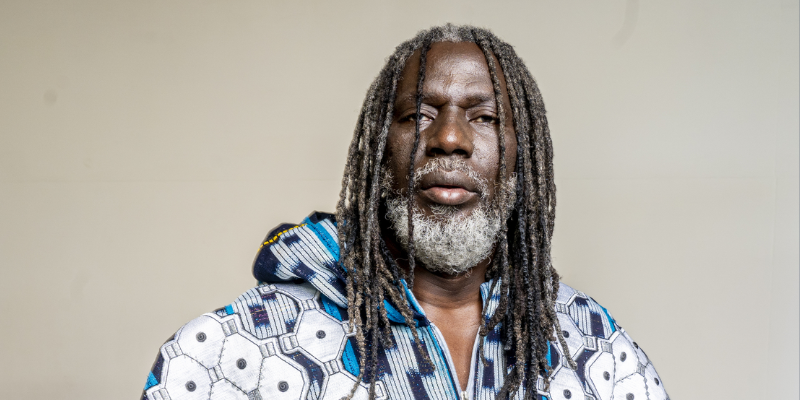
Tiken Jah Fakoly did not begin as a global performer. He began as a young artist from Odienné, Côte d’Ivoire, shaped by heritage, rhythm, and storytelling. Born into a family of griots, he grew up around tradition, memory, and the responsibility of carrying messages forward. That upbringing would later define his career, giving his music a backbone stronger than entertainment.
In 1987, he formed his first group, Djelys. At the time, it looked like the standard early stage journey: a young musician building confidence, experimenting with identity, and finding his sound. Yet even then, Fakoly’s direction was clear. He saw reggae as more than music. He saw it as a language that could speak to power, people, and possibility.
Over time, his reputation expanded from regional recognition to national prominence, eventually pushing far beyond borders. When he began performing in France, his career entered a larger arena, one where message-driven artistry could compete at global scale. He built momentum without losing his roots, and that balance became his signature.
Reggae as Strategy: Building Influence Through Clarity
Many artists chase popularity. Fakoly pursued impact. His work developed into a sharp blend of culture, commentary, and leadership. He began writing songs that reflected the social and political evolution of Côte d’Ivoire, speaking openly about change, uncertainty, and the responsibility of leadership.
A key moment arrived in 1993, following the death of Félix Houphouet-Boigny. The nation entered a new phase, and Fakoly responded through music that captured the emotions of the moment. His voice resonated deeply with young listeners, a generation seeking truth, stability, and direction. His popularity grew rapidly, powered by credibility rather than hype.
What made his approach different was intention. Fakoly positioned himself as a public communicator, using lyrics the way strong leaders use speeches: direct, timely, and built to move people into action. Over the years, that approach turned him into more than a performer. He became a symbol of awareness.
Paris 1998: The International Expansion Moment
By 1998, Fakoly stepped onto the international stage in Paris, marking the beginning of a wider global chapter. This was more than a concert milestone. It was a strategic shift, a move into markets where African voices often fight for space, attention, and respect.
Performing in France gave him access to broader audiences and media visibility, yet it also gave him a platform to push larger conversations. He often described his mission as creating music that wakes consciences. That statement reads like an artist’s quote, yet it also functions like a brand purpose. It communicates identity, direction, and long-term value.
In business terms, Fakoly built a distinct positioning: message-first, people-focused, culturally rooted, globally scalable. Very few artists achieve that blend while maintaining authenticity.
A Catalog That Challenges Power Structures
Fakoly’s music carries a consistent theme: accountability. His lyrics continue to engage with social and political systems in Côte d’Ivoire and beyond. Tracks like Mon pays va mal became widely recognized for their urgency and directness. Later works such as Braquage de pouvoir and Le peuple a le pouvoir reinforced his stance, reminding listeners that authority remains answerable to the people.
This consistency matters. In any brand-led career, trust grows through repetition of values. Fakoly’s audience returns because they know what he stands for. His music serves as both expression and commentary, offering people a way to process reality and respond to it.
His work speaks to a population that often experiences the consequences of decisions made far away from them. That is why his songs travel well. They speak about power, inequality, ownership, and identity, themes that remain relevant across borders.
2025: A Concert Album With Symbolic Weight
In 2025, Fakoly released an album recorded live at the Salle Pleyel in Paris, a venue associated with classical music and elite cultural prestige. For an artist rooted in reggae and African political commentary, this setting carried meaning.
It signaled recognition, reach, and evolution. It also showed how cultural power can move into spaces that once felt reserved for a narrow audience. Fakoly did not dilute his message to fit the venue. Instead, he brought his message into the venue, proving that influence expands through presence and performance.
From a business lens, the Salle Pleyel recording functions like a high-impact credibility asset. It reinforces global relevance while strengthening brand stature. It also demonstrates that African artistry can own premium stages without changing its core identity.
Africa, Resources, and the Case for a New Economic Narrative
Fakoly has repeatedly emphasized a bold perspective: Africa’s position in the global order requires rethinking. He argues that the continent holds the majority of raw materials needed by Western economies, and that the current balance of value and influence remains misaligned.
His message is clear. Africa carries immense economic weight through resources, talent, and demographic strength. Yet the rewards often flow outward. Fakoly speaks about awareness in France as well, highlighting that many people question the current system.
This is where his role becomes broader than music. He operates like a cross-cultural advocate, urging reflection on trade, power, and fairness. His songs become entry points for conversations that boardrooms, policymakers, and communities continue to debate.
A Call to Youth: Pan-Africanism as a Growth Mindset
Fakoly encourages young Africans to reclaim Pan-Africanism, framing it as a path toward unity, confidence, and long-term development. He calls on leaders to promote change, and he reinforces the idea that progress demands ownership of identity and direction.
This aligns with a modern leadership principle: sustainable transformation depends on people believing they belong in the future they want to build. Fakoly’s work strengthens that belief. It gives youth language, pride, and energy to see themselves as builders rather than spectators.
Legacy of a Warrior, Discipline of a Leader
Fakoly’s determination also connects to his lineage. As a descendant of warrior chief Fakoly Koumba, he carries a sense of inherited responsibility. That legacy appears in his refusal to retreat from hard conversations.
In business, resilience often decides who stays relevant over decades. Fakoly’s career proves that influence grows through conviction, consistency, and courage. He stands as a reminder that cultural leadership can shape political awareness, strengthen identity, and inspire the next generation to demand better systems.
Tiken Jah Fakoly remains a voice that refuses to soften, a brand that refuses to fade, and a leader who treats art as action.