
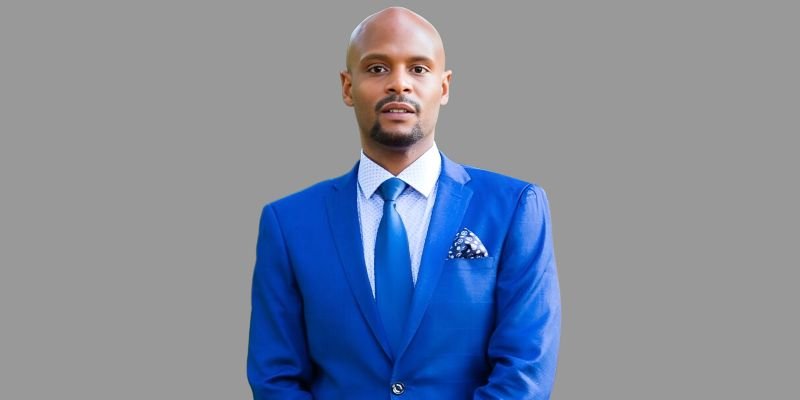
From a $50 idea in a school corridor to a multi-million-dollar solar empire spanning five African nations, Patrick has become one of Africa’s most consequential renewable energy entrepreneurs.
There is a particular kind of clarity that comes to a young person who grows up watching their community struggle with what others take entirely for granted. In much of sub-Saharan Africa, electricity is a negotiation rather than a guarantee, something that arrives unpredictably, departs without warning, and in vast stretches of the continent, never arrives at all. Tanzania, for all its natural magnificence and human vitality, has long existed within this reality.
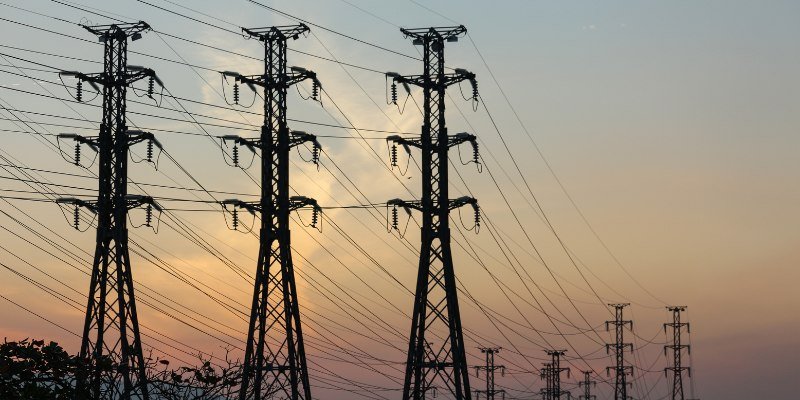
For decades, the country’s electric power grid has been able to meet only ten per cent of the population’s electricity needs, leaving hospitals running on diesel generators, classrooms falling dark at dusk, and entrepreneurs forced to factor the cost of fuel into every business calculation. It is the kind of structural constraint that can either defeat ambition or define it.
For Patrick Epaphra Ngowi, it defined everything. Born in Tanzania, Ngowi grew up to become the Founder of Helvetic Solar, the Chairman of the Helvetic Group, and one of the most decorated young entrepreneurs the African continent has produced in a generation. His story, however, does not begin with solar panels or boardrooms.
It begins with a teenager, a borrowed $50, and a keen instinct for opportunity that most adults would have overlooked entirely.
A $50 Education
Patrick Ngowi was still in secondary school when he started his first business. Mobile phone companies, Vodacom, Tigo, and others, had only recently established operations in Tanzania, and the infrastructure for distributing airtime was thin and inconvenient. Recharge vouchers could be found almost exclusively in shopping malls and exclusive phone shops, and in a city like Arusha, where those outlets were few and far between, buying airtime required a journey that many people simply could do without.
Ngowi saw what the established distributors had failed to see: a gap between what people needed and where they could get it.
He raised TSh 50,000, roughly $50 US dollars, from his mother, bought top-up vouchers from the big dealers, and then did something cleverly pragmatic for a fifteen-year-old: unable to devote much time to the enterprise himself while still attending school, he mobilised fuel station pump attendants in the local community to sell the vouchers on his behalf.
The arrangement was simple, the margins were modest, and for two years he quietly built something that most would have dismissed as a schoolboy pastime. In reality, it was the first indication of a mind that combined social observation with economic instinct, a combination that would come to define everything Ngowi built thereafter.
His parents recognised what they were witnessing and offered further encouragement in the form of a loan of USD 1,800, a substantial expression of confidence in a son who had already demonstrated that he could think commercially. With that capital and a broadening sense of possibility, Ngowi began travelling between China and Tanzania, bringing back affordable mobile handsets and selling them in the Tanzanian market.
The journeys were practical, but they were also formative. China, in the early 2000s, was a country in the middle of its own extraordinary transformation, and for a young Tanzanian entrepreneur with open eyes, it offered an education that no university alone could provide.
A Door Disguised as a Problem
It was during those years of moving between continents, absorbing the rhythms of trade and technology, that Ngowi began to pay serious attention to solar energy. He enrolled at Denzhou University in China, studying renewable energy, a discipline that, at the time, was still regarded in many African business circles as something between an idealist’s cause and an economist’s footnote. Ngowi saw it differently.
He saw the sun that fell on Tanzania every day, the generators that burned expensive diesel in every office building and wealthy household, and the vast majority of the population that could access neither grid electricity nor any alternative. He saw, in other words, a market that was enormous, underserved, and growing more urgent with every passing year.
The decision to found Helvetic Solar Contractors was, in Ngowi’s own telling, a response to a door that kept knocking. The company was conceived to supply, install, and maintain solar systems throughout the northern circuit of Tanzania, offering everything from photovoltaic panels and water heaters to battery banks, generators, and back-up units.
The name was evocative of the Swiss precision and reliability that Ngowi wished to embed in the brand, an early signal that he was building something intended to compete at an international standard, even if its immediate market was domestic.
From Start-Up to Helvetic Group
What began as a single solar energy company in Tanzania grew, with a discipline and strategic patience that belied Ngowi’s age, into the Helvetic Group, a multi-country operation with a presence across East Africa. Under his leadership, the group installed more than 6,000 rooftop solar systems across Tanzania, a figure that represents a transformation in the daily lives of the businesses, families, and institutions that now draw clean power from the sun rather than from unreliable grids or polluting generators.
Ngowi also extended the model into Kenya, Uganda, Rwanda, and Burundi, establishing similar companies in each country and building a regional network that made Helvetic one of the most significant sustainable energy operators in eastern Africa.
The expansion was driven by a philosophy that combined commercial ambition with genuine social purpose. Ngowi has been consistent, across every platform he has occupied, in articulating that the energy crisis in Africa is a moral issue as much as an economic one.
For a family in rural Tanzania, the absence of reliable electricity means children studying by candlelight, small businesses unable to refrigerate goods or power machinery, and a fundamental ceiling on aspiration that those who have grown up with reliable power supplies rarely stop to consider. Helvetic Solar, in Ngowi’s framing, is an answer to that ceiling.
Light for Those Who Need It Most
The commercial ambitions of the Helvetic Group have always run alongside a social conscience that Ngowi has expressed through deliberate, structured giving. His non-profit initiative, the Light for Life Foundation, provides free solar power to women living in the villages of Tanzania, a targeted intervention rooted in the understanding that women in rural communities frequently bear the greatest burden of energy poverty, and stand to gain the most from its alleviation.
By directing clean, renewable energy to those who could least afford it commercially, the Foundation extends the logic of Helvetic Solar into territory that the market alone would have left dark.
The Helvetic Group has also formalised its commitment to broader climate action through a partnership with The Climate Reality Project, the global initiative founded by former United States Vice President Al Gore, to make renewable energy solutions more affordable and accessible for as many Tanzanians as possible.
Ngowi himself has been recognised as one of Al Gore’s climate change reality leaders, a designation that places him within a global community of advocates who understand that the transition to clean energy is one of the defining challenges of the present century.
His designation as a United Nations SDG 7 Pioneer, awarded in recognition of his work to ensure access to affordable, reliable, and sustainable energy, adds further institutional weight to what the numbers already demonstrate.
Recognition That Arrived Early
Ngowi’s story has attracted international attention in proportion to the scale of what he has built. Forbes profiled him in a feature titled “The Young African Millionaire Lighting Up Tanzania,” a headline that captured both the practical and the metaphorical dimensions of his work with neat precision.
He was subsequently listed among Forbes’s 30 Under 30 Africa’s Best Young Entrepreneurs, and separately identified by the publication as one of the young African millionaires to watch. In 2014, Forbes listed him among Africa’s Most Promising Young Entrepreneurs, while both Forbes and CNBC named him East Africa’s Young Business Leader of the Year.
New African Magazine placed him in its Top 100 Most Influential Africans list for 2013 to 2014, and the Choiseul Institute of Paris, one of the world’s most respected think tanks on emerging global leadership, included him in its Top 100 Young Economic Leaders for 2014 to 2015.
These are distinctions that travel across borders and disciplines, earned by a man who had started his commercial life with a $50 investment and the audacity to believe that the problems around him were, in fact, opportunities in disguise.
The Philosophy Beneath the Enterprise
What emerges from the arc of Ngowi’s career is a portrait of a leader who has resisted the temptation to allow success to narrow his vision. Many entrepreneurs who achieve early recognition find themselves drawn inward, toward the consolidation of what they have built rather than the expansion of why they built it.
Ngowi has moved in the opposite direction. The creation of the Light for Life Foundation, the partnership with The Climate Reality Project, and the cross-border growth of the Helvetic Group all speak to a man who regards his business as a vehicle for something larger than profit.
His trajectory also offers a quiet but powerful argument about the relationship between context and creativity. The energy crisis that might have been experienced purely as a constraint became, for Ngowi, the very condition that made his work necessary and his company possible.
There is a discipline in that way of seeing the world, a refusal to be defeated by structural problems that others have long since accepted as permanent, that distinguishes the most consequential entrepreneurs from those who simply build businesses.
A Longer Light
The renewable energy landscape in Africa is changing at a pace that would have seemed improbable a decade ago. Solar technology has become dramatically more affordable, international investment in sustainable energy Africa has accelerated, and the political appetite for energy reform has grown across the continent.
Patrick was working in this space long before any of those tailwinds arrived, in the years when solar energy Tanzania was still largely an aspiration rather than a delivered reality. That early conviction, sustained through years of execution, has placed the Helvetic Group in a position of genuine relevance as the continent moves, however unevenly, toward a cleaner energy future.
The story of Patrick Ngowi is ultimately a story about what happens when personal initiative is directed at a problem that matters. The $50 that started everything, borrowed from a mother who believed in her son, has multiplied into an enterprise that powers thousands of homes and businesses, illuminates villages that the national grid has never reached, and demonstrates, concretely and without sentimentality, that African renewable energy leadership is real, capable, and already at work.
Whatever the next chapter of Ngowi’s career holds, the light he has already brought to Tanzania will outlast any particular chapter of his biography.