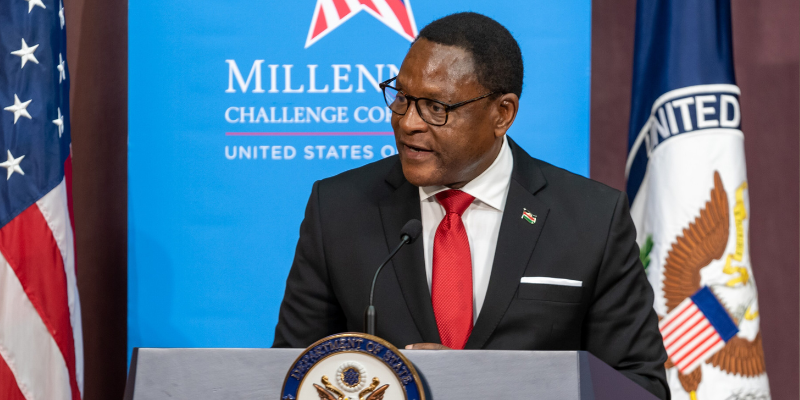
Lazarus McCarthy Chakwera’s path into leadership was unconventional for a head of state. Born in rural Malawi in 1955, he began his career not in politics or economics, but in theology. He earned degrees in philosophy and theology in Malawi, South Africa, and the United States before spending decades as a pastor and church leader.
His transition into politics came later in life. In 2013 he became president of the Malawi Congress Party, one of the country’s oldest political organisations, and positioned himself as a reformer intent on tackling systemic issues in Malawi’s governance and economy.
A Historic Electoral Win
Chakwera’s most notable political breakthrough came in 2020. After Malawi’s Constitutional Court annulled the 2019 election result on grounds of irregularities, a rare and legally significant rebuke of flawed electoral processes in Africa, Chakwera won the rerun with nearly 59 percent of the vote. This made him the first opposition leader in the world to successfully challenge an election in court and then win the subsequent poll.
Taking office on June 28, 2020, he became Malawi’s sixth president at a moment when public confidence in institutions was fragile and economic growth was stagnant.
Leadership in a Complex Economy
Malawi’s economy is heavily dependent on agriculture, with the vast majority of its population engaged in subsistence farming. Export revenues rely on commodities like tobacco, tea, and sugar, and the country is vulnerable to climate shocks, currency volatility, and external debt pressures.
During Chakwera’s term, inflation intensified, exceeding 20 percent and making basic goods unaffordable for many households. This was compounded by droughts and severe weather events such as Cyclone Freddy, which devastated agricultural outputs.
Business leaders in Malawi and international investors observed the challenges of inflation, foreign exchange shortages, and supply bottlenecks during this period. These headwinds underscored the difficulty of stabilising an economy highly exposed to environmental and global market fluctuations.
Governance, Accountability, and Reform
Chakwera came into office on a platform of anti-corruption and institutional reform. He appointed experienced corporate leaders to key economic portfolios, including Felix Mlusu, a seasoned private sector executive who served as finance minister from 2020 to 2022, bringing business expertise into government economic planning.
Under Chakwera’s leadership, efforts were made to strengthen legal and regulatory frameworks, including in digital transformation and financial governance. These moves were aimed at improving the business climate and restoring investor confidence, an essential step for economic growth.
Balancing Politics and Economic Reality
Chakwera faced criticism for selective handling of corruption scandals and struggled to translate political capital into sustained macroeconomic recovery. Persistent fuel shortages, food insecurity, and rising costs of living fuelled public frustration and created tension between government policy and citizen expectations.
Despite these efforts, voter sentiment shifted by the 2025 general election. In September 2025, former president Peter Mutharika returned to power, securing a majority in a competitive election that reflected public demand for new economic leadership. Chakwera conceded defeat, a gesture that underscored Malawi’s peaceful democratic traditions and commitment to orderly transfers of power.
Legacy and Business Perspective
For the business community, Chakwera’s presidency was a study in the intersection between political leadership and economic resilience. His tenure highlighted the challenges of navigating structural economic issues in a low-income country with high external dependencies. Leaders from the private sector saw both opportunity and constraint in his approach, appreciating moves toward governance reform while noting persistent structural bottlenecks.
Chakwera’s leadership emphasised inclusivity, legal integrity, and institutional accountability, qualities vital for long-term economic development. His willingness to engage with international partners and embed experienced corporate figures in government was a signal to the market that reform, while difficult, remained a priority.
As Malawi charts its next phase under new leadership, business leaders will continue to weigh the outcomes of Chakwera’s policies against the backdrop of economic volatility, the need for investment, and the enduring importance of democratic resilience.