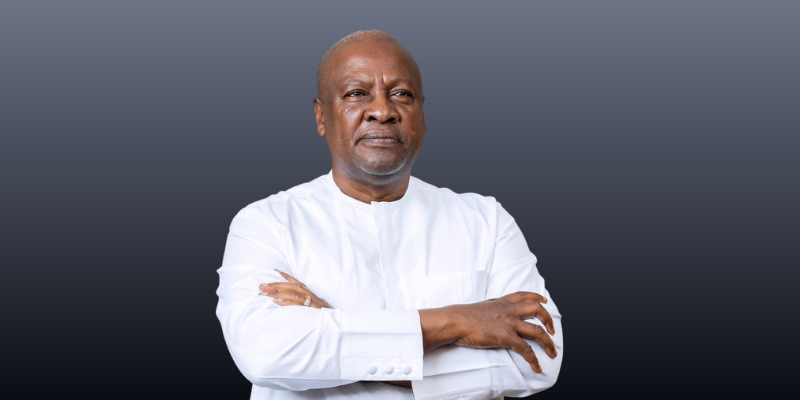
In August 2025, eight months after returning to Ghana’s highest office, President John Dramani Mahama turned Accra into a continental decision room. The Africa Health Sovereignty Summit brought together African heads of state, senior health policymakers, global experts, and financiers with one shared agenda: Africa’s health systems can no longer hinge on donor certainty.
Mahama’s message was unambiguous. Funding from the United States, Europe, and traditional donor institutions is growing less predictable. Waiting for external rescue is no longer a strategy. The next phase of African health security must be built through African ownership, African financing, and African accountability.
The summit carried the weight of a business moment, not only a health gathering. Health systems influence productivity, national confidence, supply chain continuity, investment stability, and workforce resilience. In Mahama’s framing, health sovereignty is economic sovereignty.
The Accra Compact: From Statements to Commitments
One of the summit’s key outcomes was the Accra Compact, a policy and investment roadmap designed to move the conversation from urgency to implementation. The Compact commits participating governments to make funding available for sustainable health systems, with an emphasis on long-term resilience rather than emergency dependence.
This move signals a shift in how African leadership is approaching public health. The focus is moving toward stable financing, stronger national health infrastructure, and strategies that reduce exposure to external volatility.
For investors, development partners, and private sector players, the Compact offers a clearer direction of travel. It signals that Africa is seeking new models where systems are funded consistently, strengthened structurally, and protected as strategic assets.
Sovereignty as the Signature Theme of a Second Tenure
This push for sovereignty is emerging as a defining principle of Mahama’s second tenure. He is using it as a governing lens across policy decisions, domestic reforms, and international engagement.
Rather than positioning Ghana as a recipient market, Mahama is presenting the country as a builder state. One that takes responsibility for its own systems while still valuing partnership.
This distinction matters. The strongest partnerships are formed when both sides bring capability. Ghana’s message under Mahama is clear: collaboration remains welcome, yet dependence is being reduced through stronger domestic foundations.
Steering a Fragile Economy With Fiscal Control
Mahama returned to office as Ghana was still absorbing deep economic shocks. Covid-19 weakened national resilience across sectors, while the war in Ukraine intensified global inflation pressures and disrupted commodity-linked realities for many economies.
Inheriting that environment, Mahama has maintained fiscal discipline under an IMF programme that was already in place before his return. That decision reflects continuity over emotional politics, and stability over populism.
For a business audience, this is one of the most important signals any government can send. Fiscal discipline restores confidence. It reduces uncertainty. It strengthens currency stability and debt sustainability. It also creates room for reforms to hold.
Mahama’s approach suggests a leader focused on restoring the engine first, then accelerating.
Financing Africa’s Growth: A Strategy Beyond Aid
In early 2025, Mahama hosted a Heads of State dialogue on financing African investment, in partnership with the Alliance of African Multilateral Financing Institutions. The objective was practical: move from discussion to deal-making on how Africa funds its own development priorities.
His argument has been consistent. Africa must mobilise deeper domestic resources and reduce reliance on external aid structures that can shift overnight based on foreign political cycles and global economic stress.
Domestic resource mobilisation is not a slogan. It requires stronger tax systems, improved compliance, higher efficiency in public spending, and credible governance. It also creates space for private capital to flow with more trust, since investors tend to follow stability, discipline, and policy clarity.
Mahama has chosen to place financing reform at the center of leadership, treating it as an infrastructure priority.
The Accra Reset: Challenging Development Models With Confidence
Mahama carried the same theme to the United Nations in September, where he convened leaders for what became known as the Accra Reset, a call to redesign development financing and global economic governance.
His message had the clarity of a strategic memo rather than a ceremonial speech. He argued that Africa’s future cannot rest on systems built for a different era, shaped by other nations’ priorities.
This was not a rejection of the world. It was a demand for better terms, fairer structures, and stronger inclusion in how global economic decisions are made.
In business terms, it was Africa negotiating for a more equitable seat in the architecture that influences capital flows, debt burdens, trade dynamics, and national development capacity.
Ghana as a Convening Force for a New Africa
Mahama is increasingly positioning Ghana as a convening force, a country that brings people to the table, drives alignment, and shapes next-generation models of self-reliance.
This is a powerful role for a nation with Ghana’s democratic track record and regional influence. Convening power carries real value: it builds diplomatic capital, attracts conferences and investment, and gives Ghana weight in regional agendas that influence everything from trade to health security.
It also sends a message to markets. Ghana is aiming to be more than a participant in Africa’s growth story. It wants to be a platform where decisions are shaped.
Why This Leadership Model Resonates Now
The era of predictable development funding is fading. At the same time, Africa’s need for long-term system building is rising. These realities create a leadership gap across the continent: who can speak for sovereignty while still building partnerships that deliver results?
Mahama’s advantage lies in framing the issue with discipline and clarity. He is connecting health to economics, aid dependence to investment confidence, and governance reform to long-term growth.
He is also building momentum through gatherings that create commitments, roadmaps, and shared priorities across national borders.
The Business Takeaway: Policy That Protects Growth
Mahama’s strategy is ultimately about insulating Africa’s future from uncertainty. When health systems are funded sustainably, economies avoid disruption. When fiscal discipline holds, investors regain confidence. When domestic resources are mobilised, national priorities stop depending on outside approval.
Ghana’s direction under Mahama is becoming easier to read: stronger systems, tighter discipline, deeper ownership, and smarter partnerships.
Accra is evolving into a capital where continental conversations become investment pathways. In a decade that will reward self-reliant economies, Mahama is building Ghana’s identity as the place where Africa’s next model of growth is negotiated, designed, and launched.