
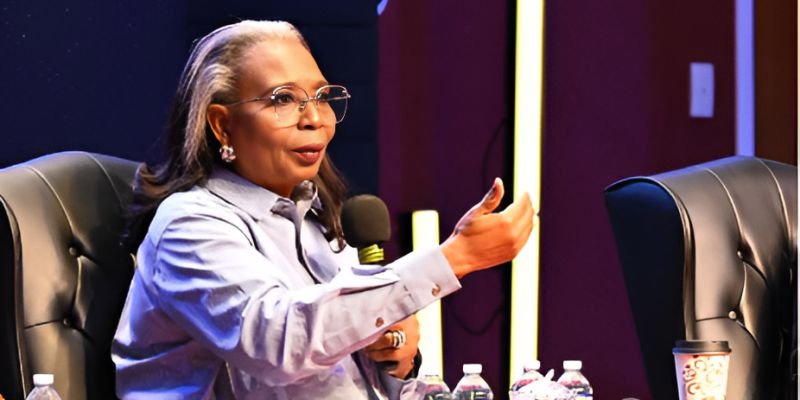
Every society remembers the people who build companies. Far fewer remember those who build people. Factories can expand through capital and markets, yet confidence, courage, and vision require something harder to manufacture. They demand guidance shaped by experience and honesty earned through struggle. Ibukun Awosika belongs to that second category of builders, the kind who measure success through the lives strengthened along the way.
Her journey through business leadership began with enterprise, though it gradually transformed into something larger. She currently operates as an entrepreneur while serving on boards and mentoring others and writing books and advocating for responsible leadership worldwide.
Starting Where Certainty Rarely Exists
Entrepreneurs start their journeys with initial excitement. Sustaining it demands endurance. The Chair Centre Group which Awosika established in Nigeria during 1989 faced challenges because the business environment made it difficult for young women entrepreneurs to enter established markets. The furniture manufacturing process required businesses to establish credibility and develop supply chains while gaining customer trust for their brand names. She built that trust step by step.
The company established itself as a trustworthy provider of furniture manufacturing and security systems which proved that local companies could achieve success through their commitment to quality. Her initial achievement established her as a person who dedicated herself to developing long-term success instead of seeking immediate recognition.
Her academic background in chemistry may seem unrelated to entrepreneurship but she explains her learning process through her development of curiosity rather than following fixed career paths. Education opened doors which led him to different opportunities while he discovered his true purpose through practical experience.
People developed their leadership abilities through taking on responsibilities instead of pursuing leadership positions for personal gain.
A Seat at the Table That Changed Expectations
The financial sector of Nigeria maintained its traditional hierarchical structure throughout its existence. The appointment of Awosika as First Bank of Nigeria chairperson, which made her the first woman to hold that position at one of Nigeria’s oldest and most prominent institutions, produced both practical duties and symbolic importance.
Banks control the three main factors which determine economic stability and investment choices and public trust in financial systems. The institution needed direction through its developing institutional changes which emerged from both regulatory updates and technology advancements.
Her time as an executive proved her point which she repeatedly makes during public discussions. The ability to lead exists beyond people who share typical traits of previous leaders.
People need to understand that visibility affects their capacity to invent new things. The young professionals who watched her lead board meetings found new possibilities which they had previously accepted as permanent restrictions.
That visibility continues shaping conversations around gender and leadership across Africa.
Leadership That Moves Outside the Boardroom
Corporate success alone never defined her ambitions.
Awosika has dedicated her time to establishing mentorship platforms which help young professionals develop their leadership abilities. As co founder of Women in Management, Business and Public Service, she helped create networks that support women navigating industries where advancement often depends on access as much as talent.
The Afterschool Graduate Development Centre followed a similar philosophy. The organization helps Nigerian youth who face employment challenges by providing graduate students with both job readiness training and business skills development programs.
These initiatives reflect a belief that opportunity expands when preparation meets access.
Her Ibukun Awosika Leadership Academy continues that work on an international scale. In 2025, the academy launched African Marketplace Dubai, an ambitious platform designed to connect export ready African and Caribbean businesses with global investors and partners. The initiative aims to reshape perceptions about African enterprise while creating direct pathways into international markets.
Commerce becomes cultural diplomacy when entrepreneurs gain visibility abroad.
Speaking Truth About Wealth and Responsibility
Experience in banking gave Awosika insight into financial realities many families rarely discuss openly.
In early 2026, she publicly warned about hidden debt and the illusion created by outward displays of prosperity. Drawing from years of observing financial records, she described situations where families discovered heavy liabilities only after losing loved ones.
Her message focused on honesty within households as much as discipline within business.
Success, she argued, must rest on transparency rather than performance designed for public admiration.
Such commentary reflects a recurring theme throughout her work. Leadership carries responsibility towards people who trust appearances without seeing underlying risks.
Financial wisdom therefore becomes a form of protection.
A Voice in Global Conversations
Awosika’s influence extends far beyond Nigeria’s borders.
She belongs to international advisory boards which cover multiple fields including energy, education, governance and technology. The UK G7 Impact Taskforce designated her as a global initiative because international standards need better representation from emerging markets.
Through her recent writing and speaking activities she has demonstrated that international systems need to include representatives from Global South countries. Emerging economies experience major impacts from sustainability reporting and investment transparency and development strategies, but decision making has traditionally favored developed countries.
Her argument carries practical urgency. Policies created without inclusive participation risk misunderstanding local realities.
Global conversations grow stronger when experience from multiple regions shapes outcomes.
Mentorship as a Movement
Many leaders inspire through speeches. Awosika prefers creating environments where action follows inspiration.
The International Woman Leadership Conference, which she convenes in Dubai, brings together hundreds of participants from multiple continents each year. During the 2025 gathering, attendees received direct financial support and professional opportunities after openly sharing career challenges.
One participant secured funding for further education. Another received investment support for a business venture.
Moments like these reveal her philosophy clearly. Encouragement matters, though resources create lasting change.
Participants often describe the experience as transformational because conversations move quickly into solutions.
Leadership becomes practical rather than symbolic.
Navigating the Digital Age
People today have to deal with fresh dangers because artificial intelligence technologies enable new forms of public manipulation. In 2026 Awosika encountered AI-generated videos which falsely displayed her as an endorser of investment projects.
The incident showed how technological developments now enable fraudsters to create fake identities of specific public figures. She delivered an immediate response which included two messages that warned people about digital deception while she told them to protect themselves from online threats.
The incident showed that contemporary leaders need to manage uncharted areas which extend beyond their traditional duties.
Modern organizations need to protect their reputation because they must deal with both their regular duties and this new challenge of technological abuse. Digital deception has created a new threat which can instantly damage trust that was built through extended personal contact.
Faith, Culture, and Identity
Awosika shares her decision-making process because she describes the values which drive her choices while connecting her business knowledge to her personal beliefs. Her Christian faith determined her outlook on life which she used to create the Christian Missionary Fund that provides educational and healthcare services throughout Nigeria.
The media and storytelling work she does shows her desire to understand how culture affects society. She has worked on film productions and she has written books which investigate leadership and life purpose and personal development.
The various forms of storytelling which exist in enterprise and mentorship and advocacy work together because they all pursue the same goal. The platforms create new opportunities to influence how people understand things.
Building Futures That Outlast Careers
Many executives leave behind balance sheets and annual reports. Awosika appears more interested in legacy measured through human development.
Thousands of professionals have passed through her mentorship programmes. Entrepreneurs gain access to international markets through initiatives she designed. Young women enter leadership roles encouraged by visibility she helped create.
Her work suggests that economic progress and personal growth remain deeply connected.
A thriving business sector depends on leaders who understand responsibility as clearly as ambition.
Across conferences, boardrooms, classrooms, and global forums, she continues building networks where opportunity travels further than individual achievement.
Some leaders build institutions that carry their names. Others build confidence that carries into rooms they may never enter themselves.
Ibukun Awosika has chosen the second path, shaping leaders who will continue conversations long after applause fades, ensuring that enterprise serves people rather than the other way around.