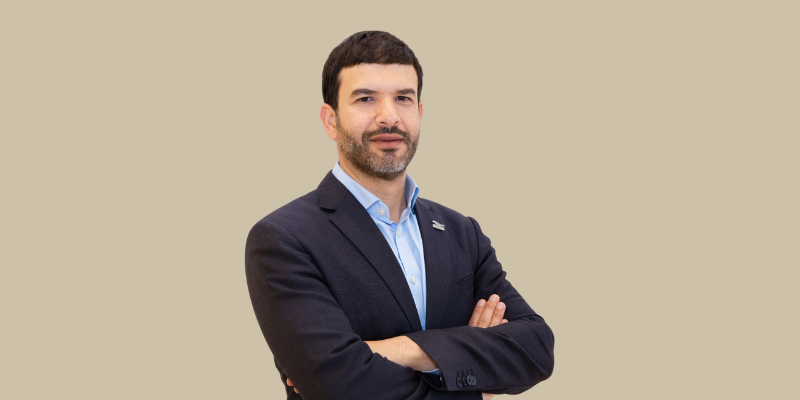
In the global knowledge economy, universities that shape industry outcomes and policy direction stand apart from traditional academic centers. Hicham El Habti has guided one such transformation in Morocco, turning Mohammed VI Polytechnic University into a high impact platform for applied science, entrepreneurship, and leadership development.
His work centers on a clear belief. A university can serve as an engine for economic progress when research, industry, and public interest move in alignment. Through that lens, UM6P has grown into a destination for advanced study and solution driven research, with influence stretching across Africa and into global innovation networks.
The institution today hosts thousands of students and a strong doctoral community, supported by deep research infrastructure and cross disciplinary programs. Its trajectory signals a new model of African higher education built around application, scalability, and measurable outcomes.
From Industrial Strategy to Academic Transformation
Before leading UM6P, El Habti spent years inside OCP Group, one of the world’s largest phosphate producers. His work there focused on strategy and development, areas that demand long term planning, capital discipline, and ecosystem thinking.
That background shaped his academic leadership style. He approaches university building the same way one would design a future ready enterprise. Every research program connects with industry relevance. Every academic investment aligns with a broader development objective. Every partnership supports a larger innovation chain.
This industry informed mindset has helped UM6P evolve at speed. Instead of slow academic drift, the university runs with strategic direction, performance metrics, and global benchmarking. The result is a campus culture where research carries commercial, social, and environmental value.
A Convergence Model for Modern Education
At the core of El Habti’s framework sits convergence. Science, technology, business, and governance operate as interconnected domains rather than isolated faculties. Students and researchers work across disciplines, combining technical depth with market awareness and policy understanding.
This model encourages applied output. Research teams collaborate with entrepreneurs. Engineers engage with agricultural specialists. Data scientists work alongside energy experts. Such proximity creates faster translation from discovery to deployment.
Programs at UM6P emphasize field testing, pilot projects, and real environment validation. Laboratories connect with farms, mines, energy sites, and manufacturing units. Knowledge flows in both directions, from theory to practice and from practice back into theory refinement.
Graduates leave with research credentials plus execution capability. Many contribute to sectors such as sustainable agriculture, advanced materials, renewable energy, and resource optimization. Their work supports regional resilience and long term productivity.
Research as an Economic Multiplier
Global university rankings often track publication volume and citation influence. Under El Habti’s leadership, UM6P has also focused on research utility and ecosystem impact. That balance has earned international recognition, including a strong position in global rankings published by Times Higher Education.
Yet the deeper measure of success appears in sector transformation. Research output supports soil health improvement, fertilizer efficiency, water management, and climate adaptation. These areas carry direct consequences for food systems and economic stability across Africa.
The university functions as a living research platform. Startups, corporate labs, policy groups, and international scholars operate within the same environment. Shared facilities and shared datasets accelerate progress. Funding structures encourage experimentation with accountability.
This approach turns research into an economic multiplier rather than an isolated academic exercise.
Africa Centered Innovation with Global Standards
El Habti promotes a strong message about African scientific leadership. He encourages locally driven innovation that addresses continental priorities while meeting global quality standards. Food security, climate resilience, energy transition, and sustainable mining rank high on the agenda.
UM6P attracts talent from across Africa and beyond, creating a diverse research community. Doctoral programs draw scholars who aim to solve region specific challenges through advanced science and engineering. International collaborations extend reach while preserving local relevance.
The campus design itself reflects this mission. Research clusters, incubation centers, and experimental platforms sit close together. That physical proximity supports constant exchange of ideas and rapid iteration of solutions.
Such structure creates a scientific ecosystem rather than a traditional lecture driven campus. Curiosity receives institutional support. Collaboration receives funding priority. Implementation receives equal weight with theory.
Leadership Rooted in Analytical Rigor
El Habti trained in applied mathematics and economics at leading French institutions, including École Polytechnique and École Nationale des Ponts et Chaussées. That analytical foundation shows up in his decision making style. Strategy receives data backing. Investments follow modeled scenarios. Program expansion follows measurable demand.
He treats uncertainty as a variable to manage rather than a barrier. Pilot programs, phased rollouts, and feedback loops guide institutional growth. This disciplined method reduces risk while preserving ambition.
Faculty recruitment also follows this logic. The university seeks researchers who combine academic excellence with field engagement. Teaching integrates research projects, industry challenges, and entrepreneurial exposure.
The Next Chapter for Impact Universities
The UM6P journey under Hicham El Habti offers a blueprint for universities across emerging markets. Strong industry linkage, applied research focus, interdisciplinary design, and leadership discipline create a powerful mix.
As global challenges grow more complex, institutions that connect science with execution will shape real progress. Universities that operate as innovation ecosystems will influence markets, policy, and social outcomes.
Through strategic clarity and ecosystem building, El Habti has positioned UM6P as a high impact knowledge hub with continental significance and global voice. That trajectory signals a broader shift in how academic institutions contribute to economic and technological advancement.