For years, the International Finance Corporation (IFC) has carried an uncomfortable label in parts of Africa: dependable, but too careful. In a region where urgency often outpaces traditional finance, IFC’s conservative approach was sometimes viewed as a brake, not a boost.
Now, under Ethiopis Tafara, that perception is beginning to shift.
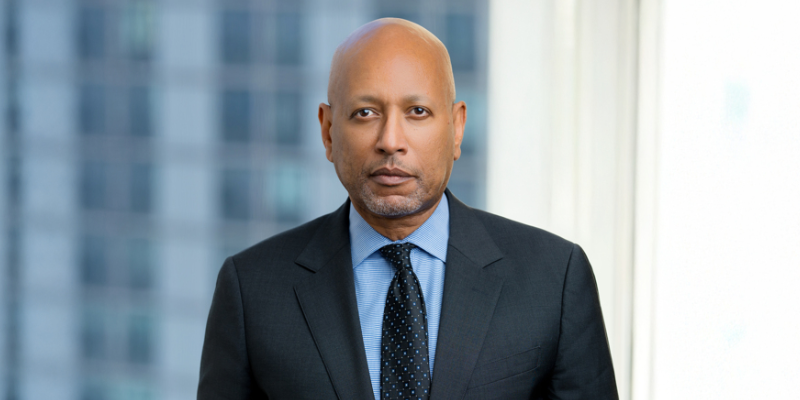
Tafara stepped into the role of IFC’s Vice President for Africa with a mandate that is both simple and hard: keep Africa investable, even when the world is distracted. He oversees a portfolio measured in billions and a team spread across the continent, but his leadership is increasingly defined by a sharper question: How do you move private capital into places where risk is real, but so is opportunity?
Public money is tightening, and the gap is growing
Across Africa, fiscal space is shrinking. Governments are juggling rising debt-service costs, social spending needs, and infrastructure demands, often with fewer options than before. The old model, where public budgets and donors carried most of the load, is not holding up under today’s global pressures.
That is where Tafara’s approach feels timely. Instead of waiting for perfect conditions, the focus is on structuring deals that can attract capital despite volatility, and proving that development and returns do not have to sit on opposite ends of the table.
This shift matters because Africa’s development financing gap remains massive, while external financing is becoming harder to access. At the same time, domestic pools of capital exist, but are not yet fully unlocked for productive investment.
A risk expert leading growth: the advantage Tafara brings
Tafara is not a leader who is learning risk on the job. His career has been built around it.
Before IFC, he held senior roles in global finance and risk institutions, including experience in political risk insurance through the World Bank Group ecosystem. That matters in Africa, where one of the biggest investment blockers is not a lack of ideas, but a lack of confidence in execution.
His edge is the ability to separate headline risk from bankable risk.
And that is exactly the gap IFC is positioned to close: stepping in early, structuring financing intelligently, and using its credibility to pull in other investors who would not enter alone.
The Tafara shift: calculated boldness, not reckless lending
IFC’s renewed stance in Africa is not about throwing money at problems. It is about making private capital finally work at the scale Africa needs.
That means taking on risk in a way the private market cannot do easily. It also means knowing when IFC’s involvement can change the entire economics of a project by reducing uncertainty for everyone else.
This is where Tafara’s leadership style becomes clear:
be careful, but do not be passive.
IFC’s own strategy has been increasingly centred on market creation, stronger deal pipelines, and mobilising private investment into sectors that can deliver measurable outcomes.
Backing the backbone: SMEs and job creation as the real growth engine
In many African economies, the growth conversation often gets dominated by mega infrastructure projects, large energy deals, and flagship investments.
But Tafara is pushing the spotlight toward the real backbone: small and medium enterprises (SMEs).
The logic is straightforward. SMEs do not only create jobs. They create supply chains. They keep local value circulating. They turn growth into livelihoods.
IFC has been advancing tools like risk-sharing facilities and new ways to improve access to finance for smaller businesses, especially where traditional credit models fail to recognise informal cash flows or thin-file borrowers.
And in a jobs-hungry continent, that focus is not charity. It is smart economics.
Mobilising domestic capital: Africa’s money, working for Africa
One of Tafara’s most important priorities is mobilising domestic capital, because the next decade will not be funded only by foreign investors.
Africa has significant capital sitting inside pension funds, sovereign pools, insurance assets, and local banks. The issue is not always availability. It is structure, regulation, and pipeline.
The goal now is to strengthen local markets so that domestic money can participate in bankable projects, instead of staying locked in low-risk instruments that do not build the real economy.
This is where IFC’s influence goes beyond investing. It also supports the ecosystem: capital markets development, financial sector reforms, and advisory that helps projects become investable.
Local currency and scale: the two levers investors care about
The global investment world has changed its filters.
Large institutional investors are looking for scale. They want projects big enough to absorb meaningful capital. At the same time, Africa continues to face currency volatility that can destroy returns even when the underlying business performs well.
IFC’s renewed push toward local-currency lending directly tackles this pain point. It protects borrowers from currency mismatch and gives investors a cleaner risk profile.
At the Africa Financial Summit, IFC leadership highlighted how local currency approaches and larger project scale can help unlock bigger global flows into Africa.
This is the quiet strategy behind Tafara’s public message:
make Africa’s projects structured for real capital, not just good headlines.
Staying on the agenda when the world is distracted
The world is not short on crises. Capital is being pulled toward markets that feel safe, predictable, and familiar. For Africa, that creates an additional challenge: it has to compete for attention as well as funding.
Tafara’s leadership has stood out because it refuses to let Africa become a footnote.
By pushing IFC to be bolder, to partner more creatively, and to mobilise private capital with sharper tools, he is reinforcing a bigger truth: Africa does not need sympathy investment. It needs smart investment.
The bottom line: profitability and progress can share the same deal
Tafara’s Africa playbook is not built on slogans. It is built on structure.
It is built on the belief that private capital will come, not when risk disappears, but when risk is priced properly, shared intelligently, and supported by institutions willing to lead.
This is what IFC is proving under Tafara:
Africa’s next investment era will not be funded by caution alone.
It will be funded by conviction, credibility, and deals that finally match the scale of Africa’s ambition.