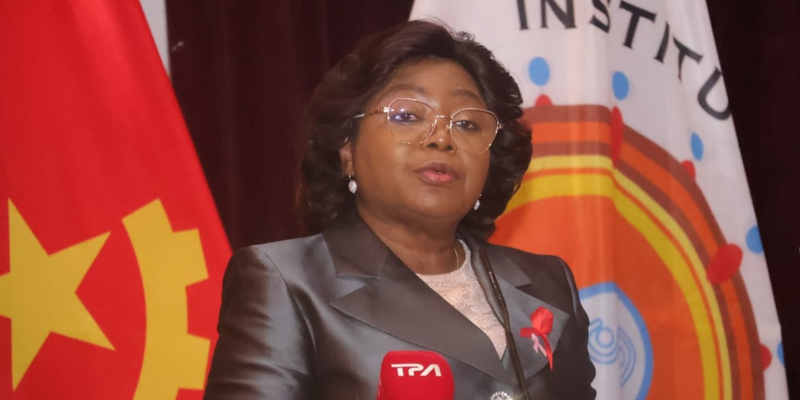
Esperança Maria Eduardo Francisco da Costa is redefining leadership in Angola’s public sector by blending academic excellence with strategic governance. Since she assumed office as the fourth Vice President of the Republic of Angola on September 15, 2022, she has brought a rare combination of scientific discipline and political resolve to the forefront of national development.
Born on May 3, 1961, in Luanda, Angola’s capital, da Costa became the first woman to hold the vice presidency, a historic milestone in a nation navigating economic diversification, regional integration, and social inclusion.
A Strong Foundation in Science and Education
Before entering national politics, da Costa was a distinguished scientist and university professor. She began her academic journey at Agostinho Neto University, graduating in biology in 1985, and later pursued advanced degrees in Portugal, obtaining both a master’s and a doctorate in phytoecology from the Technical University of Lisbon.
Her early career was rooted in academia and research, where she served as a professor of plant biology and led the Luanda Herbarium, a key scientific institution cataloguing Angola’s plant biodiversity. She directed the UAN Botany Center for a decade and played an influential role in expanding higher education across the country.
Her transition from academia to leadership in government came naturally; she applied her deep analytical skills and collaborative mindset to policy implementation long before taking national office.
Stepping Into National Leadership
Da Costa’s political ascent began with her election to the Central Committee of the ruling Movimento Popular de Libertação de Angola (MPLA) in 2019, followed by her appointment as Secretary of State for Fisheries in 2020. Her scientific, academic, and administrative experience became strategic assets for national governance.
In the 2022 general elections, she was chosen as running mate to President João Lourenço, reflecting the party’s intent to integrate technocratic expertise into executive leadership. With the MPLA’s victory, da Costa took the oath as Vice President, signaling a renewed focus on inclusive governance and evidence-based policy.
Championing Human Capital and Sustainable Growth
In her current role, da Costa has emphasized policies that reflect her scientific background and commitment to development. She is deeply involved in expanding education, particularly at the primary and higher levels, to build Angola’s human capital and support economic diversification beyond oil dependency.
Under her leadership, initiatives have been launched to strengthen educational infrastructure and improve teacher training. She also champions women’s empowerment and youth inclusion in science, technology, engineering, and mathematics fields, an effort to broaden participation in Angola’s future economy.
Her vice presidency also intersects with environmental stewardship. Da Costa’s scientific expertise informs Angola’s position on climate resilience and biodiversity conservation, extending her influence into international dialogues on sustainable development.
Global Engagement and Strategic Diplomacy
Da Costa represents Angola on the world stage, participating in high-level forums like the United Nations climate conferences and regional assemblies that promote cooperation on environmental and economic issues. In these spaces, she advocates for adaptation financing and multilateral partnerships that align with Angola’s development goals.
Her diplomatic engagements reflect Angola’s broader ambitions to diversify its economy while fostering regional integration and international cooperation.
Leadership With Broader Impact
Beyond policy and governance, Esperança da Costa’s career symbolizes an important shift in Angolan leadership. Her rise from science to state leadership encourages a new model of public service where expertise, evidence, and inclusive policy intersect. Her voice amplifies not just national priorities but also the role of women in sectors traditionally dominated by men.
As Angola navigates post-election economic strategies and social transformation, da Costa’s blend of academic rigor and political savvy positions her as a pivotal figure in shaping the nation’s next chapter, one grounded in knowledge, inclusion, and long-term growth.