
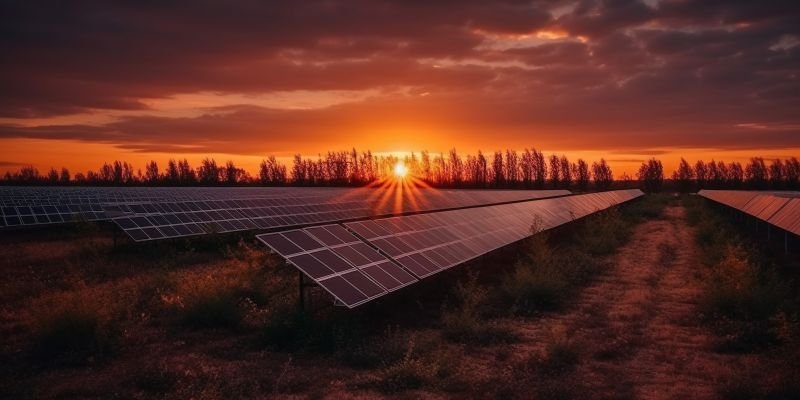
Africa is sitting on one of the most abundant solar resources on the planet. With sunlight levels that dwarf those of Germany, the world’s longtime leader in solar adoption, the continent holds extraordinary promise for clean energy. Governments, development finance institutions, and private investors have poured billions of dollars into solar projects across sub-Saharan Africa, from large utility-scale farms in South Africa’s Northern Cape to village-level mini-grids powering health clinics in rural Mali. The installations go up. The ribbon gets cut. The lights come on.
But then, quietly, things start to go wrong.
The conversation around solar energy in Africa tends to focus almost entirely on installation: how many panels, how many megawatts, how many households connected. What it consistently underestimates, and frequently ignores altogether, is the cost and complexity of keeping those systems running. Dust, heat, and geographic isolation are not minor inconveniences.
They are engineering adversaries that degrade solar performance relentlessly, and without a serious maintenance strategy, even the best-built solar installation in Africa will underperform, deteriorate, and eventually fail.
The Dust Problem: A Silent Yield Killer
Soiling, the accumulation of dust, sand, bird droppings, and other particulate matter on photovoltaic panels, is one of the most underappreciated threats to solar energy output across Africa. In arid and semi-arid regions, which cover a vast proportion of the continent, dust is not an occasional nuisance. It is a constant, daily phenomenon driven by harmattan winds, desert sandstorms, and dry-season conditions that persist for months at a time.
Research consistently shows that in high-dust environments, unclean panels can lose between 15% and 40% of their energy yield within just a few weeks of installation. In the Sahel region, studies have documented soiling losses exceeding 25% during peak dry periods. For a household system, that might mean lights that dim and phone chargers that struggle. For a commercial installation or a mini-grid serving a community hospital, it can mean the difference between a functioning system and a critical failure.
The challenge is not just the dust itself, it is cleaning it off affordably and repeatedly in environments where water is scarce. Dry brushing can scratch panel surfaces and reduce long-term efficiency. Water cleaning is effective but logistically difficult in regions where water must be fetched, purchased, or carefully rationed. Automated cleaning solutions exist but require significant upfront investment and ongoing maintenance of their own. For most rural African solar installations, cleaning remains a largely manual, irregular, and inadequately resourced task.
Heat Stress: When the Sun Becomes the Enemy
Solar panels generate electricity from light, not heat, and high temperatures are, counterintuitively, bad for solar performance. Every photovoltaic module has a temperature coefficient that quantifies how much output drops for each degree Celsius above the panel’s rated test temperature of 25°C. For most crystalline silicon panels the dominant technology globally, that coefficient is around -0.4% per degree Celsius.
In West Africa, East Africa, and the Horn of Africa, ambient temperatures regularly exceed 35°C, with panel surface temperatures climbing to 60°C, 65°C, or even higher in the midday sun. At 65°C, a panel operating at its rated capacity of 400 watts may actually be delivering closer to 320 to 340 watts. Across an entire installation, this thermal derating represents a significant and persistent loss that is rarely factored into project revenue models or energy access projections.
Beyond output reduction, sustained high temperatures accelerate the degradation of solar modules over time. Thermal cycling, the daily expansion and contraction of panel components as temperatures swing between night and day, stresses solder joints, encapsulants, and junction boxes. In African climates, where temperature swings can be dramatic and sustained, panels may degrade faster than the 25-year performance warranties suggest. When degradation claims arise, navigating warranty processes with manufacturers based in China, Germany, or the United States from a village in Chad or Mozambique presents its own formidable challenge.
The Distance Factor: Maintenance Beyond the Last Mile
Geography may be the most brutal constraint of all. Africa’s solar installations are often deliberately located in the most remote and underserved communities, precisely because those are the people who need energy access most urgently. But remoteness that defines the need for off-grid solar also makes maintaining it extraordinarily difficult.
When an inverter fails in a rural solar mini-grid in northern Nigeria or southern Ethiopia, the repair process can unfold over weeks or months. A qualified technician must first be identified, no trivial task in countries where certified solar engineers are overwhelmingly concentrated in capital cities. Travel to the site may require navigating unpaved roads that become impassable in the rainy season. The replacement part must be sourced, potentially imported, and transported through a supply chain that may involve multiple intermediaries and long delays.
Meanwhile, the community that the system was built to serve sits in the dark. Health facilities lose refrigeration for vaccines. Students cannot study after sunset. Small businesses that depend on reliable power revert to expensive diesel generators or simply shut down. The human cost of maintenance failure is immediate, tangible, and severe, but it rarely appears in the metrics used to evaluate solar project success.
The economics of remote maintenance are equally punishing. A service visit that might cost $50 in a city suburb can easily cost $500 or more when travel, accommodation, and technician time are factored in for a truly remote site. Many project developers and NGOs that fund installations simply do not budget adequately for this reality, treating maintenance as an afterthought rather than a core component of the business model.
Building a Maintenance Culture: What Works
The good news is that practical, affordable solutions exist, when they are genuinely prioritised. Community-based maintenance models, in which local technicians are trained and equipped to handle routine upkeep and minor repairs, have shown strong results across East and West Africa. Programmes in Rwanda, Kenya, and Ghana have demonstrated that with proper training, local agents can dramatically reduce system downtime and extend asset lifetimes.
Remote monitoring technology is rapidly becoming more accessible and affordable. IoT-enabled systems that transmit real-time performance data via mobile networks allow operators to detect soiling events, component failures, and performance degradation without requiring a physical site visit for diagnosis. This shift from reactive to predictive maintenance can significantly reduce costs and downtime.
Cleaning protocols need to be built into project design from day one, with attention to local water availability and the specific dust conditions of each site. Anti-soiling coatings for panel surfaces are improving in quality and falling in cost, offering a promising long-term reduction in cleaning frequency for new installations.
Perhaps most importantly, financing structures need to evolve. Pay-as-you-go solar models and energy-as-a-service contracts, where the developer retains ownership and responsibility for the system’s performance, create stronger incentives for sustained maintenance than one-time capital grants. When the company’s revenue depends on the system actually running, maintenance stops being optional.
Conclusion
Africa’s solar opportunity is real. The sunlight is abundant, the need is urgent, and the technology is mature. But the gap between installed capacity and reliable delivered energy will continue to widen unless the industry, governments, and funders fundamentally rethink their approach to solar maintenance on the continent.
Dust does not take a day off. Heat does not moderate itself. Distance does not shrink because a project deadline has passed. The hidden costs of maintaining solar in Africa are not hidden at all, they are entirely predictable, well-documented, and persistently underaddressed. Closing that gap is not a technical problem. It is a question of whether the sector is willing to take maintenance as seriously as installation.
Until it does, Africa’s solar revolution will remain, for too many communities, a promise that fades with the light.