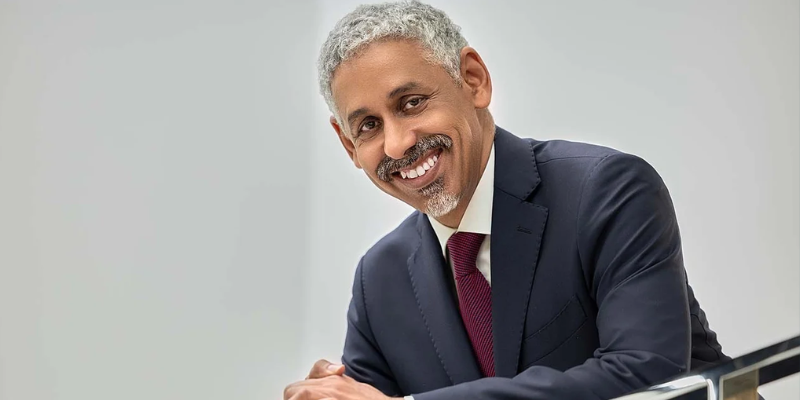
When Dr. Sidi Ould Tah was elected President of the African Development Bank (AfDB) on 29 May 2025, it was not just a leadership change. It signaled a new phase for Africa’s biggest development lender, arriving at a moment when global funding is tightening and expectations from the continent are rising fast.
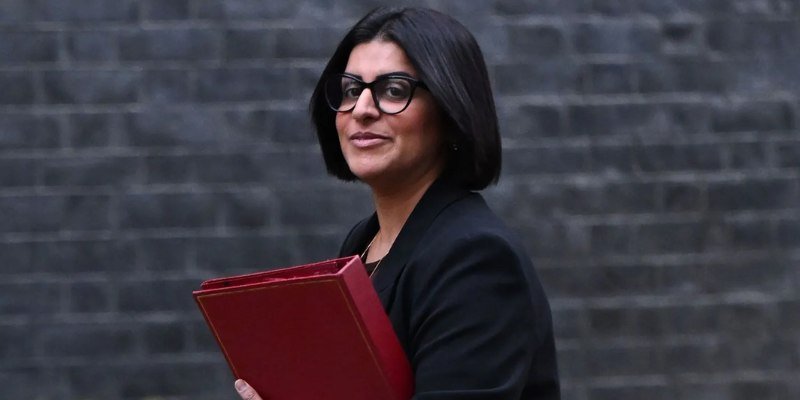
His election also came alongside another major transition in Africa’s multilateral finance ecosystem: Afreximbank naming Dr. George Elombi as its next President, succeeding Professor Benedict Oramah. The message across the continent’s top financial institutions is clear: a new generation of leadership is stepping in, and the next chapter will be shaped by capital mobilisation, pragmatism, and partnerships that go beyond the traditional donor map.
A Quiet Leader Taking Over a Loudly Demanding Moment
Dr Tah is widely seen as the opposite of his predecessor, Dr Akinwumi Adesina, whose leadership style was energetic and highly visible on the global stage. Tah’s approach appears more measured and finance-first, shaped by years of navigating development capital, sovereign relationships, and cross-regional partnerships.
But while styles may differ, the pressure is arguably greater now.
Africa’s development ambitions have not slowed down. If anything, they have expanded. Yet the external financing environment has become less generous. Western donor governments face increasing domestic fiscal pressures, and funding priorities are shifting.
That means the AfDB’s next era will not be defined by speeches alone. It will be defined by how quickly and creatively the Bank can secure long-term, scalable funding for Africa’s transformation.
The New Reality: A Widening Development Finance Gap
Africa’s development finance challenge is not theoretical. It is measurable, visible, and increasingly urgent.
In recent reporting, Sidi Ould Tah highlighted that the continent faces a development financing gap estimated at $402 billion annually, driven by external shocks and rising needs across infrastructure, agriculture, sanitation, and industrial capacity.
This gap matters because it hits the core of what development banks are supposed to do: accelerate growth where commercial capital hesitates, and bridge the difference between what is needed and what is currently investable.
And this is where Tah’s leadership will be tested early.
Because the pressure is not only to raise more funding. It is to raise the right kind of funding: long-tenor, stable, and affordable enough to support projects that take years to deliver returns, like transport corridors, port expansion, power grids, and water infrastructure.
A Built-in Advantage: The Arab World Connection
Tah’s strongest strategic advantage is not a slogan. It is his network.
Before leading AfDB, he headed the Arab Bank for Economic Development in Africa (BADEA), placing him at the center of Arab development finance flows into African economies.
This matters because the Arab world holds vast capital reserves and has a growing strategic interest in African growth sectors: logistics, agriculture, energy, manufacturing, and trade infrastructure.
Soon after taking office, AfDB under Tah moved quickly to strengthen ties with the Arab Coordination Group (ACG), a coalition of Arab development finance institutions. AfDB held its first meeting with the group in Abidjan, with a focus on building a more structured partnership model to mobilise long-term capital for industrialisation, job creation, and infrastructure.
This is not symbolic diplomacy. It is a financing strategy.
A formal declaration was signed to set co-financing priorities and create a coordination platform aimed at targeting large-scale regional projects, rather than smaller one-off investments.
Diversification Will Be the New Survival Skill
Tah is stepping into a world where development institutions can no longer rely heavily on predictable Western donor cycles. AfDB will still work with them, but the Bank’s growth strategy is being pushed toward diversification.
That includes deeper engagement with emerging and non-traditional partners.
Frannie Léautier of the Atlantic Council has described expectations that Tah will strengthen domestic resource mobilisation, implement innovative financing instruments, and expand partnerships with emerging powers such as Turkey, the UAE, and Saudi Arabia.
For Africa, this shift has a business implication: capital will flow toward execution-ready projects with regional relevance, bankable structures, and clear economic impact.
It also means governments and private sector players will need to align with a new financing language, where blended finance, guarantees, co-lending, and private capital mobilisation become central, not optional.
Afreximbank’s Transition Signals a Bigger Continental Pattern
The AfDB change of guard is not happening in isolation.
Afreximbank, another cornerstone institution in Africa’s financial architecture, formally transitioned leadership to Dr. George Elombi, who took over from Prof. Benedict Oramah.
This matters for one reason: Africa’s multilateral financial institutions are preparing for a higher-stakes decade.
Trade finance, industrial development, regional integration, and resilience funding are becoming more interconnected. When AfDB shifts its funding approach, and Afreximbank strengthens its trade and export focus, the opportunity is in building coordinated momentum across the continent.
For businesses, that could translate into stronger pipelines for regional infrastructure, industrial clusters, cross-border trade systems, and financing that is better aligned with Africa’s real growth engines.
What Success Looks Like Under Tah
If Tah succeeds, it will likely look less dramatic but far more structural.
It will show up in:
- Larger co-financed infrastructure programs that span regions, not just countries
- Stronger capital mobilisation from Gulf and Arab development finance institutions
- More domestic resource mobilisation and financial innovation
- Funding models that attract private sector participation without inflating risk
- Faster execution cycles, with more focus on implementation performance
This is not a “new era” headline. It is the hard work behind it.
A Steady Hand for a Tougher Road Ahead
Sidi Ould Tah takes the AfDB presidency at a time when Africa cannot afford stalled development. The demands are urgent, the capital gap is real, and traditional funding channels are under stress.
But his background signals something important: this is a leader built for negotiation, structuring, and capital mobilisation.
And in this climate, that might be exactly what Africa’s biggest development lender needs.
Because the future of African development finance will not be won by ambition alone.
It will be won by partnerships, funding innovation, and the ability to turn relationships into real money on the table.