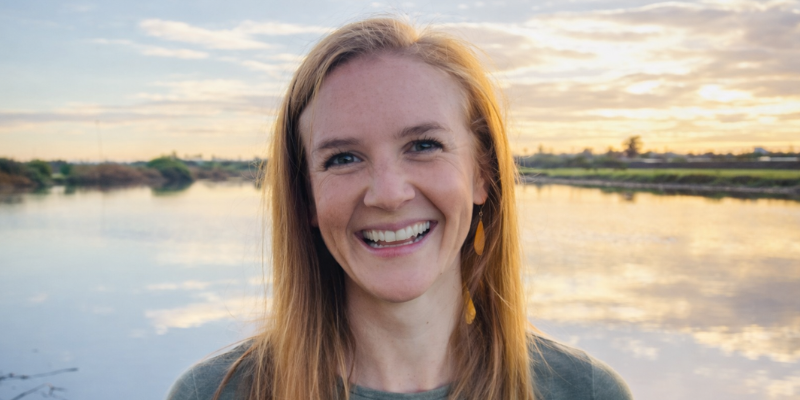
Dr. Hayley Clements is not a typical academic. Her work sits where ecology meets economics, where biodiversity science informs policy and business decisions that shape futures for people and the planet. As a senior researcher and lecturer at Stellenbosch University, she focuses on how African biodiversity connects to human well-being and economic opportunity, a perspective increasingly relevant to business leaders facing environmental risk and social expectations.
Her research brings together complex systems thinking, economic insight, and sustainability science. It helps leaders understand that nature is not separate from markets, supply chains, or investment climates. In fact, natural systems are a foundational part of long-term economic viability and resilience.
A Multidisciplinary Approach to Impact
Clements holds a PhD in Biological Sciences and has held postdoctoral appointments in both Australia and South Africa. Her work draws on decades of research and collaboration across countries and disciplines to advance understanding of social-ecological systems, the intertwined networks of humans and ecosystems that support livelihoods and industry alike.
At Stellenbosch University, she is affiliated with the Centre for Sustainability Transitions and the African Wildlife Economy Institute, centers that bridge academic research and real-world sustainability challenges. Her research is not confined to journals. It is used by policymakers, conservationists, and businesses seeking practical strategies for navigating environmental change with economic stability in mind.
Her commitment to impact-oriented research shows in her leadership of projects like the Biodiversity Intactness Index for Africa, which aggregates expert knowledge to create a continent-wide metric that can guide sustainable development, investment decisions, and conservation policy. This initiative brings a new kind of data into conversations about development, empowering leaders with actionable evidence rather than assumptions.
Redefining Value in Business Decisions
In the conventional approach of business thinking, biodiversity often regarded as an externality – the element not taken into consideration at the core financial calculations. Clements, however, goes against that concept. She claims that the health of the environment and the health of the economy are two sides of the same coin. When companies do not consider the changing ecosystems, they put themselves in danger. On the other hand, when they do consider it, they unlock the doors for innovations, marketing advantages, and growth that is sustainable.
Her research motivates firms to adopt the meeting regulations or social responsibility approach only and to actively incorporate the understanding of nature into their strategies and risk management. The method appeals to the higher-ups who recognize that climate alteration, extinction of species, and the public’s norms are driving changes in the market and legal environments.
Driving Sustainability Through Collaboration
Clements thinks the best solutions are those that involve all disciplines together. Her collaborations include faculty from different universities, wildlife protection organisations, and global research networks. She highlights that the complex sustainability problems cannot be solved by a single sector or discipline. For the corporate heads this presents a roadmap of collaboration: remove the barriers that separate science, industry, government, and civil society, and that would lead to comprehensive solutions.
Her research deals with very critical issues related to land use, conservation zones, animal economies, and social-economic growth. It does not only dwell on the academic ground, but also goes to the extent of shaping the manner in which the business and governments deal with investment, resource handling, and participation of communities.
Translating Insight Into Action
Clements’s work is also about capacity building, teaching future leaders to think systemically. In classrooms and research projects alike, she mentors students and professionals who will carry sustainable thinking into diverse sectors from finance to infrastructure, from agriculture to tourism. Her influence extends far beyond Stellenbosch University’s campus, touching policy circles, conservation networks, and business forums focused on Africa’s future.
A New Model for Business-Environmental Leadership
For executives navigating a world of climate uncertainty, biodiversity decline, and shifting stakeholder expectations, Clements offers a model rooted in evidence, systems thinking, and proactive engagement. Her work shows that protecting nature and building economic resilience are not opposing objectives. They are complementary strategic priorities.
Her research reminds leaders that sustainable business is not a buzzword. It is an investment in stability, reputation, and long-term value creation. And in a continent rich with ecological diversity and economic potential, that balance matters for companies and communities alike.