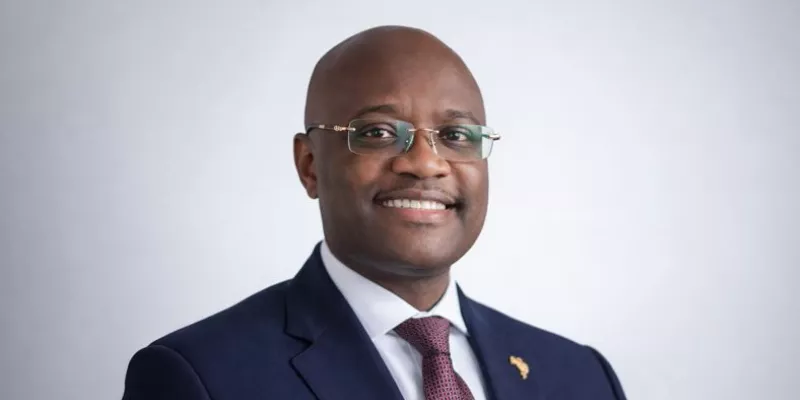
Power rarely announces itself with spectacle in serious institutions. On 28 June 2025 in Abuja, Nigeria, the shareholders of African Export-Import Bank made a decision that will shape Africa’s trade and industrial future for decades. Dr. George Elombi was appointed President and Chairman of the Board, becoming only the fourth leader in the Bank’s 32 year history.
The moment was understated. The implications are not.
At a time when Africa faces tightening global capital, fragmented supply chains, and renewed pressure to industrialise from within, Afreximbank chose continuity anchored in deep institutional knowledge. Elombi is not an external reformer. He is a builder who has spent nearly three decades shaping the institution from the inside.
From Legal Foundations to Strategic Command
Elombi’s journey at Afreximbank began in 1996, when the Bank itself was still consolidating its role as a continental financial anchor. He joined as a Legal Officer, bringing with him academic experience from the University of Hull in the United Kingdom and a rigorous grounding in commercial law.
What followed was a methodical rise through the institution’s core governance engine. Senior Legal Officer. Chief Legal Officer. Deputy Director for Legal Services and Executive Secretary. Director and Executive Secretary. Each role placed him closer to the Bank’s strategic nerve center, where legal architecture, governance discipline, and shareholder confidence intersect.
In 2015, he was appointed Executive Vice President for Governance, Legal and Corporate Services. That role would define his legacy long before the presidency came into view.
Architect of a Modern Pan African Institution
Behind Afreximbank’s public profile lies a complex group structure designed to expand reach, manage risk, and deploy capital with precision. Elombi was central to that transformation.
He led the creation and consolidation of Afreximbank Group subsidiaries, extending the Bank’s capacity beyond sovereign and corporate lending into equity investment, advisory services, and trade facilitation. These moves were strategic, not cosmetic. They positioned the Bank to support Africa’s industrial value chains rather than merely finance exports.
Under his supervision, governance reforms strengthened board processes, compliance systems, and institutional credibility. For international investors and African shareholders alike, that credibility became a competitive advantage.
Leadership Under Pressure: The Pandemic Test
Elombi’s leadership was tested most visibly during the COVID 19 crisis. As Chair of the Emergency Response Committee, he coordinated Afreximbank’s response at a moment when global access to vaccines and medical supplies was deeply unequal.
The Bank mobilised more than US$2 billion to support vaccine acquisition and deployment across Africa and the Caribbean. It was one of the largest coordinated financing efforts by a multilateral African institution during the pandemic. The operation required speed, diplomacy, legal precision, and financial muscle. It also reinforced Afreximbank’s role as a first responder in continental crises.
Strengthening the Balance Sheet
While crisis management drew public attention, Elombi was also focused on the fundamentals. Overseeing Equity Mobilisation and Investor Relations, he played a key role in raising approximately US$3.6 billion in ordinary equity by April 2025.
For a pan African institution operating across volatile markets, that capital base matters. It determines lending capacity, risk tolerance, and strategic ambition. It also underpins the shareholders’ long term vision of building Afreximbank into a US$250 billion institution within the next decade, a goal Elombi has publicly embraced.
A Mandate Shaped by Trust
Elombi’s appointment followed a rigorous, global selection process launched in January 2025. An international call for applications, interviews conducted by an executive search firm, and final vetting by the Board of Directors culminated in shareholder approval at the Annual General Meeting in Abuja.
Under the Afreximbank Charter, the President serves a five year term, renewable once. In accepting the mandate, Elombi framed his leadership around stewardship rather than reinvention.
“I see Afreximbank as a force for industrialising Africa and for regaining the dignity of Africans wherever they are,” he said. “I will work to preserve this important asset.”
Credentials and Recognition
Elombi holds a Master of Laws and a PhD in commercial arbitration from the London School of Economics, alongside a Maitrise en Droit from the University of Yaoundé. His career reflects a rare combination of legal scholarship, institutional governance, and strategic finance.
In 2019, the Government of Cameroon awarded him the Chevalier de l’Ordre de la Valeur, recognising his contribution to African development alongside his predecessor.
The Road Ahead
When George Elombi formally assumes office later in 2025, he will inherit an institution larger and more influential than the one he joined in the 1990s. He also inherits unfinished work. Africa’s trade finance gap remains wide. Industrial capacity is uneven. Global competition is unforgiving.
What distinguishes this transition is not ambition alone, but preparation. Afreximbank has placed its future in the hands of someone who knows its systems, its shareholders, and its strategic pressure points.
For Africa’s traders, manufacturers, and policymakers, that choice signals one thing clearly. The next phase is not about finding direction. It is about scaling it.