For years, Simandou carried the reputation of a legendary African project: enormous in promise, complicated in execution, and constantly delayed by the realities of scale, financing, and coordination. Like the Inga Dam in the Democratic Republic of Congo, it looked transformational on paper, yet seemed destined to remain stuck in headlines and feasibility studies.
That era has ended.
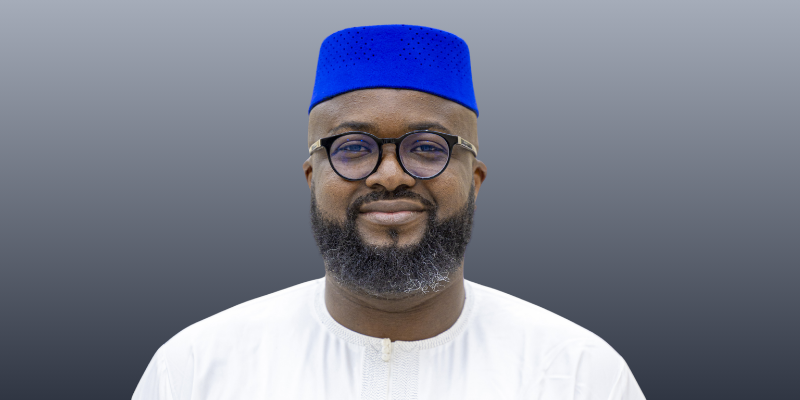
By the close of 2025, first shipments from the Simandou iron ore mine will finally begin, marking a turning point not only for Guinea, but for the global iron ore market. Behind this breakthrough stands Djiba Diakité, Guinea’s Minister and Chief of Staff to the Presidency, a central force driving one of the most ambitious integrated resource developments on the continent.
Simandou is no longer a future plan. It is becoming an operational reality, and with it comes a new story of African execution.
A $20 Billion Integrated Industrial Play
The Integrated Simandou Project is valued at roughly $20 billion, designed as a fully connected mine-rail-port complex. Its purpose is clear: unlock one of the world’s largest high-grade iron ore deposits and bring it efficiently to global markets.
This is not a simple extraction project. It is industrial infrastructure on a national scale.
A mine of this magnitude requires logistics that work with precision. Rail capacity must match output. Port throughput must match exports. Governance must hold the structure together. A single failure point can weaken the entire value chain.
Simandou’s integrated design reflects a modern approach to mining economics: build the ecosystem around the asset, instead of treating the asset as a standalone operation.
For Guinea, this establishes a new foundation for national competitiveness.
Changing the Global Iron Ore Equation
High-grade ore carries strategic value in a world that is reshaping heavy industry. Steelmakers are under growing pressure to improve efficiency and lower emissions. High-grade iron ore supports cleaner, more productive steel manufacturing by reducing waste and improving output.
Simandou is expected to reshape iron ore dynamics because it introduces a major volume of premium ore into a market where quality increasingly matters as much as quantity.
This positions Guinea as far more than a supplier. It places the country into a category of strategic relevance for industrial economies, infrastructure builders, and steel value chains worldwide.
In business terms, Simandou is not only Guinea’s growth lever. It is a global supply shift.
From Raw-Material Dependency to Value Creation
The deeper significance of Simandou is what it represents politically and economically. Guinea is signaling a shift away from raw-material dependency toward industrial value creation.
This is the difference between exporting rocks and building a system.
The project is expected to stimulate domestic industries, expand infrastructure, improve connectivity, and unlock broader economic multipliers across employment and services. When executed correctly, a mine-rail-port project becomes a national platform rather than a single revenue stream.
Diakité’s leadership has pushed Simandou into that category: a state-driven industrial transformation engine with long-range intent.
Responsible Mining With Education at the Center
One of the defining features of Simandou under Diakité’s leadership is how revenues are being framed. This is not being positioned as extraction for short-term gain. It is being structured as national reinvestment.
The project’s mining tax revenues include:
- 20% earmarked for education and scholarships
- an additional 5% allocated to the national education system
This is a major governance signal.
It reflects a model where a country treats natural resources as a tool for building human capital. Education funding transforms mining into long-term productivity growth. It shifts the national mindset from depletion to development.
In many African resource economies, the key question has always been the same: where does the value go? Simandou is attempting to answer that question with a concrete framework.
The Architect Behind Guinea’s National Vision
As Minister and Chief of Staff to President Mamady Doumbouya, Diakité has become the architect of Guinea’s bold economic transformation. His role is not ceremonial. It sits at the center of national execution, coordination, and strategic delivery.
He is driving an approach that fuses three major principles into one national direction:
- sovereignty through stronger control of strategic assets
- industrialisation through infrastructure and value creation
- sustainability through long-term planning and responsible frameworks
This blend reflects a new African governance model: pragmatic, ambitious, execution-driven.
Simandou 2040: A $200 Billion Development Blueprint
Diakité’s leadership extends beyond mining into nation-building at scale. He also steers the Simandou 2040 Sustainable and Responsible Socio-Economic Development Program, a 15-year plan valued at $200 billion.
The program includes 122 projects and 36 reforms, aimed at reshaping Guinea’s economic architecture. The intent is clear: transform the country into one that is more prosperous, better connected, and more sovereign.
This kind of planning signals more than optimism. It signals national strategy.
When major countries industrialise, they do so through long-term infrastructure, coordinated reforms, and sustained investment flows. Simandou 2040 is Guinea’s attempt to create that arc, with mining acting as the ignition point, not the final destination.
A Telecommunications Engineer Leading a Mining Revolution
One of the most striking elements of Diakité’s profile is his background. He is a telecommunications engineer and data-strategy expert, an identity that reflects Africa’s evolving leadership pipeline.
This is the rise of the technocratic reformer: confident with complexity, globally fluent, and focused on systems rather than slogans.
Simandou is a project that demands technical fluency. It requires coordination across engineering, logistics, finance, governance, environmental standards, and stakeholder management. Diakité’s skill set fits the demands of the task: turning a national vision into an operational machine.
He is demonstrating how modern African leadership is shifting toward execution capability, long-term planning, and performance delivery.
A Model for Africa’s Green Industrial Renaissance
Simandou positions Guinea as a mining power, yet the larger ambition is more valuable. The project is being framed as a foundation for a green industrial renaissance, where resources are used to build sustainable prosperity rather than fuel dependency cycles.
High-grade ore supports more efficient industrial processes. Rail and port infrastructure expands national logistics capacity. Education funding builds the workforce of the future. Reform programs build investment confidence.
This is how resource wealth becomes national strength.
The Takeaway: Guinea’s New Era Has a Name
Djiba Diakité represents a new kind of African state leadership, one rooted in strategy, engineering thinking, and national execution.
By bringing Simandou to first shipments after years of complexity, he has helped shift Guinea’s story from potential to performance. By anchoring the project inside education, reforms, and long-term socio-economic planning, he is giving it meaning beyond exports.
Guinea is still mining iron ore, yet what it is really exporting now is a signal: Africa can build at scale, govern with intent, and convert natural wealth into shared prosperity.
And Simandou, under Diakité’s guiding hand, is becoming the proof.