In global commerce, customs agencies sit at the crossroads of revenue growth, trade facilitation, and economic security. Ethiopia’s Customs Commission has undergone notable transformation under Debele Kabeta, the Commissioner General who is redefining the role of customs in a rapidly shifting global trade environment.
Appointed in 2018 when the Ethiopian Customs Commission (ECC) emerged as an independent entity from the former Ethiopia Revenues and Customs Authority, Kabeta has focused on institutional strengthening, compliance, and modernization to align Ethiopia with international trade standards.
Modernizing Customs for Competitiveness
Under Kabeta’s stewardship, the ECC has reinforced its role as a critical institution supporting Ethiopia’s economic priorities. The Commission is mandated to enforce customs laws, collect duties, regulate trade activity, and contribute to national revenue targets in coordination with the Ministry of Revenues. Its responsibilities span protecting society from illegal imports, facilitating lawful trade, and compiling vital foreign trade data.
One measurable outcome of this strategic focus was reported growth in revenue collection, with the Commission exceeding its target, achieving 106 percent of planned duties, excise taxes, and VAT in one recent period. Customs enforcement also intensified anti-smuggling efforts, safeguarding over significant value in goods and protecting local industry.
Recognition on the Continental Stage
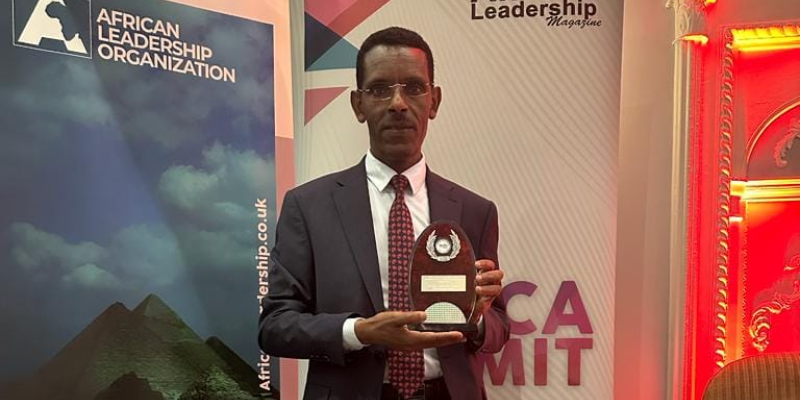
Kabeta’s leadership has gained wider African recognition for its impact on public sector governance and customs modernization. In 2023, he received “The Best Customs Commissioner Award” at the African Leadership Magazine Africa Summit in London, a platform that brings together policymakers, trade leaders, and investors to drive economic cooperation and growth across the continent.
Building on this accolade, in 2025 Kabeta was named African Public Sector Leader of the Year by African Leadership Magazine at their Persons of the Year event. The award underscores his contribution to strengthening institutional efficiency, transparent governance, and public service excellence at both national and regional levels.
These honours do more than decorate a resume. They signal Ethiopia’s growing influence in shaping customs practices that balance enforcement with facilitation, an important element for trade competitiveness in Africa’s evolving economic landscape.
Institutional Innovation and Partnerships
Beyond revenue targets and awards, Kabeta has driven collaborative efforts that expand ECC’s reach and relevance. One such initiative involves partnering with the African Leadership Excellence Academy to establish a dedicated innovation center. This hub, to be developed in coordination with the academy’s broader network of think tanks, is designed to drive research and advancement in customs practices, fostering innovation and leadership development.
These efforts reflect a broader philosophy that customs administrations must evolve beyond regulatory functions to become engines of economic development. Through research, capacity building, and strategic cooperation, ECC under Kabeta is positioning itself as a thought leader in modern trade governance.
Navigating Complex Challenges
The customs landscape remains fraught with challenges. Illicit trade, smuggling, and contraband networks have been persistent obstacles in Ethiopia and across the region. Kabeta has publicly addressed these issues, highlighting the need for stronger enforcement tools, interagency cooperation, and strategic resourcing to counter sophisticated smuggling operations that undermine revenue and legal trade.
Addressing such systemic challenges calls for innovation, coordination with security agencies, and policy solutions that extend beyond customs alone. Yet, Kabeta’s engagement with lawmakers and public institutions demonstrates an understanding that sustainable solutions require collective commitment.
The Business Impact of Customs Leadership
For businesses engaged in import and export, customs efficiency matters. Predictable clearance processes, transparent compliance mechanisms, and collaboration with traders enhance ease of doing business. Under Kabeta’s leadership, ECC has emphasized client service and border management reforms that reduce friction without compromising enforcement. These improvements bolster Ethiopia’s attractiveness as a trade and investment destination.
Looking Ahead
As Ethiopia deepens regional integration and expands its presence in international markets, the role of customs will remain pivotal. Kabeta’s blend of strategic vision, institutional discipline, and commitment to public service excellence anchors ECC’s mission in economic competitiveness and governance integrity.
In a landscape where borders are both literal and symbolic gateways to growth, leadership that understands complexity, accountability, and innovation sets the tone for sustainable trade progress. Debele Kabeta’s trajectory suggests a customs institution not just adapting to change, but shaping it.