
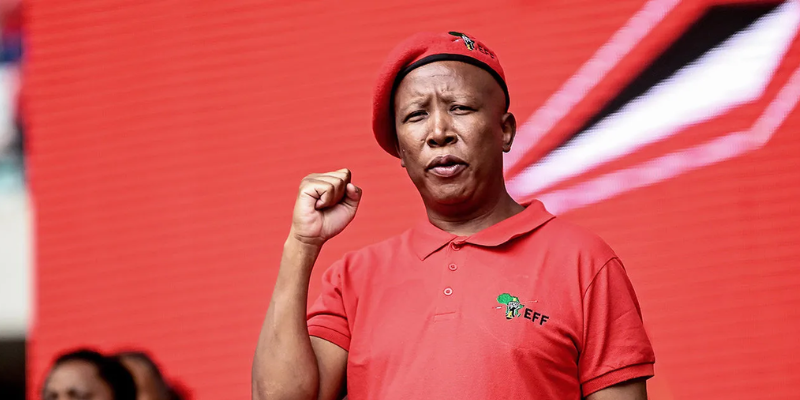
Julius Sello Malema is one of South Africa’s most watched political figures. Born in March 1981 in Seshego, a township in the Limpopo province, he moved early into political life, joining youth movements and gaining prominence as a communicator and organizer. His trajectory from grassroots activism to national leadership has turned him into a household name in South African political life.
Malema’s story is not just political. For the business reader, he represents how bold messaging and brand identity can shape a movement’s appeal and traction. South Africa’s economic climate remains defined by inequality, unemployment, and the persistent legacy of apartheid. In this environment, Malema’s Economic Freedom Fighters (EFF) has carved out influence by aligning its narrative with citizens seeking economic redress and structural change.
Building a Political Brand
In 2013, if Malema did not leave the African National Congress Youth League he wouldn’t have been able to create a political brand which is recognizable by its radical reform. The party EFF, is now the fourth biggest in South Africa’s National Assembly and even counted more than a million members by 2022.
The emergence of the EFF has been a learning experience for the businessmen and women as the main factor among others that led the party to success was the way it was able to position itself clearly and to resonate emotionally with the people thus turning their frustrations into the party’s support.
The party’s branding is not accidental: red berets, militant images, and uncompromising rhetoric all serve to signal urgency and confidence. The EFF, whether you disagree with their positions or not, has managed to create a very different and thus more recognizable identity as compared to the more traditional political brands.
Economic Messaging at the Core
Malema’s major economic concern is one that captures the spotlight as it addresses the core problem of structural imbalances. The EFF is pushing for policies like the non-compensated land expropriation and the nationalization of vital sectors.
These proposals are hotly debated, mainly by the investors and established business interests. However, a large sector of the population which considers the old economic system as elitist does support these proposals.
For the business world, Malema’s economic perspective is a reminder of the impact of narrative on public opinion. The spokesman’s style is clearer and more frequently used which are the characteristics that marketers acknowledge can make a brand in the public eye. The consistent message in parliament and on social networks is that economic freedom has to be both urgent and transformative.
Polarization and Reputation Risk
Malema’s leadership style has not been without controversy. His speeches and actions have drawn legal attention, including convictions related to hate speech and firearm offenses. In 2025 he was found guilty of unlawful firearm possession and other charges following a 2018 incident. That ruling carries potential implications for his political future, including eligibility to serve in parliament if a custodial sentence is imposed.
These controversies present a dual lesson for business readers. First, leadership that challenges established norms can galvanize support and redefine agendas. Second, public figures who adopt highly confrontational approaches also carry heightened reputation risk, particularly when international scrutiny intersects with domestic politics. For CEOs and brand leaders, this tension between bold positioning and reputational exposure is a familiar strategic calculation.
Coalition Politics and Economic Impact
South Africa’s political landscape is fluid. No single party commands an outright majority, which means coalition negotiating power has increased in recent elections. Malema and the EFF have positioned themselves as kingmakers, capable of influencing policy directions through parliamentary alliances or oppositional leverage.
This reality matters for business strategy because national policy, especially on land, resources, and investment, shapes investor confidence. Multinational firms assess political risk as part of capital allocation decisions. Leaders like Malema change the calculus by shifting public debates toward structural reform. Understanding that shift is critical for companies operating in or considering entry into South African markets.
Looking Ahead
Julia Malema is in front of a crossroads. His name still attracts a lot of South African consumers who want change but at the same time he is going through some legal and political problems which if they take a turn can affect his power.
On the one hand, business leaders consider him to be a model of politically active leadership that is unashamed, closely linked to economic stories, and has a significant impact on the overall operating environment.
In essence, this means that the political brands are very significant for the markets. The leaders with the most radical imaginations will have both supporters and critics at the same time. The dilemma for the business strategists will be how to perceive and respond to the signals coming from such characters he portrays and the changing demands in the political economies that are in constant motion. In the future of South African politics, Malema and the EFF will be the ones to talk about.