
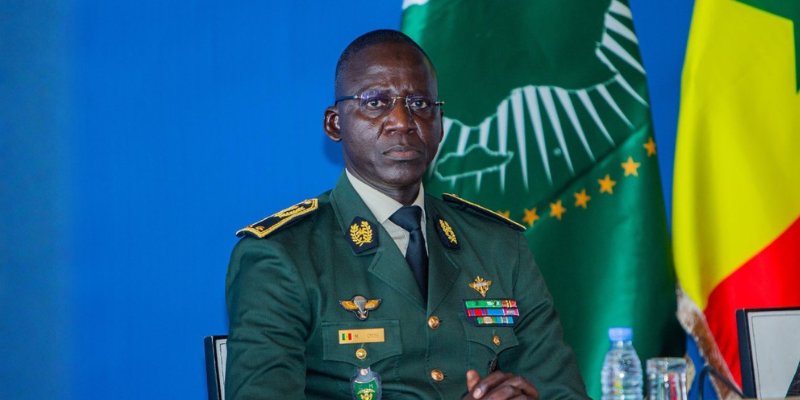
In a world where security and strategic partnerships influence economic and geopolitical stability, General Mbaye Cissé, Chief of the General Staff of the Armed Forces of Senegal, is quietly shaping his country’s role on the regional and international stage. His leadership in forging military cooperation and diplomatic relationships reflects a broader understanding of defense as a conduit for stability, trust and long-term engagement.
General Cissé holds the top professional military position in Senegal, responsible for overseeing the armed forces’ operational readiness and planning, reporting directly to the nation’s Minister of Defense. He has been in this role since April 2023, positioning himself at the centre of Senegal’s defense strategy in a rapidly changing security environment.
Leading by Engagement: Rwanda Visit
In May 2024, General Cissé led a high-level delegation to Rwanda Defence Force (RDF) Headquarters in Kigali on a study tour aimed at strengthening collaboration between the two countries’ military institutions. The visit involved senior leadership exchanges and discussions focused on shared security concerns and best practices in defence operations.
The significance of such engagements extends beyond protocol. Senegal and Rwanda are both navigating complex regional security landscapes in West and Central Africa. By opening channels for dialogue and mutual learning, General Cissé is advancing Senegal’s influence and enhancing interoperability between African defence forces. Military partnerships of this nature help bolster collective readiness and contribute to frameworks that can support economic and social stability across the continent.
Diplomacy in Action: Strengthening Ties With Oman
General Cissé’s role also encompasses diplomatic outreach. In February 2024, he met with Saif bin Rashid Hilal Alsaadi, head of the Oman Embassy in Senegal. This meeting reflected Senegal’s commitment to engaging with strategic partners beyond the immediate region.
Diplomacy between military leaders and foreign representatives often lays groundwork for deeper cooperation on training, interoperability, and support in peacekeeping initiatives. For Senegal, such ties help expand its diplomatic portfolio and showcase its reliability as a partner in security matters. Oman, with its own historical role in regional stability and logistics, represents a strategic partner in bridging defence and diplomatic ambitions.
Building Influence Through Military Leadership
General Cissé’s approach to leadership is informed by a broader vision of defense as more than just national security. It is about building institutional credibility that resonates internationally. Visits like the one to Rwanda and diplomatic engagements with foreign missions are part of a pattern. They illustrate how Senegal integrates defence cooperation into its foreign policy toolkit.
This strategy reinforces Senegal’s position as a partner that understands the interplay between military readiness, regional stability, and international cooperation. In doing so, General Cissé enhances both Senegal’s defence posture and its standing in multilateral security dialogues.
Africa’s Role in Global Security
Military leaders today are increasingly expected to blend operational command with diplomatic acumen. General Cissé embodies this shift. By prioritizing engagements that expand influence and build reciprocal trust, he aligns Senegal’s military strategy with broader goals that include economic development, stability and international partnership.
In a continent where security challenges are intertwined with economic opportunity, leaders like General Cissé play pivotal roles. Through strategic visits, diplomatic engagement, and a commitment to collaboration, he is helping position Senegal as a key contributor to continental security and cooperation.
As nations recalibrate their foreign policy and defence postures for a more interconnected world, Senegal’s model, driven by leadership that values both strength and partnership, offers a blueprint for how smaller states can assert influence without aggression. Rather than operating in isolation, Senegal under General Cissé’s watch exemplifies how military leadership can broaden a country’s reach, reinforce its reliability as a partner, and contribute to regional stability that underpins economic growth.