
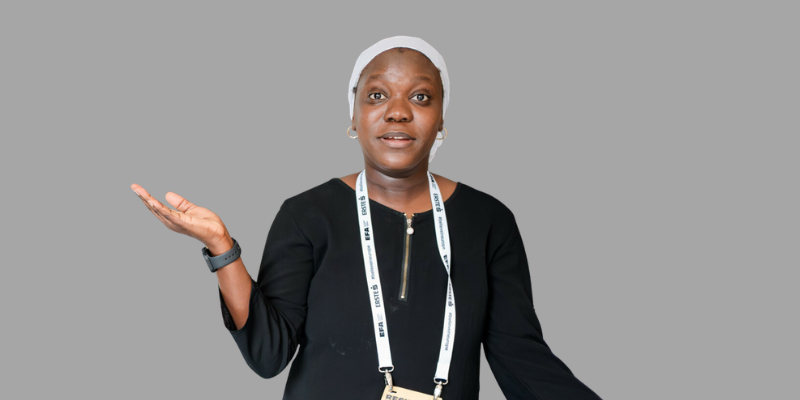
At just under 30, Fatou Jeng has emerged as one of The Gambia’s most credible climate leaders, with a profile that travels far beyond the country’s borders. Her story begins in Banjul, shaped by a farming background and the everyday realities climate change brings to homes across The Gambia. Water scarcity forces women to walk long distances. Farmers plan seasons around skies that no longer follow patterns. And the country’s low-lying coastline faces rising sea levels and accelerating erosion.
For Jeng, these experiences became more than a personal concern. They became a leadership mission with a measurable impact and a clear business lesson: climate disruption is an operational challenge, a social stability issue, and a long-term economic threat.
Building Clean Earth Gambia Into a Movement
In 2017, Jeng founded Clean Earth Gambia, a youth-led organisation designed to move climate conversations into practical action. What started with coastal clean-ups grew into one of the country’s most energetic environmental movements, mobilising thousands of young people and strengthening community ownership of local climate solutions.
Clean Earth Gambia has since evolved into more than an awareness campaign. It operates like a grassroots mobilisation engine: engaging volunteers, partnering with institutions, and creating repeatable models for climate education and conservation.
Results That Speak: 35,000+ Trees and Coastal Protection
A strong climate story requires proof of impact, and Jeng has consistently delivered outcomes that can be counted, tracked, and scaled. Under her leadership, Clean Earth Gambia has planted more than 35,000 trees, including large-scale coconut planting along the Banjul coastline. This effort supports erosion control and strengthens natural protection for communities facing sea-level rise.
Tree planting alone does not solve the climate crisis. Yet it signals something important: implementation discipline. For communities, it means stronger ecosystems and shade, soil stability, and better long-term resilience. For leadership observers, it shows the ability to rally people around an outcome and deliver on it.
A New Model of Leadership: Youth, Gender, and Climate Together
One reason Jeng stands out is her clarity around gender-responsive climate action. In many climate-impacted communities, women carry a disproportionate share of the burden, whether through water access challenges, household food security, or disaster recovery.
Jeng’s work brings gender realities into the center of climate planning, where policy and funding decisions carry long-term implications for equity, stability, and human development.
This focus also adds an important dimension for businesses and institutions investing in sustainability: climate action creates stronger returns when it strengthens the people most exposed to disruption.
Global Recognition With Real Weight
In March 2023, UN Secretary-General António Guterres selected Fatou Jeng as a member of his Youth Advisory Group on Climate Change, positioning her among a small group shaping youth perspectives at the highest level of global climate decision-making.
This is where her profile shifts from national leadership to global influence. It also highlights a broader change underway: global climate strategy increasingly requires voices with frontline credibility, field experience, and community trust.
In 2024, she received the Greentech Festival Youngster Award in Berlin, a milestone that recognised both her impact and the international relevance of her approach.
Awards can be symbolic. In Jeng’s case, they amplify a proven record of work and open doors to partnerships, funding, and policy conversations that can help scale solutions faster.
Creating a National Platform for Youth Climate Dialogue
In 2024, Clean Earth Gambia hosted the country’s first National Children and Youth Climate Change Conference, bringing young climate voices into direct conversation with stakeholders shaping the national agenda.
This kind of convening matters because it builds a pipeline of informed future leaders while pushing institutions toward longer-term planning. It is also a practical signal to the global development community that youth climate engagement in The Gambia is organised, active, and ready for collaboration.
Expanding Her Reach Through Plant-for-the-Planet
Jeng also serves as an International Relationship Manager at Plant-for-the-Planet, supporting international empowerment work with a focus on West and East Africa.
This role strengthens her position as a connector between local realities and global climate infrastructure. It gives her exposure to international networks, systems thinking, and collaboration models that can help young organisations scale sustainably.
Why Fatou Jeng Represents the Next Era of African Climate Leadership
Fatou Jeng’s rise reflects a shift in how climate leadership looks and how it performs. Her work proves that influence is no longer reserved for legacy institutions. It is earned through execution, community trust, and the ability to turn urgency into outcomes.
She represents a generation of African leadership that is pragmatic, organised, and solution-driven. From mobilising youth at scale to engaging with global decision-makers, Jeng is shaping a climate leadership style that is both grounded and internationally relevant.
In business terms, her story carries a clear message: the future will reward leaders who build resilience early, involve communities deeply, and treat climate strategy as a growth and survival priority.