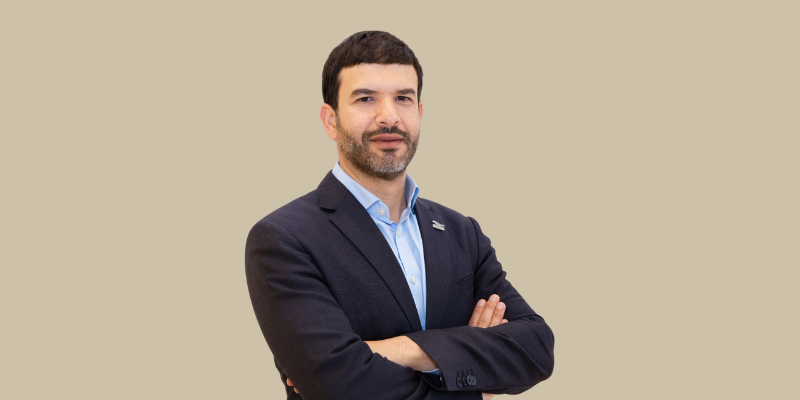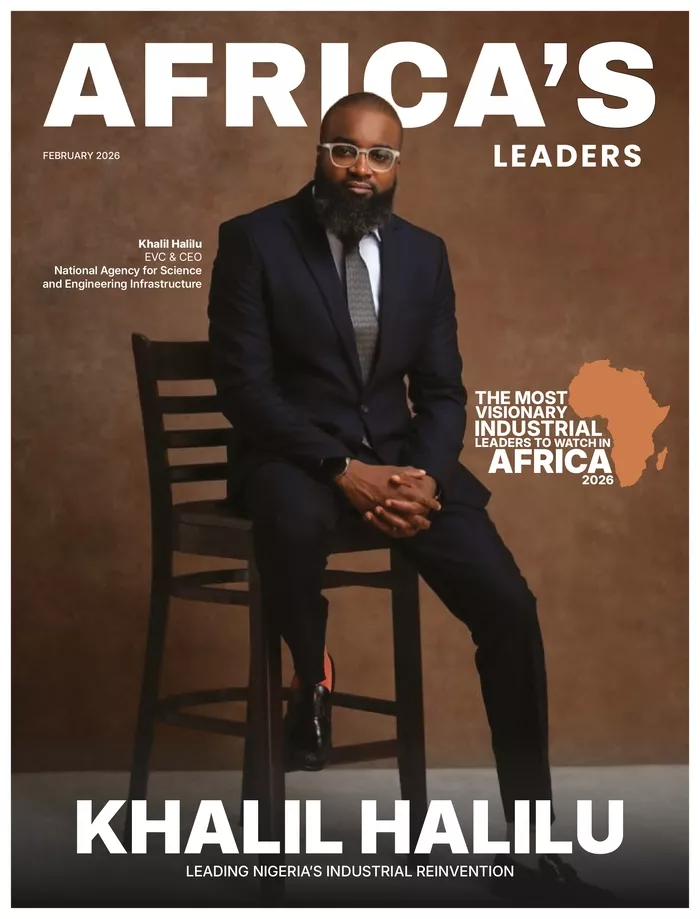

In an era obsessed with forecasting what comes next, Khalil Halilu works from a different premise. Take care of the minutes. Respect the days. Let the years take care of themselves. It is a deceptively simple philosophy, yet it underpins a leadership style that is reshaping how innovation, industry, and public service intersect in Nigeria.
As Executive Vice Chairman and Chief Executive Officer of NASENI, Khalil stands at the center of Nigeria’s push toward industrial self reliance and technological relevance. His work stretches across startups, manufacturing, public policy, and youth empowerment, guided by a belief that innovation only matters when it solves real problems.
An Entrepreneurial Beginning
Khalil’s instincts were shaped early in Kano, a city that has long served as the commercial heartbeat of Northern Nigeria. Born into a family of entrepreneurs, he grew up immersed in trade, negotiation, and enterprise. Business was not theoretical. It was lived.
That foundation carried into his education. He earned a Bachelor’s degree in Business Administration and Technology, followed by a Master’s degree in International Business from the University of Hertfordshire in the United Kingdom. Even then, he gravitated toward building things. He organized events, explored software development, and found creative ways to turn ideas into action.
After completing his studies, Khalil returned to join the family business as Chief Operating Officer of its beverage subsidiary. The role was formative. It offered his first real test of leadership, exposing him to the realities of managing people, systems, and expectations inside an established organization.
Lessons in Patience and Perspective
The COO role taught Khalil a crucial lesson. Change is not powered by ideas alone. It requires patience, negotiation, and respect for organizational culture. As a young leader eager to modernize operations, he learned how ambition must be balanced with pragmatism.
Those lessons stayed with him as he stepped out to build his own ventures. He founded OyaOya, a commodity on demand marketplace, and later launched ShapShap, an award winning logistics platform addressing last mile delivery challenges. He also created The CANs, West Africa’s first eco friendly technology hub, blending co working, innovation consulting, and community building in Abuja.
Across these ventures, a pattern emerged. Technology was never the end goal. It was the means.
Influences That Shape a Vision
Two figures loom large in Khalil’s thinking. Steve Jobs, for his insistence on authenticity, collaboration, and technology as a tool to enhance human life. And Aliko Dangote, for demonstrating what scale, resilience, and vision can achieve from African soil.
From Jobs, Khalil draws inspiration to think boldly and focus on quality and impact. From Dangote, he sees the power of persistence and pan African ambition. Both reinforce his belief that innovation must be rooted in context, not imitation.
When asked about legacy, Khalil is direct. He wants to be known as someone whose ideas transformed sectors, created opportunity, and inspired young people to believe that success is possible.
Leading Across Sectors
Khalil’s leadership journey spans private enterprise, philanthropy, and now the public sector. At NASENI, he oversees a complex national institution with ten engineering institutes spread across Nigeria. The scale is different. The stakes are higher.
This transition sharpened his approach. Delegation became essential. Strategic clarity mattered more than personal involvement. He learned to process vast amounts of information while empowering teams to execute.
His leadership rests on focus, integrity, humility, and results. Collaboration is non negotiable. He believes lasting transformation happens when diverse strengths align around a shared mission.
Redefining NASENI’s Role
Under Khalil’s leadership, NASENI has shifted from a prototype focused agency to a driver of market ready innovation. The transformation is anchored in the Strategic Launchpad, built on four pillars.
First, enhancing Nigeria’s manufacturing capacity. Second, reducing import dependence through research and development. Third, repositioning NASENI as a catalyst for industrial growth. Fourth, leveraging the unique advantages of Nigeria’s thirty six states and the Federal Capital Territory.
The results are tangible. NASENI is rolling out computers, solar powered irrigation pumps, lithium batteries, smartphones, and electric vehicles. These are not experiments. They are products designed to strengthen local industry and keep value within the economy.
Technology as a Growth Engine
Khalil sees emerging technologies as Africa’s chance to leap forward. Artificial intelligence, like mobile phones before it, can help bypass traditional development constraints. But potential alone is not enough.
Preparation matters. Education matters. Investment matters. Khalil emphasizes training, access to tools, and funding as the foundation for innovation to thrive.
NASENI’s partnerships reflect this thinking. A one hundred fifty million dollar joint venture with a Chinese company is establishing a lithium ion battery manufacturing facility in Nigeria. Collaboration with an Indonesian firm is developing a coal based fertilizer factory. Work with the Czech Republic focuses on co financing innovation projects between both countries.
Each partnership is designed to transfer capability, not just import solutions.
Inclusion and the Next Generation
Khalil’s vision extends beyond infrastructure. Through the DELT Her initiative, NASENI supports young women engineers with grants, mentorship, and tools. The goal is simple. Close the gender gap and ensure leadership in engineering reflects the population it serves.
For Khalil, building the future means expanding who gets to participate in it.
Balance as a Leadership Discipline
Despite the demands of leadership, Khalil insists on balance. He is an avid polo player and horse enthusiast, carving out time for life beyond work. He believes fulfillment fuels performance, not the other way around.
When work and life are both meaningful, time is found for each. The same applies to family. Presence is not scheduled. It is chosen.
A Leader to Watch
Khalil Halilu’s influence lies in his ability to connect present action with future impact. He does not chase trends. He builds foundations. His leadership offers a blueprint for how Africa can harness technology, industry, and human potential without losing sight of purpose.
By honoring the present, he is shaping a future that feels both ambitious and attainable.