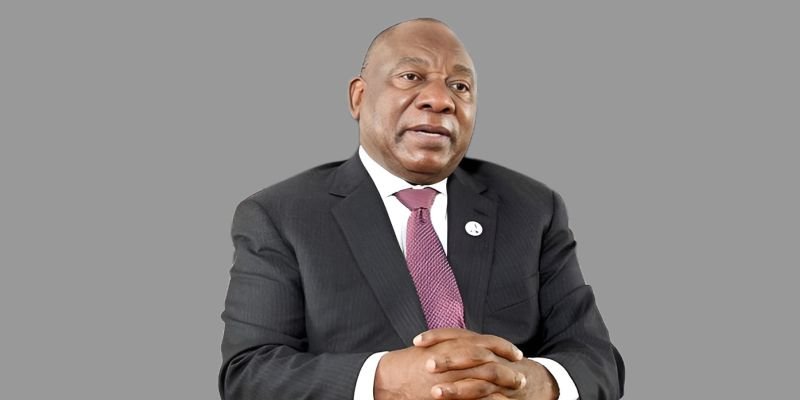


Arnold Ekpe’s professional story reads like a masterclass in disciplined ambition. Long before his name became synonymous with African banking leadership, he was already learning how complex systems behave under pressure.
His career did not begin in finance, but in engineering, working as a wireline logging engineer at Schlumberger in 1977. The work demanded precision, patience, and an ability to interpret signals buried far below the surface. Those same skills would later define his leadership style in boardrooms across the continent.
His early move to Alcan Aluminium Nigeria as executive assistant to the chief executive officer widened his exposure to enterprise realities. Procurement, labor relations, and operational decision making were not abstract concepts. They were daily responsibilities. This grounding outside banking gave Ekpe an uncommon advantage. He understood how institutions function beyond balance sheets.
Entering Banking Through Strategy, Not Chance
When Ekpe entered the banking sector in 1980, it was through strategy, not coincidence. At International Merchant Bank, an affiliate of First Chicago, he took on the role of head of strategy at a time when Nigeria’s financial system was evolving rapidly and often unpredictably. Strategy was not a planning exercise. It was a survival tool.
He went on to become operations manager and later general manager of IMB Securities, overseeing stockbroking and investment banking activities during a formative period for capital markets in Nigeria. These years refined his ability to connect vision with execution. He was known for building teams that understood both risk and responsibility, an uncommon balance in fast growing financial environments.
Mastering Corporate Finance and Global Banking Standards
Ekpe’s reputation as a steady hand in corporate finance followed him to City Securities Limited, the investment banking arm of First City Monument Bank, where he served as head of corporate finance and general manager. Shortly after, he moved to Nigeria International Bank, later Citibank Nigeria, as general manager.
This phase of his career placed him at the intersection of global banking standards and local market realities. Managing multinational expectations in an emerging economy required more than technical competence. It required judgment, cultural intelligence, and restraint. Ekpe earned trust quietly, becoming known as an executive whose decisions were deliberate and defensible.
Building a Pan African Banking Institution
The defining chapter of Arnold Ekpe’s career came at Ecobank Group, where he eventually became group chief executive officer. Leading a truly pan African bank was an exercise in complexity. Multiple jurisdictions, fragmented regulations, political risk, and uneven infrastructure formed the backdrop of daily decision making.
Ekpe approached the role with a clear philosophy. Scale mattered only if governance could support it. Growth had to be matched with discipline. Under his leadership, Ecobank strengthened its institutional framework and emerged as one of Africa’s most recognizable banking groups. His tenure emphasized consistency over spectacle, sustainability over speed.
When he retired as group chief executive officer in 2012, he left behind an institution better equipped to endure volatility.
From Executive Leadership to Board Stewardship
Retirement marked a transition, not a withdrawal. Ekpe moved into board leadership, serving as chairman and non executive director across several organizations, including Dangote Industries Limited. In these roles, his influence is measured in perspective rather than control.
Boardrooms benefit from leaders who know when to challenge and when to support. Ekpe brings institutional memory, strategic clarity, and a calm authority shaped by decades of decision making at the highest levels. His presence signals stability, particularly in founder led and growth driven enterprises.
Education, Recognition, and Enduring Credibility
Ekpe’s academic foundation is as strong as his professional one. He earned a first class honors degree from the University of Manchester as a Shell Scholar, followed by an MBA from Manchester Business School. These years shaped his global outlook and analytical rigor.
Recognition followed naturally. In 2011, he received the Lifetime Achievement Award at the African Bankers Awards. In 2019, Manchester University honored him with a Distinguished Alumni Award. These acknowledgments reflect not isolated success, but sustained credibility.
A Legacy of Quiet Authority
Arnold Ekpe represents a leadership model defined by restraint, ethics, and long term thinking. He has never relied on noise to command attention. His influence comes from consistency and judgment earned over time.
In an era that celebrates disruption and speed, his career offers a different lesson. Institutions are built by leaders who understand patience, governance, and responsibility. For Africa’s business community, Ekpe’s story stands as proof that longevity is the ultimate measure of success, and that true leadership often speaks in a calm, steady voice.