
He did not promise miracles. He built systems.
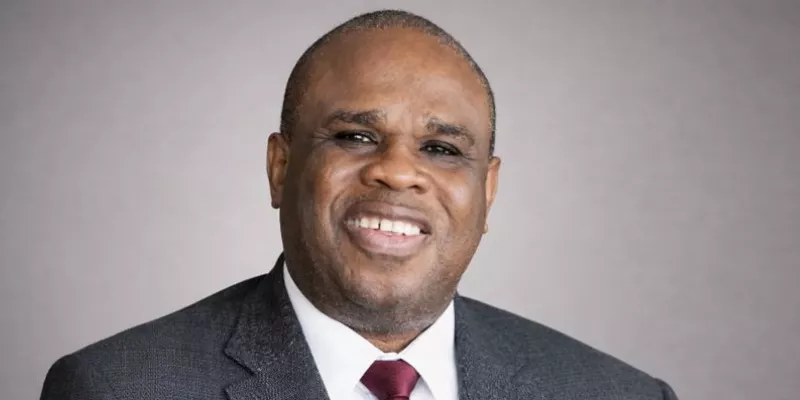
When Benedict Okechukwu Oramah assumed leadership of the African Export-Import Bank in 2015, Africa was still spoken about in cautious tones by global capital. Trade finance gaps were wide, currencies fragile, and intra-African trade more aspiration than reality. A decade later, the language had shifted. Africa was no longer just a frontier market. It was a financial actor building its own architecture. That change did not happen by accident. It happened because Oramah understood something fundamental about power in the modern economy: those who control systems control outcomes.
This is the story of the economist who turned a development bank into one of the most consequential financial institutions on the continent and, in doing so, reshaped how Africa trades with itself and the world.
Roots, Rigor, and a Long View
Oramah was born on July 24, 1961, in Ahoada, in what is now Rivers State, Nigeria. His family roots trace to Nnokwa in Anambra State, a commercial hub where trade is woven into daily life. As the youngest of four children, he grew up learning patience, discipline, and observation. These traits would later define his leadership style.
His academic path was deliberate. A bachelor’s degree in Agricultural Economics from the University of Ibadan in 1983 was followed by a master’s and doctorate from Obafemi Awolowo University. His focus was not abstract theory. It was applied economics, trade flows, and structural development. Later, an Advanced Management Certificate from Columbia Business School sharpened his global perspective.
From the beginning, Oramah believed that Africa’s challenge was not a lack of resources, but a lack of financial systems designed for African realities.
Learning the Machinery of Trade
Oramah began his professional career at the Nigerian Export-Import Bank in 1992, where he gained firsthand exposure to the mechanics of trade finance in an emerging economy. Two years later, in 1994, he joined Afreximbank as one of its original employees.
What followed was a steady ascent built on technical depth and institutional memory. Chief Analyst. Assistant Director. Deputy Director. Director of Planning and Business Development. Senior Director. Executive Vice President. By the time he was appointed President in July 2015, succeeding Jean-Louis Ekra, Oramah had spent over two decades inside the institution.
He did not need an orientation. He needed execution.
Redefining What a Development Bank Could Be
When Oramah took the helm, Afreximbank’s balance sheet stood at approximately five billion dollars. Its mandate was clear, but its reach was constrained. Oramah saw an opportunity to go beyond lending. His strategy was structural: build an ecosystem, not just a bank.
Under his leadership, Afreximbank evolved into a group institution with multiple strategic arms. The Fund for Export Development in Africa was created to provide long-term equity and quasi-equity financing for industrial projects. AfrexInsure addressed trade risk and insurance gaps. MANSA introduced a continent-wide customer due diligence repository, reducing compliance friction for African entities.
Perhaps most transformative was the Pan-African Payment and Settlement System. PAPSS tackled one of Africa’s most persistent trade barriers: currency dependence. By enabling cross-border payments in local currencies, it reduced costs, settlement delays, and reliance on external clearing systems.
These were not incremental reforms. They were infrastructure decisions.
From Vision to Scale
Results followed structure. By 2023, Afreximbank’s total assets had grown to thirty-seven billion dollars. More telling than the numbers was the institution’s relevance. During global supply chain disruptions, commodity price volatility, and the COVID-19 pandemic, Afreximbank became a stabilizing force.
It financed vaccine procurement. Supported governments facing balance-of-payments stress. Kept trade corridors open when private capital retreated. In moments of crisis, the bank demonstrated what African-led finance could look like when credibility meets conviction.
Oramah also understood the importance of platforms. The Intra-African Trade Fair emerged as a flagship marketplace, convening buyers, sellers, financiers, and policymakers at scale. Creative African Nexus reframed culture as an export industry. The African Medical Centre of Excellence addressed healthcare dependency through capacity building.
Each initiative reinforced the same message: Africa must trade, insure, finance, and heal itself.
Influence Beyond the Bank
Oramah’s leadership extended well beyond Afreximbank’s walls. He chaired the boards of major continental initiatives, including the Fund for Export Development in Africa and the Pan-African Payment and Settlement System. He served on global advisory councils covering development goals, cocoa markets, and emerging market finance.
His role during the African Union COVID-19 Response Fund highlighted his ability to bridge finance and policy under pressure. International institutions increasingly viewed him as a credible African voice in global economic forums.
In 2018, he was appointed Professor of International Trade and Finance, formalizing a reputation already established. His published works on structured trade finance and African development remain influential among practitioners and policymakers.
Recognition Without Distraction
Awards followed, though they never defined his work. Forbes Africa named him Person of the Year in 2023. African Banker Magazine recognized him twice as African Banker of the Year. He received lifetime achievement honors, financial leadership awards, and honorary doctorates from leading universities.
In 2025, Nigeria conferred on him the Grand Commander of the Order of the Niger, one of the nation’s highest honors. Cameroon knighted him for his contribution to regional integration.
Yet those close to Oramah note that recognition never altered his operating style. He remained analytical, reserved, and intensely focused on institutional outcomes rather than personal visibility.
Succession as Strategy
In June 2025, at Afreximbank’s Annual Meetings in Abuja, Oramah formally handed over leadership to George Elombi. The transition was smooth, deliberate, and devoid of drama. That, too, was intentional.
Institutions that depend on personalities are fragile. Institutions that outlive them are powerful.
By the time he stepped aside, Afreximbank had depth, systems, and credibility. His exit marked continuity, not uncertainty.
The Legacy of a Builder
Benedict Oramah’s legacy is not confined to asset growth or awards. It lies in proof. Proof that African institutions can be bold and disciplined. Proof that trade finance can be developmental without being concessional. Proof that Africa’s economic future does not need to be outsourced.
He did not sell optimism. He engineered confidence.
In the long arc of Africa’s economic history, Oramah will likely be remembered not as a charismatic disruptor, but as something far rarer and more enduring: a builder of systems that made ambition executable.